Canada’s Fighter Jet Gamble Signals a New Strategic Direction
For years, Canada’s defense policy has largely followed a familiar path: maintain close military integration with the United States while modernizing its armed forces within the framework of NATO. Today, that approach appears to be evolving.
A new debate in Ottawa over fighter aircraft procurement is revealing something much larger than a military purchasing decision. It is exposing a broader reassessment of Canada’s strategic dependencies in an increasingly uncertain world.
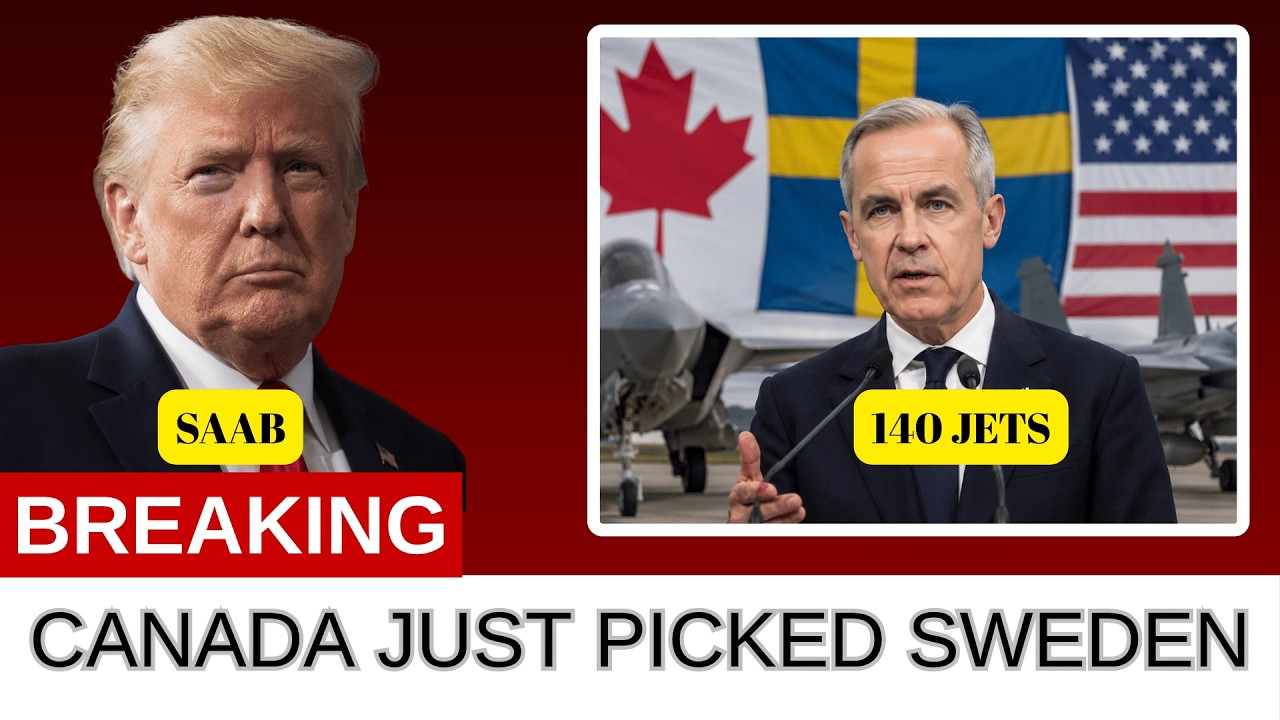
Recent reports suggest Canada is considering expanding its future fighter fleet beyond the originally planned 88 aircraft. Instead of relying exclusively on American-made F-35s, Ottawa is reportedly examining a mixed fleet that could include Sweden’s Gripen E fighter.
If implemented, the plan could increase Canada’s total fighter inventory to roughly 140 aircraft, a level not seen since the height of the Cold War. Such an expansion would represent the most ambitious air force modernization effort in four decades.
At first glance, the proposal appears to be about military capability. However, the deeper story revolves around sovereignty, industrial strategy, and geopolitical flexibility.
Canada originally selected the F-35 in 2023, but the government remains contractually committed to only a portion of the overall purchase. This has left Ottawa with significant room to adjust its long-term plans.

Rather than replacing American aircraft entirely, policymakers appear to be exploring a hybrid solution. Such a model would preserve access to advanced fifth-generation stealth capabilities while reducing dependence on a single supplier.
The attraction of the Swedish Gripen extends far beyond performance specifications. Saab has repeatedly emphasized technology transfer, domestic assembly, and local industrial participation as central components of its proposal.
That distinction matters. Modern defense procurement is no longer simply about buying weapons. Increasingly, governments want to control maintenance networks, software systems, and supply chains that determine operational independence during crises.
For Canada, this concern has become more visible amid broader tensions in North American trade relations. Political disputes have highlighted how economic and technological dependencies can become strategic vulnerabilities.
The emerging partnership between Ottawa and Stockholm gained additional momentum following discussions surrounding Saab’s GlobalEye airborne early-warning aircraft. What initially appeared to be a surveillance platform acquisition may now be part of a much larger industrial vision.
Industry sources suggest that infrastructure established to support GlobalEye production could eventually serve as the foundation for domestic Gripen assembly. If realized, such a project would generate thousands of skilled jobs and create one of Canada’s largest defense-industrial investments in modern history.
This shift reflects a growing trend among middle powers. Countries are increasingly seeking defense partnerships that provide not only military capability but also domestic economic benefits and strategic autonomy.
The Canadian debate also illustrates a changing definition of national security. Traditional military strength remains important, but policymakers are placing greater emphasis on supply-chain resilience and industrial self-sufficiency.
Critics inside military circles have raised questions about whether some European platforms fully match operational requirements. Those concerns remain part of the ongoing discussion and are unlikely to disappear.

Yet the political calculus extends beyond technical evaluations. Decision-makers must balance military performance with economic development, alliance management, and long-term national interests.
Another factor shaping the debate is the Arctic. As competition intensifies across the northern regions, Canada faces growing pressure to strengthen its ability to monitor and defend vast remote territories.
Aircraft capable of operating from dispersed locations with reduced logistical demands are attracting increased attention. The Arctic environment rewards flexibility and resilience as much as technological sophistication.
Meanwhile, the conversation is already extending beyond current-generation fighters. Ottawa has signaled interest in future defense programs, including next-generation combat aircraft projects being developed by European partners.
Such engagement suggests Canada is not merely reconsidering one procurement decision. It may be repositioning itself within a broader network of defense relationships that extends beyond its traditional reliance on Washington.
None of this means Canada is abandoning its alliance with the United States. The two countries remain deeply interconnected through NATO, NORAD, intelligence sharing, and decades of military cooperation.
However, the fighter jet debate reveals an important reality. In an era defined by geopolitical uncertainty, Canada appears increasingly determined to ensure that partnership does not become dependence. Whether through Swedish aircraft, domestic production, or future European defense projects, Ottawa’s message is becoming clearer: strategic flexibility has become a national priority.
If these plans move forward, historians may ultimately view this moment not as a procurement story, but as the beginning of a significant shift in how Canada defines security, sovereignty, and its place in the changing international order.