Leaked Pipeline Maps Reveal the Biggest Obstacle to Canada’s Pacific Energy Ambitions
A major geopolitical battle is quietly taking shape in western Canada, and newly leaked documents have exposed a problem that could determine whether one of the country’s most ambitious energy projects ever gets built.
For months, Alberta has promoted plans for a new oil pipeline capable of transporting up to one million barrels per day to the Pacific Coast, creating a direct export corridor to Asian markets. The project has been presented as a nation-building initiative with construction targeted for 2027 and exports beginning by the early 2030s.
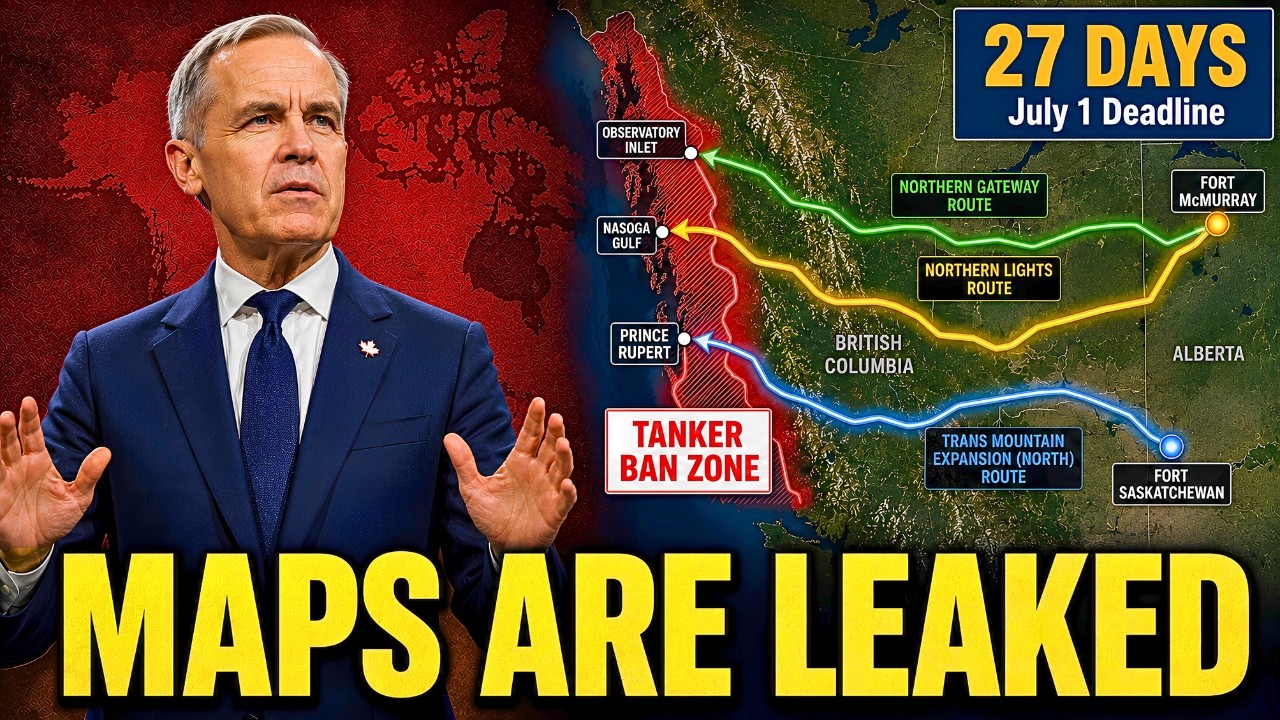
But leaked consultation maps obtained by CBC reveal a far more complicated reality.
According to the documents, Alberta has been evaluating four possible routes. Three northern routes would terminate on British Columbia’s northern coastline, while a fourth southern option would head toward the Vancouver region.
The significance of those routes cannot be overstated.
Every northern option appears to run directly into Canada’s federal Oil Tanker Moratorium Act, legislation that restricts large crude oil tankers from operating along much of British Columbia’s northern coast.
In practical terms, Alberta may be planning export terminals in locations where federal law currently prevents the very tanker traffic needed to make the project economically viable.
That legal obstacle immediately transforms what appears to be an infrastructure debate into a national political confrontation.
The first proposed route would connect Alberta’s oil sands to Observatory Inlet near the Alaska border. A second route would terminate at Nasoga Gulf, while a third would link to Prince Rupert or Kitimat through a corridor resembling the canceled Northern Gateway project. All three locations fall within the tanker moratorium zone.
The comparison to Northern Gateway is particularly important.
That project spent years navigating regulatory reviews before ultimately collapsing under political opposition and legal challenges. The resemblance between the proposed corridor and Northern Gateway is likely to revive many of the same debates that dominated Canadian politics for nearly a decade.
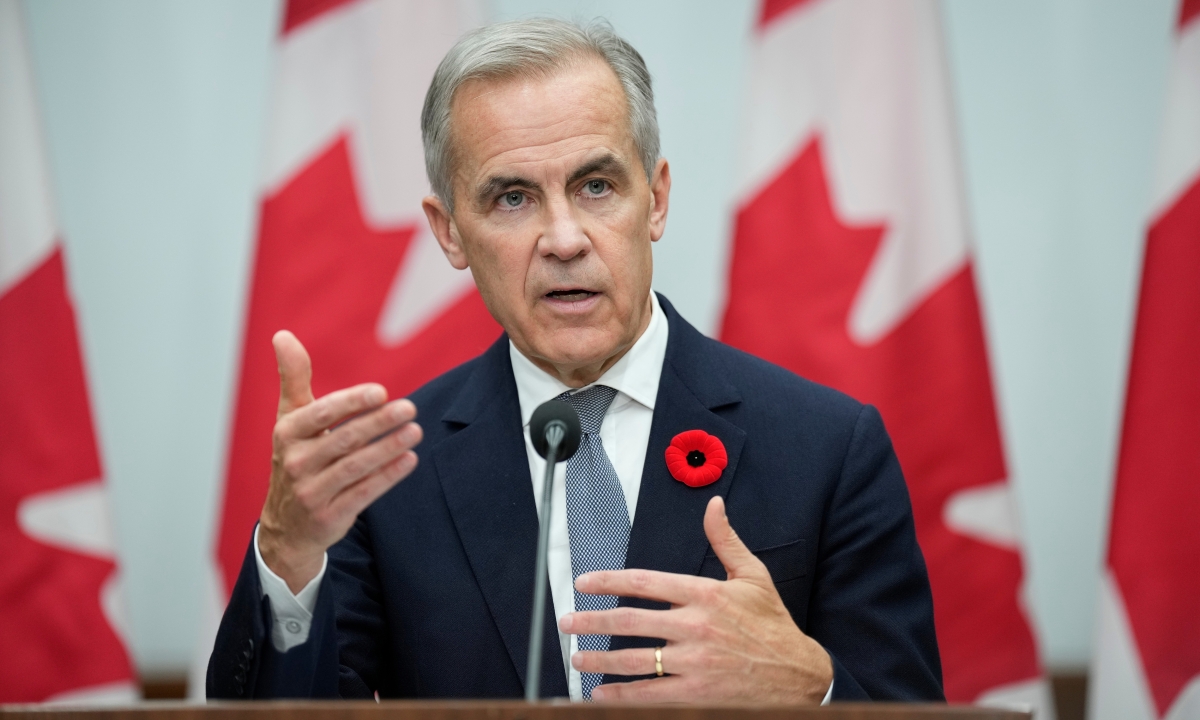
The federal tanker moratorium itself was introduced in 2019 and covers much of British Columbia’s northern coastline. Repealing or modifying it would require legislation passed through Parliament, a process that would almost certainly trigger fierce political resistance.
Environmental organizations would likely challenge any repeal effort.
Equally important, Indigenous opposition could become a decisive factor.
Several First Nations leaders have already raised concerns about the proposed routes. West Moberly First Nations Chief Roland Wilson stated that his community opposes all three northern options and argued that consultation has not yet occurred in a meaningful way.
That issue carries significant legal implications.
Canadian courts have repeatedly affirmed the federal government’s constitutional duty to consult Indigenous communities when major projects affect their rights and territories. Failure to satisfy that obligation has delayed or disrupted numerous resource developments across the country.
The challenge is not limited to a single nation.
Any pipeline crossing northern British Columbia would potentially affect multiple Indigenous territories, including those of the Nisga’a, Tahltan, Wet’suwet’en, Carrier Sekani, and Gitxsan peoples. Each possesses legal rights that must be addressed through lengthy consultation and negotiation processes.
Yet the situation is not entirely unfavorable for Alberta.
The Nisga’a Nation, whose territory includes some of the proposed northern terminals, has previously supported major resource developments and could emerge as an important partner if meaningful ownership structures are included.
This introduces another emerging trend in Canadian energy policy.
Increasingly, large infrastructure projects are being designed around Indigenous equity participation rather than traditional consultation alone. Alberta has already signaled interest in pursuing a co-owned pipeline model similar to recent Indigenous investment arrangements in other energy projects.
Meanwhile, the southern route offers a dramatically different path forward.
Unlike the northern options, a route terminating near Vancouver or the Strait of Juan de Fuca would avoid the tanker moratorium entirely. However, it would introduce a different set of challenges, including denser populations, environmental opposition, and political sensitivities within British Columbia’s most populated regions.
British Columbia Premier David Eby has indicated a preference for southern alternatives and has publicly stated that he has not yet been included in discussions regarding the northern proposals.
That absence is becoming increasingly difficult to ignore.
With Alberta preparing to submit its proposal to Ottawa, the project is rapidly approaching a critical political milestone. Yet fundamental questions surrounding tanker access, Indigenous consultation, and provincial cooperation remain unresolved.
The broader geopolitical significance extends far beyond western Canada.
This pipeline is ultimately part of Canada’s larger effort to diversify energy exports away from near-total dependence on the United States and strengthen access to Asian markets. Energy security, trade diversification, and strategic autonomy have become increasingly prominent themes in Ottawa’s economic planning.
The leaked maps therefore reveal something larger than a routing debate.
They expose the collision between Canada’s energy ambitions and the legal, environmental, and constitutional realities that govern major infrastructure development.
Whether this project becomes a Pacific export super-corridor or another chapter in Canada’s long history of pipeline battles may depend less on engineering than on politics.
And with the proposal deadline approaching, the clock is already ticking.