PHILADELPHIA — A street protest that brought traffic to a halt on one of Philadelphia’s busiest roads during evening rush hour has ignited fierce online backlash and renewed a national debate over the boundaries of public demonstration in American cities.
Videos rapidly circulated on social media showed dozens of protesters occupying the roadway, forcing vehicles to stop amid honking horns and visible frustration from drivers. Commuters described being trapped in gridlock for extended periods as authorities worked to restore order.
The incident, which occurred on a major thoroughfare, quickly drew national attention. Clips depicting heated exchanges between protesters, motorists and police amplified outrage across platforms, with many users condemning what they saw as an unacceptable disruption to daily life.
City officials confirmed that law enforcement eventually moved in to clear the roadway, reopening traffic after significant delays. No immediate reports of serious injuries or arrests were detailed in initial statements, though investigations into the event are continuing.
The protest’s timing and tactics — halting vehicles at peak commuting hours — have become central to the controversy. Supporters defended the action as a necessary form of civil disobedience to highlight pressing social issues, while critics argued it crossed the line from protected speech into public endangerment and coercion.
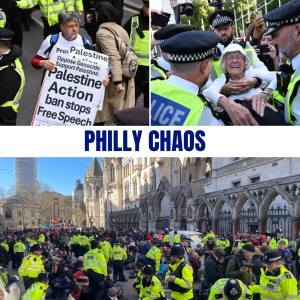
Philadelphia, like many large American cities, has seen a series of demonstrations in recent years addressing concerns ranging from policing and racial justice to housing costs and economic inequality. This latest episode fits into a broader pattern of protests that test the limits of tolerated disruption.
Local residents expressed divided views. One commuter, stuck for nearly an hour, told reporters the blockade felt punitive. “I support the right to protest, but not when it punishes working families trying to get home,” he said, requesting anonymity to avoid online harassment.
Organizers have not yet been publicly identified in detail, but preliminary accounts suggest the demonstration focused on issues of community safety and police accountability. Advocates for the protesters emphasized that such actions are sometimes required to force attention on systemic problems often ignored in routine political discourse.
Civil liberties groups pushed back against blanket criticism. “Peaceful assembly is a cornerstone of the First Amendment,” said a representative from a local rights organization. “While traffic inconvenience is regrettable, it has historically been part of making society confront uncomfortable truths.”
Law enforcement officials walked a careful line. Philadelphia Police Department spokespeople noted that officers prioritized de-escalation and public safety. “We respect free expression, but blocking major arteries creates hazards for everyone, including emergency responders,” one official said.
The episode has fueled intense discussion online. Hashtags related to the protest trended, with users sharing personal stories of being delayed for work, medical appointments or childcare. Some posts praised the demonstrators’ boldness; many more decried what they called selfish tactics.
This is not the first time traffic blockades have sparked controversy in Philadelphia or nationally. Similar actions during past movements — from anti-war protests to climate activism to responses to police violence — have repeatedly raised questions about proportionality and effectiveness.
Critics argue that such disruptions often alienate potential supporters. Public opinion surveys on protest tactics frequently show strong majorities oppose blocking roads, even when they sympathize with the underlying cause. The tactic can generate media coverage but risks eroding broader goodwill.
Defenders counter that conventional marches and permitted rallies frequently fail to break through public apathy or media cycles. “Disruption is the point,” one activist familiar with local organizing efforts said. “Polite protests get polite indifference.”
Philadelphia Mayor’s office issued a measured statement acknowledging the right to protest while stressing the need for responsible exercise of that right. City leaders indicated they would review traffic management protocols for future demonstrations to better balance competing interests.
Legal experts note that while the First Amendment offers robust protections for speech and assembly, courts have long upheld “time, place and manner” restrictions. Blocking traffic without permits can lead to citations or arrests, though enforcement varies widely by jurisdiction and political climate.
The incident arrives amid ongoing national conversations about urban governance, public safety and polarization. In cities across the United States, officials grapple with rising frustration over protest-related disruptions, homelessness, crime and strained municipal budgets.
For many Philadelphians, the event crystallized deeper anxieties. Families trying to navigate daily routines feel caught between legitimate grievances and the immediate impacts on their lives. Emergency medical technicians and delivery workers have reported similar frustrations in past incidents.
As videos continue to circulate, the debate shows little sign of cooling. Conservative commentators framed the protest as emblematic of liberal governance failures, while progressive voices warned against using isolated events to demonize activism broadly.
City Council members offered differing perspectives along partisan and ideological lines. Some called for stricter enforcement and permit requirements. Others urged dialogue with community organizers to channel dissent into less disruptive forms.
Ultimately, the Philadelphia traffic blockade underscores a persistent tension in democratic societies: the right to be heard versus the right to move freely through shared public spaces.
Resolving that balance remains elusive. As American cities confront complex social challenges, the methods used to spotlight them will likely continue to provoke strong reactions from both participants and bystanders.
Whether this incident leads to policy changes in Philadelphia or serves mainly as another flashpoint in the culture wars may depend on how local leaders, activists and residents respond in the coming weeks.