
It was a day that will be indelibly etched in the diplomatic history books of the European Union—a moment when the seemingly unassailable authority of Brussels officials abruptly clashed with the unyielding reality of a sovereign state. Imagine the scene: Several high-ranking European Union officials, people accustomed to moving in the elegant corridors of power and whose words normally carry the weight of law, are suddenly handed an official letter from the Hungarian government.
The contents of this document leave absolutely no room for misinterpretation, diplomatic pleasantries, or protracted negotiations: Pack your belongings, leave Budapest, you have exactly 48 hours. No exceptions. No discussions about diplomatic immunity or the inviolable status of being a representative of the European Commission. The expulsion was absolute, unambiguous, and, above all, effective immediately.
Such a course of action is unprecedented in the entire, often turbulent history of the European Union. Even in the darkest, most chaotic hours of the Euro crisis or during the nerve-wracking and emotionally charged Brexit negotiations, diplomatic decorum was always formally maintained.
But in Budapest, something more fundamental has now broken. The international media reacted with a loud outcry of disbelief. Major newspapers immediately spoke of an unprecedented escalation, while established news channels, in their live broadcasts, stammered in disbelief about an “unprecedented diplomatic incident.”
But what appears to some as a scandalous affront and a breach of all rules is, for others, a courageous, long-overdue act of national self-assertion. The Hungarian government’s official justification for this drastic step can be reduced to three extremely powerful and consequential words: sovereignty, interference, and election manipulation. A clear, incisive statement that ruthlessly gets to the heart of the matter: Not with us, not in our country, and certainly not on the mere orders of Brussels.
To grasp the magnitude of this conflict, one must examine the behavior of those EU officials in Budapest more closely. According to reports, they moved through the historic streets of the Hungarian capital as if the entire metropolis were their private testing ground. Carrying briefcases and with glances often perceived as condescending and patronizing, they acted as if they came from a morally superior sphere.
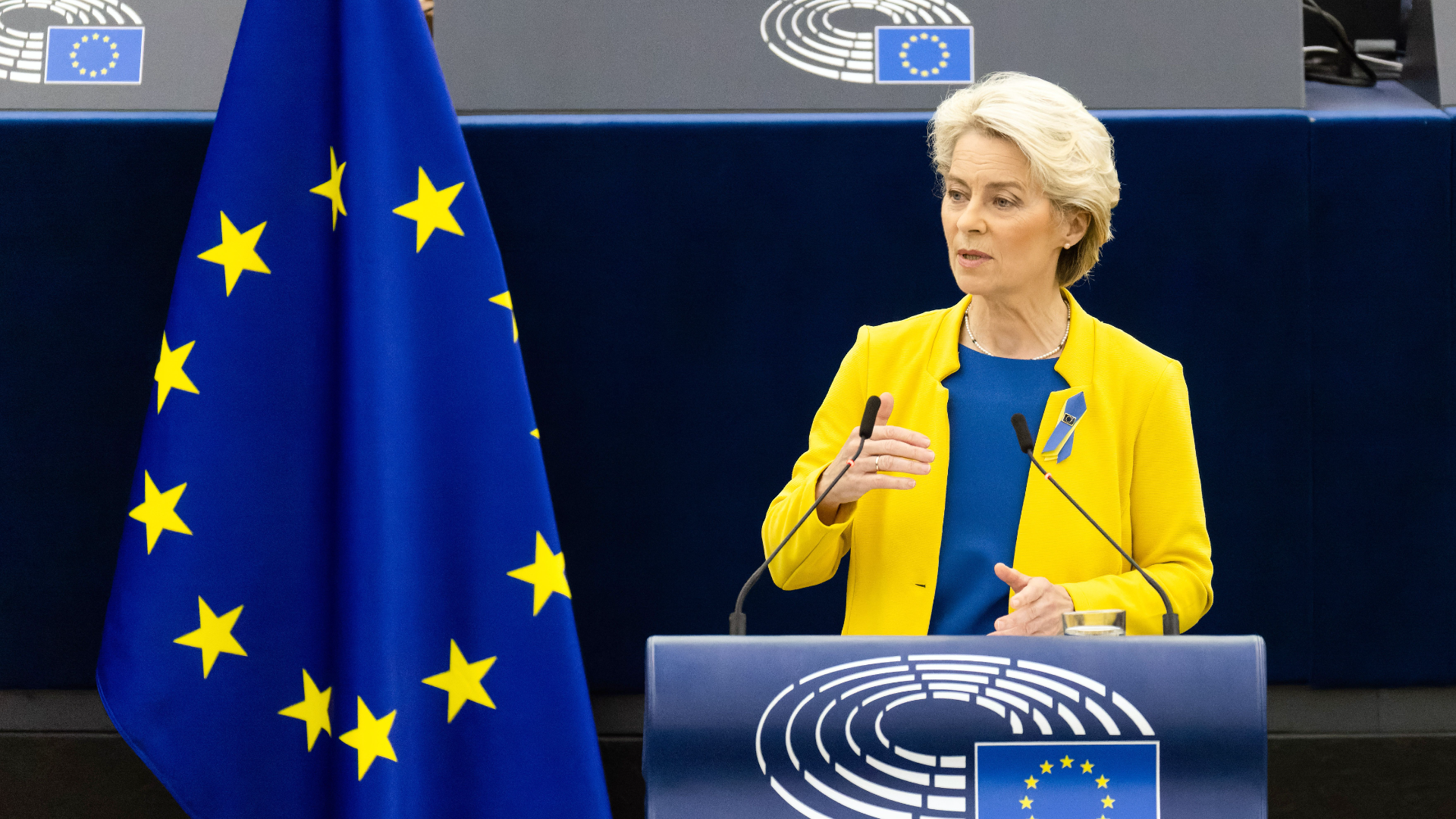
This arrogance culminated in symbolic acts: Immediately after the election victory of the new government under Peter Magyar, EU flags were raised throughout the city, as if marking conquered territory. Even Commission President Ursula von der Leyen publicly celebrated this as a great victory for Europe.
But many Hungarians bitterly wondered at that moment: Is this still about our country and our future, or just about the imperial expansion of power by the European Union?
The Hungarian government finally pulled the plug. These officials, according to harsh criticism from Budapest, had behaved not like partners, but like inspectors from a bygone era. Comparisons were drawn that cut deep into the country’s historical wounds: they acted like modern-day colonial rulers or Soviet commissars ruthlessly enforcing the law in a satellite state – only this time the ideology was not communist, but bureaucratic and Brussels-centric.
The accusations are serious: the EU representatives allegedly interfered in domestic affairs, systematically ignored Hungarian laws, trampled on the country’s culture and traditions, and attempted to reshape a sovereign member state according to the whims of Brussels headquarters.
National judges were allegedly pressured, critical journalists intimidated, and opposition NGOs generously funded with European taxpayers’ money. All this under the guise of the so-called “rule of law mechanism.” A term that sounds bureaucratic and harmless, but in the eyes of the Hungarian leadership has long since been perverted into a brutal instrument of power and financial blackmail.

In Brussels, the expulsion was met with shock and moral outrage, of course. The usual political charade of surprise was staged, as if they hadn’t been fully aware of the massive pressure exerted by their own people on the ground over the years.
The Commission under Ursula von der Leyen apparently thought that the new Prime Minister, Peter Magyar, would bow to the immense pressure, dance to their tune, and abandon the old blockades. But they had fundamentally miscalculated.
Hungary steadfastly refuses to open its borders to illegal migration, abandon its traditional values, and merge into a homogenous European landscape.
But behind the diplomatic storm rages a ruthless financial war, which reached its provisional climax on May 29, 2026, during a personal meeting between Ursula von der Leyen and Peter Magyar in Brussels.
The result of this highly charged negotiation was an agreement that, at first glance, appears to be a liberating breakthrough: a staggering €16.4 billion in frozen EU funds is to be released for Hungary.
This corresponds to approximately 13 percent of the entire Hungarian state budget – a gigantic sum. Ten billion euros come from the recovery fund, and billions more from the cohesion fund. Hungarian students will also be able to participate in the popular Erasmus program again starting in September 2026.
However, a closer look reveals the extremely toxic conditions attached to this money. Von der Leyen is demanding massive concessions that amount to a humiliation.
Hungary is to completely forgo vital Russian gas, cease operations of the Druzhba pipeline, and simultaneously agree to a €90 billion EU loan for Ukraine.
These are demands that would drive Hungary into a dangerous dependence on expensive liquefied natural gas and increase the financial burden on its own citizens immeasurably. Furthermore, sweeping reforms are planned to overhaul the education system: Established national foundations like the Mathias Corvinus Collegium are to be dismantled in order to transfer control of the universities directly from Budapest to Brussels.
This is not about education; it is about ideological hegemony. The price for these billions is nothing less than a significant piece of national sovereignty.
Hungary’s response to this blackmail is as logical as it is alarming for Brussels: If Europe wants to buy our freedom, we will find other partners. Magyar is simultaneously negotiating intensively with China and other global players to break free from Brussels’ financial dependence. He is building genuine, viable alternatives.
Meanwhile, sheer despair is spreading through the corridors of the EU Commission. A high-ranking diplomat is said to have admitted internally, with resignation, that Magyar is currently the only leader in the Union who still harbors his own independent thoughts. One senses that here stands someone who is not prepared to sacrifice the soul of his country for a few billion euros.
At the end of this unprecedented power struggle lie far-reaching questions that affect us all. Will we allow the European Union to degenerate into a centralist superstate that blackmails and patronizes its own member states?
Ultimately, it is the hard-working taxpayers in Germany, Hungary, and across Europe who finance this dysfunctional system—a system that ignores national interests and disregards the will of the people.
The bombshell in Budapest is far more than just a diplomatic incident. It is a loud, unmistakable wake-up call to all European nations. It is a call to remain vigilant, to protect one’s homeland and identity, and never to carelessly relinquish fundamental freedom of choice to functional bureaucracies.
The coming months will show whether this is the beginning of the end for Brussels’ arrogance, or whether the pressure from the central government can finally break Hungary’s freedom-loving heart.






