Markets Challenge Conventional Assumptions as Canada Pursues Greater Economic Independence Amid Trade Tensions
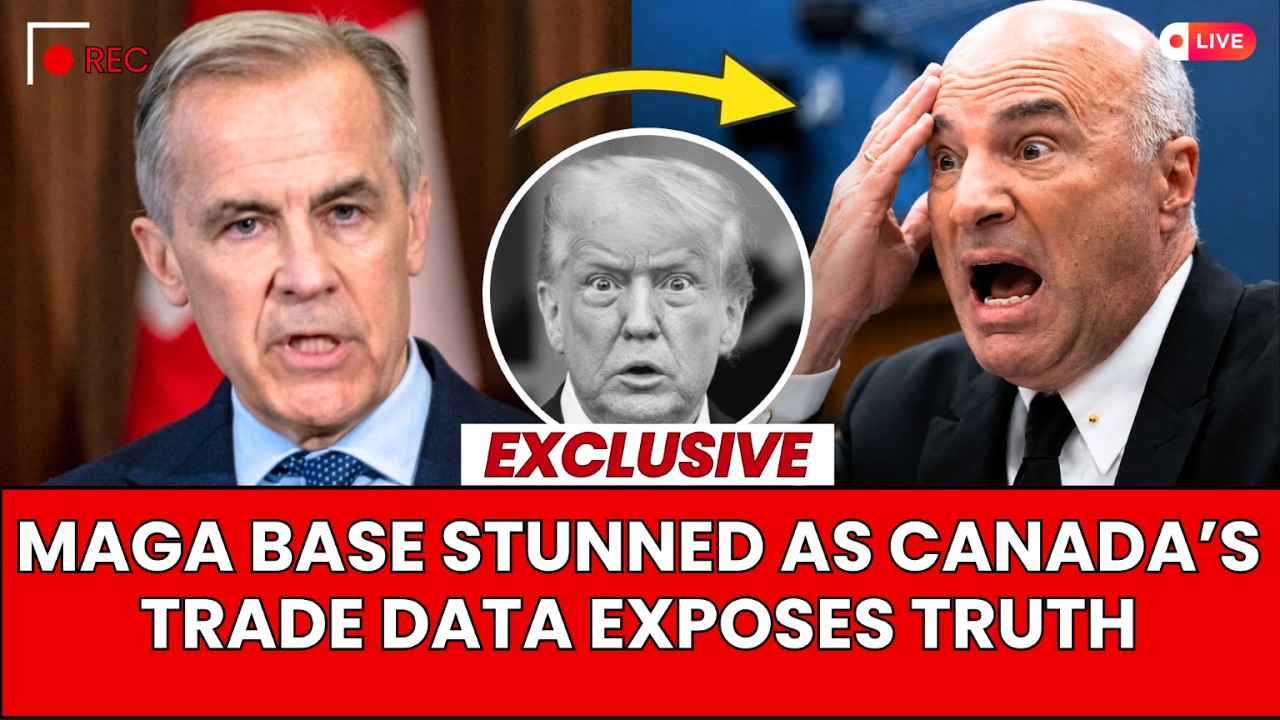
Canada’s evolving trade strategy has drawn significant attention across the country after comments from Kevin O’Leary reignited debate about the balance of economic power between Ottawa and Washington. At the centre of the discussion is whether Canada remains overwhelmingly dependent on the United States or whether recent economic developments suggest a more complex reality is emerging.
The debate intensified after Donald Trump continued to raise the prospect of tariffs and economic pressure targeting Canadian industries. O’Leary argued that Canada still relies heavily on access to the American market, noting that a substantial share of Canadian exports continues to flow south of the border.
Yet the broader economic picture outlined in the discussion suggested a more nuanced situation. Rather than experiencing instability, Canada’s financial indicators appeared to remain resilient during periods of heightened trade rhetoric, prompting renewed debate across Canada’s political landscape.
While financial markets are not typically driven by political messaging alone, the transcript argues that investors continued directing capital toward Canadian sectors including energy, mining, infrastructure, and industrial development. This pattern became a central point in assessing Canada’s economic position.
Supporters of the diversification strategy contend that investor behaviour often reflects long-term assessments of stability and strategic value. According to the discussion, markets appeared increasingly willing to view Canada as a critical supplier of resources and industrial capacity within the broader Western alliance.
The transcript further suggested that Canada’s stock market performance and the strength of the Canadian dollar contrasted with predictions that tariff threats would trigger substantial economic weakness. Those developments became part of a wider conversation about Canada’s leverage in international trade relationships.
At the same time, global supply chains have increasingly shifted toward considerations beyond simple cost efficiency. Security, reliability, political stability, and access to trusted resources have become central concerns for governments and investors alike.
Canada’s role in supplying oil, natural gas, potash, uranium, hydroelectricity, aluminum, and critical minerals has therefore gained renewed strategic importance. Demand for many of those resources continues across North America, Europe, and Asia, reinforcing Canada’s position within international markets.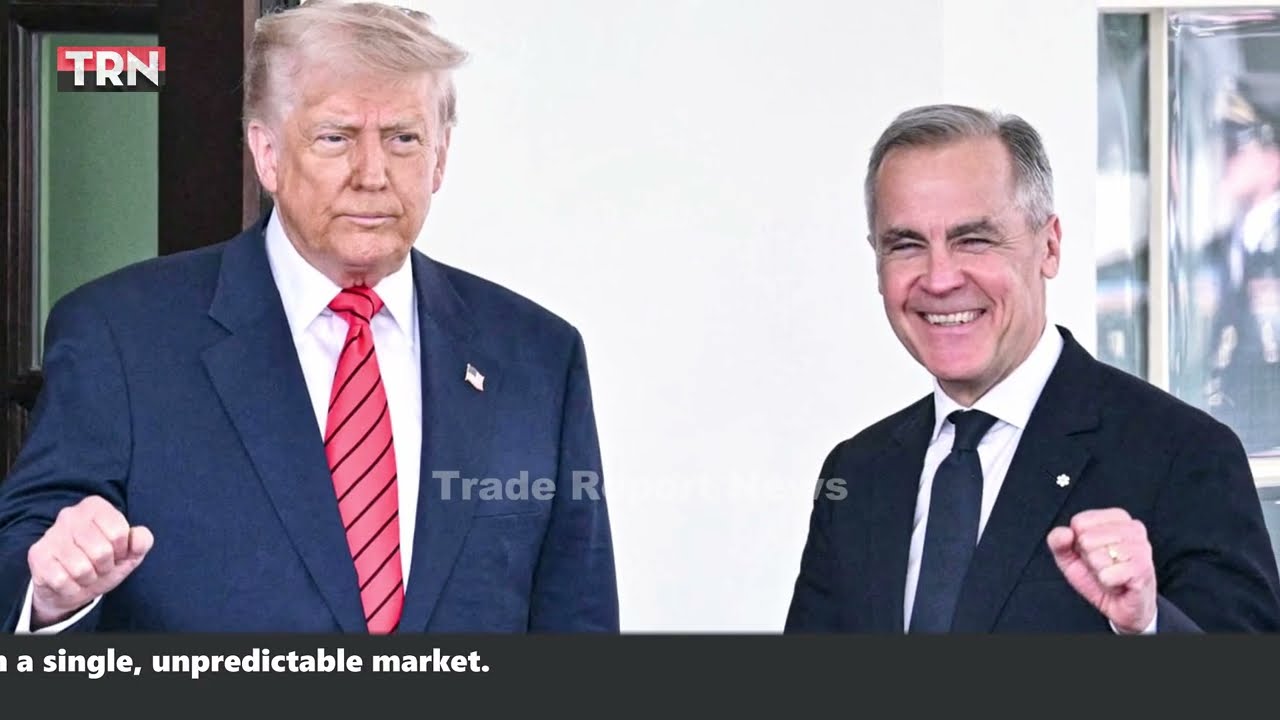
The discussion also highlighted efforts by the government of Mark Carney to expand economic engagement beyond traditional markets. Increased cooperation with European and Asian partners was presented as part of a broader effort to reduce long-term vulnerability to external political pressures.
Rather than portraying diversification as a rejection of the United States, the transcript framed it as an attempt to ensure Canada is not dependent on a single economic relationship. That approach has increasingly shaped conversations in Ottawa regarding trade resilience and national economic strategy.


Another significant theme involved Canada’s evolving relationship with China. The discussion referenced the reopening of certain agricultural trade channels and ongoing conversations involving sectors such as canola, seafood, and electric vehicles.
According to the transcript, these developments do not represent a strategic shift away from the United States. Instead, they reflect efforts to broaden Canada’s range of economic options and strengthen flexibility in an increasingly uncertain global environment.
The conversation took on additional significance when O’Leary acknowledged that Canadian markets, the currency, and investment activity remained strong during periods of political and economic confrontation. That observation became a focal point for those arguing that Canada possesses greater economic resilience than some critics assume.
The interview also highlighted the degree to which the United States depends on Canada. The transcript noted that Canada remains a major export destination for many American states and that billions of dollars in goods and services move across the border daily.
This reality, supporters argue, demonstrates that the relationship is characterized less by one-sided dependence and more by deep structural interdependence. Supply chains, manufacturing networks, agricultural production, and energy systems on both sides of the border remain closely connected.
The transcript suggested that efforts to destabilize Canada’s economy would inevitably create consequences within the United States as well, affecting manufacturing costs, agricultural inputs, energy supplies, and regional economic activity.
For policymakers in Ottawa, this interconnectedness has reinforced arguments for pursuing diversification while maintaining strong ties with Washington. Such a strategy seeks to expand options without abandoning Canada’s most important trading relationship.
The discussion also pointed to growing investments in Arctic infrastructure, LNG export capacity, critical minerals, and Indo-Pacific partnerships. These initiatives were presented as part of a long-term effort to strengthen Canada’s economic autonomy and global reach.
Particular attention was given to Alberta’s growing role in international energy markets. The transcript described increasing Chinese interest in Alberta crude oil and emphasized the strategic significance of export routes that provide access to Asian buyers through the Pacific coast.
As Canada prepares for future trade negotiations and broader geopolitical challenges, these developments may continue to influence debates about economic sovereignty, competitiveness, and national strategy. The discussion suggested that assumptions about Canada’s limited alternatives are increasingly being questioned by both policymakers and investors.
Ultimately, the debate surrounding O’Leary’s remarks extends far beyond a single television interview. It touches on Canada’s long-term effort to diversify exports, strengthen international partnerships, and reduce exposure to political uncertainty. While Canada continues to rely heavily on the American market, the transcript suggests that Ottawa is actively pursuing a future in which its prosperity is supported by a broader network of global relationships. For that reason, the debate remains unresolved within Canada’s broader political landscape.