WASHINGTON — What began as a morning of routine diplomatic engagement spiraled rapidly into one of the most consequential ruptures in trans-Atlantic relations in decades, after Donald Trump accused some of America’s closest allies — including the United Kingdom, the European Union and Canada — of conspiring against the United States and hinted at restricting intelligence sharing.
Within hours, senior officials across Europe and North America issued unusually blunt rebukes. The response from London was particularly stark. The British prime minister publicly described Trump’s remarks as “appalling and false,” a phrase rarely used by leaders of allied democracies to describe the sitting president of the United States. Diplomats privately said the comments triggered “alarm bells” across security and intelligence agencies that depend on decades-old cooperation with Washington.
The episode underscored a growing reality of Trump’s second term: that American foreign policy is no longer judged merely by its strategic decisions, but by whether allies can rely on the United States as a stable partner at all.

A line crossed
According to transcripts and video shared widely on social media, Trump claimed that allied governments were “coordinating” to undermine U.S. interests and suggested that intelligence cooperation could be reconsidered if those countries failed to align more closely with his administration. While the White House later attempted to soften the language, foreign officials said the damage was done.
“This was not a misunderstanding,” said a senior European diplomat, speaking on condition of anonymity to discuss internal deliberations. “It was a signal — and a deeply troubling one — that the United States may now view its allies as adversaries.”
The implications go far beyond rhetoric. Intelligence sharing among the U.S., the U.K., Canada, Australia and New Zealand — often referred to as the Five Eyes partnership — is a cornerstone of Western security architecture. Any suggestion that Washington might politicize that relationship sends shock waves through defense ministries and financial markets alike.
Allies respond — publicly and privately
In Ottawa, Canadian officials rejected Trump’s assertions outright, with one cabinet minister calling them “baseless” and warning that “trust, once broken, is not easily restored.” In Brussels, European Union officials emphasized that cooperation with the United States has been built on mutual defense commitments and shared democratic values, not transactional loyalty.
British lawmakers from across the political spectrum echoed the prime minister’s condemnation, framing Trump’s remarks as an attack not just on policy disagreements, but on the integrity of allied governments. Several members of Parliament urged an emergency review of diplomatic engagement with Washington, a move that would have been unthinkable only a few years ago.
Behind the scenes, according to people familiar with the discussions, allied intelligence agencies moved quickly to assess whether operational changes would be needed to protect sensitive information should political interference escalate.
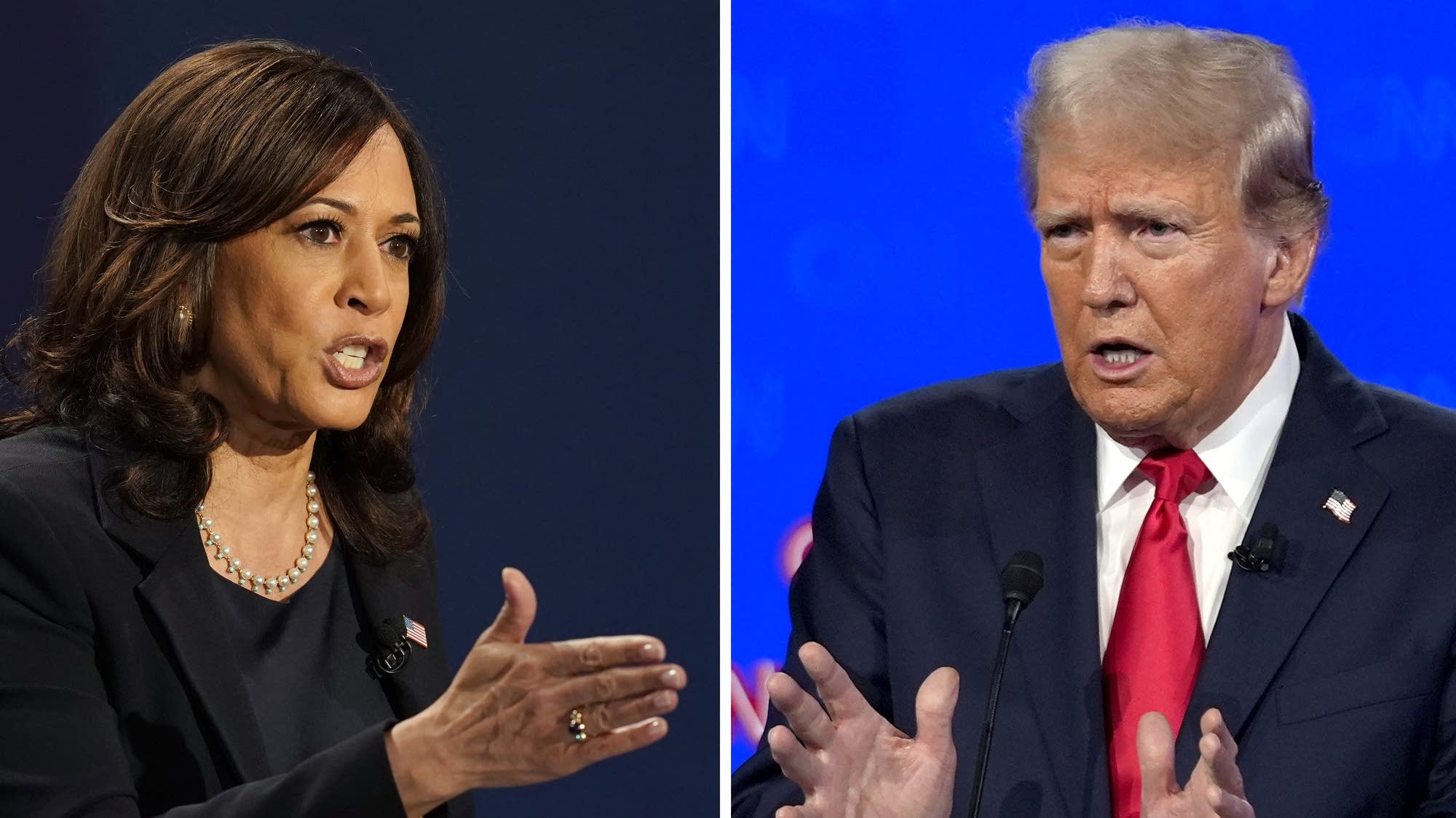
Domestic reaction in the United States
At home, the backlash was swift. Kamala Harris, speaking at a campaign event later in the day, warned that undermining alliances was “not a show of strength, but a reckless gamble with America’s security.”
“Our alliances are force multipliers,” Harris said. “When a president insults them, he doesn’t weaken foreign leaders — he weakens the United States.”
Former national security officials from both parties expressed concern that Trump’s remarks could erode intelligence cooperation at a time of heightened global instability, from ongoing conflicts in Eastern Europe to tensions in the Indo-Pacific.
Several Republican lawmakers offered muted responses, with some emphasizing that alliances “need to be modernized,” while stopping short of endorsing Trump’s language. Others, particularly those in competitive districts, privately worried that the episode reinforced perceptions of chaos and unpredictability at the top of the U.S. government.
Markets and credibility
Financial markets, already jittery amid uncertainty over trade and tariffs, reacted cautiously. Analysts noted that geopolitical trust — particularly between the U.S. and its allies — underpins everything from defense contracts to currency stability. Even the perception of a breakdown can have real economic consequences.
“This is about credibility,” said a senior analyst at a global investment firm. “When allies start questioning whether the U.S. will honor commitments or weaponize intelligence, that uncertainty gets priced in.”
The episode also revived a familiar debate: whether Trump’s confrontational style is a negotiating tactic or evidence of a deeper isolationist drift. Supporters argue that blunt rhetoric forces allies to shoulder more responsibility. Critics counter that publicly humiliating partners erodes cooperation precisely when collective action is most needed.
A pattern, not an anomaly
For many diplomats, what made the moment so alarming was not its novelty, but its familiarity. Trump has repeatedly framed alliances as burdens rather than assets, often measuring relationships through a narrow lens of immediate advantage. What changed this time, they say, was the explicit questioning of allied motives and the threat — implicit or otherwise — to core security arrangements.
“This wasn’t about trade deficits or defense spending,” said a former U.S. ambassador to Europe. “This was about loyalty and trust. And once you start questioning that, you’re in dangerous territory.”
The stakes ahead
As the White House works to contain the fallout, allied governments are recalibrating. Some European leaders are accelerating discussions about strategic autonomy, while Canada and others are quietly exploring ways to diversify intelligence and security partnerships without severing ties to Washington.
Whether the rupture becomes permanent remains unclear. Diplomacy, after all, is built on repair as much as on agreement. But officials on both sides of the Atlantic acknowledged that something fundamental has shifted.
“This may not be fatal to the alliance system,” one senior European official said. “But it is a warning — that the assumptions we have lived under for generations can no longer be taken for granted.”
For Trump, the incident may further cement his image as a disruptor unconcerned with diplomatic convention. For the United States, the risk is larger: that repeated shocks to trust could leave America increasingly isolated, even as global challenges demand cooperation.
As one Western diplomat put it, “This is not ‘America First.’ It is America alone. And history suggests that is a far more dangerous place to be.”






