Political chaos exploded inside the House of Commons after a dramatic debate over jury trials left senior Labour figures under intense pressure and triggered accusations that David Lammy had been completely exposed during the confrontation.
The fiery parliamentary clash centered around Labour’s controversial Courts and Tribunals Bill, a proposal critics say could severely limit the public’s traditional right to jury trials in England and Wales.
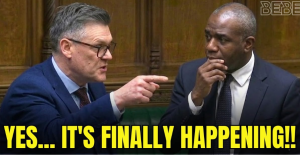
As tensions rose in Westminster, Labour backbencher Karl Turner stunned the chamber by openly criticizing key parts of the government’s plan during the bill’s second reading debate.
Turner shocked many MPs by praising the opposition’s arguments against the legislation, admitting there was “nothing” in parts of the criticism that he could disagree with.
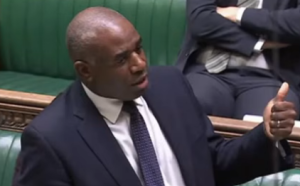
The unexpected rebellion instantly created visible discomfort for Lammy, who had strongly defended the reforms as necessary to tackle the enormous backlog currently overwhelming Britain’s Crown Courts.
According to critics inside Parliament, Lammy attempted to justify the changes using examples involving low-level theft cases, including hypothetical scenarios about stolen bottles of whiskey.
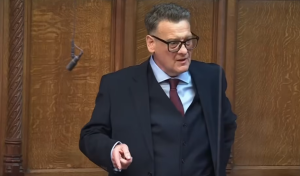
But Turner dismissed those arguments as unrealistic and misleading, saying he had never seen defendants demanding Crown Court jury trials over such minor allegations during his years working in criminal law.
The Labour MP described sections of the legislation as “unworkable, unjust, unpopular, and unnecessary,” comments that immediately intensified the political damage surrounding the bill.
Observers watching the Commons debate noted that Lammy appeared increasingly uncomfortable as criticism mounted from both opposition MPs and members of his own party.
The proposed legislation eventually cleared its first major parliamentary hurdle after MPs voted 304 to 203 in favor of allowing the bill to proceed to the next stage.
However, the result exposed growing fractures within Labour ranks, with several Labour MPs openly rebelling against the government while dozens more reportedly abstained from the vote altogether.
Supporters of the reforms insist the bill is needed to reduce delays in the justice system, where victims and defendants are often forced to wait years before their cases finally reach court.
During the emotional debate, Labour MP Charlotte Nichols revealed her own experience as a victim waiting more than 1,000 days for a case to reach trial.
Nichols argued that victims were being failed by the current system and warned that severe delays were damaging public trust in the courts and justice process across the country.
But critics of the bill claim the proposed restrictions on jury trials would barely reduce delays while weakening one of the oldest constitutional protections in British legal history.
Many opponents fear the reforms could open the door to wider reductions in jury trials in the future, arguing that once limits are accepted in some cases, broader changes may eventually follow.
The debate has now become far larger than a simple discussion about court backlogs. For many campaigners, it represents a battle over the balance of power between ordinary citizens and the state itself.
Political commentators say the backlash surrounding the bill has exposed serious tensions inside Keir Starmer’s Labour Party, with critics warning that public anger could continue growing as the legislation moves through Parliament.
Video clips from the explosive Commons debate are now spreading rapidly across social media, with viewers fiercely divided over Lammy’s handling of the crisis, and the internet is absolutely exploding over the dramatic political showdown.