Tensions erupted inside a One Nation campaign event on the eve of the crucial Farrer by-election after two ABC journalists were dramatically escorted out of the venue in a confrontation that has now triggered national political backlash.
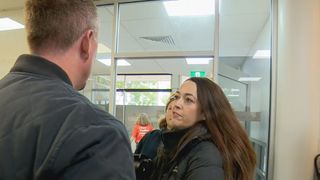
The incident unfolded on Friday night during a One Nation media event attended by party leader Pauline Hanson, chief of staff James Ashby, and candidate David Farley in the regional electorate of Farrer, located in southern New South Wales.
Footage captured by Nine News showed the two ABC reporters packing up their equipment while being escorted from the venue moments before the press conference was scheduled to begin.
As confusion unfolded, one of the journalists asked directly whether the order to remove them had come from Farley himself.
A party volunteer responded bluntly: “That doesn’t matter, come on… sweetheart, please.”
The exchange quickly became tense when one ABC staffer replied: “We are a tax-funded organisation.”
Moments later, Ashby personally intervened and instructed the journalists to leave immediately. Video footage showed him saying “bye-bye to the ABC” while ushering the pair toward the exit.
Ashby later confirmed that the decision had come from him personally. According to reports, he told the journalists their management in Canberra would understand the reason behind the move.
But the situation took an unexpected turn when Hanson herself appeared visibly confused and displeased by what had happened.
After learning the journalists were local regional ABC reporters from nearby Wodonga, Hanson questioned Ashby directly in front of cameras.
“Why, if they’re local ABC? Rural and regional?” Hanson asked.
Ashby responded: “Because they’re reporting back to ABC Canberra. They were told.”
Hanson immediately pushed back.
“They shouldn’t have gone,” she replied.
That brief exchange instantly became one of the most talked-about political moments of the campaign, with many observers pointing to visible tension between Hanson and her longtime chief of staff.
The controversy exploded just hours before voters headed to the polls in what has become one of the most dramatic by-elections Australia has seen in decades.
The Farrer seat had historically been considered one of the safest conservative electorates in the country. The Coalition had held the seat continuously since its creation in 1949.
The by-election was triggered after former Liberal leader Sussan Ley resigned following a brutal leadership defeat earlier this year.
But instead of a routine conservative victory, the contest turned into a political earthquake.
For the first time in modern history, the Liberal and National parties competed against each other in the same electorate, splintering the traditional Coalition vote and creating a massive opening for One Nation.

Polling throughout the campaign suggested One Nation candidate David Farley was in a strong position to win the party’s first-ever lower house seat in federal parliament.
Farley, a former agribusiness executive and water lobby figure, campaigned heavily on immigration, cost-of-living pressures, regional frustration, and opposition to net-zero climate policies.
His campaign also attracted controversy.
Old comments resurfaced in which Farley reportedly referred to former Prime Minister Julia Gillard as a “non-productive old cow.” Other criticism emerged over social media activity and comments about crime in Griffith, a major town within the electorate.
Despite those controversies, One Nation’s momentum continued growing throughout the campaign.
Analysts said the result reflected deep anger toward the major parties, particularly across regional Australia where voters increasingly feel ignored by Canberra.
Former Queensland premier Peter Beattie warned earlier this week that the political mood resembled the anti-establishment wave that originally fuelled Hanson’s rise in the late 1990s.
Meanwhile, the Coalition’s decision to preference One Nation ahead of independent candidate Michelle Milthorpe also generated fierce criticism.
Some strategists warned the move could backfire catastrophically and legitimize Hanson’s party even further.
The ABC expulsion controversy only intensified scrutiny on One Nation’s relationship with the media.
Critics accused the party of adopting increasingly Trump-style tactics toward journalists, particularly public broadcasters.
Online reactions were immediate and explosive.
Many commenters argued the decision to eject reporters from a public political event represented a dangerous attack on press freedom, while others noted Hanson herself appeared uncomfortable with Ashby’s aggressive handling of the situation.
Some observers suggested the confrontation exposed growing internal tensions inside One Nation about how the party should present itself as it moves closer to mainstream electoral success.
Others argued the moment reflected broader populist distrust of traditional media institutions, a trend that has become increasingly visible across Western democracies.
The ABC itself has not publicly escalated the incident, but the footage circulated rapidly across Australian television and social media throughout Friday night and Saturday morning.
For Hanson, the timing could hardly have been more sensitive.
The by-election was being watched nationally as a test not only for One Nation, but also for new Liberal leader Angus Taylor and Nationals leader Matt Canavan.
Both parties now face serious questions about whether the conservative movement in Australia is fragmenting beyond repair.
By Saturday night, those fears appeared justified.
One Nation officially secured victory in Farrer, delivering the party its first seat in Australia’s House of Representatives and shattering more than seven decades of Coalition dominance in the electorate.
Political commentators immediately described the result as historic.
Reuters reported that the victory reflected a broader international surge in populist and anti-establishment movements, while Australian analysts warned the outcome could permanently reshape conservative politics nationwide.
Speaking after the win, Hanson celebrated the result as proof that Australians were demanding change and promised that One Nation would aggressively target additional seats across the country.
“We’re coming after those other seats,” Hanson declared after the historic victory.
But even amid celebration, the image of ABC journalists being escorted from a campaign event continued dominating headlines.
For many Australians, the moment symbolized a deeper question now hanging over the country’s political future: as outsider parties gain power, how far will they go in confronting the institutions they believe have worked against them for years?






