TRUMP LOSES IT AFTER JIMMY KIMMEL DESTROYS HIM ON LIVE TV
Jimmy Kimmel didn’t just roast Donald Trump on live television — he exposed him. What began as another late-night monologue quickly turned into one of the most talked-about moments in modern American media, as Kimmel calmly dismantled Trump’s attacks and revealed a deeper pattern of intimidation, control, and fear of criticism.
:max_bytes(150000):strip_icc():focal(745x256:747x258)/Jimmy-Kimmel-Molly-McNearney-Trump-110925-485dc36e83f1480d8bf34d04562153bb.jpg)
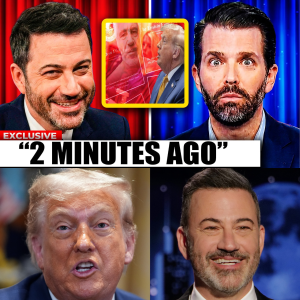
The turning point came after Trump’s allies pressured ABC to suspend Jimmy Kimmel Live following repeated jokes aimed at the president. When Kimmel returned to the air on September 23, 2025, many expected him to soften his tone. Instead, he walked out to a standing ovation and delivered an 18-minute monologue that reframed the entire controversy. “This show is not important,” Kimmel said. “What’s important is that we live in a country that allows us to have a show like this.” The line instantly went viral.
Rather than lashing out, Kimmel chose restraint and clarity. He reminded viewers that free speech isn’t a liberal value or a conservative one — it’s an American principle. He even thanked conservatives who defended his right to speak, exposing Trump as the true outlier. That moment cut deeper than any insult because it stripped away Trump’s claim to be a defender of free expression.
Trump’s reaction was immediate and explosive. Within minutes of the episode airing, he posted angry messages on Truth Social, attacking Kimmel’s talent, ratings, and network. He threatened lawsuits, bragged about extracting money from media companies in the past, and openly suggested that ABC should be punished for bringing Kimmel back. In trying to deny intimidation, Trump proved it.

The numbers told a story Trump couldn’t spin. Kimmel’s return episode became the most-watched regular broadcast in the show’s history, drawing over 26 million viewers across platforms. The monologue alone reached more than 15 million views on YouTube in 24 hours. Far from fading, Kimmel’s audience grew — a direct contradiction of Trump’s claims.
What made the moment so powerful wasn’t volume or rage, but composure. Kimmel didn’t beg for sympathy or escalate the fight. He framed Trump’s behavior as something larger than a personal feud: an attempt to silence critics, intimidate institutions, and punish dissent. By doing so, he shifted the conversation from comedy to democracy.
Trump’s obsession only intensified in the weeks that followed. He continued attacking Kimmel and other late-night hosts, celebrating canceled shows and rooting for more firings. Each outburst reinforced the same image: a president unable to tolerate ridicule, using power to crush voices he can’t control. The louder Trump got, the clearer Kimmel’s point became.
In the end, this wasn’t just a late-night TV moment. It was a cultural reckoning. A comedian stood on national television and defended free speech without shouting, threatening, or insulting — and in doing so, he exposed how fragile Trump becomes when faced with truth and laughter. Trump tried to silence the joke. Instead, he became it.