Ottawa Faces Renewed Trade Questions After U.S. Ambassador’s Tariff Remarks Stir Cross-Border Concerns
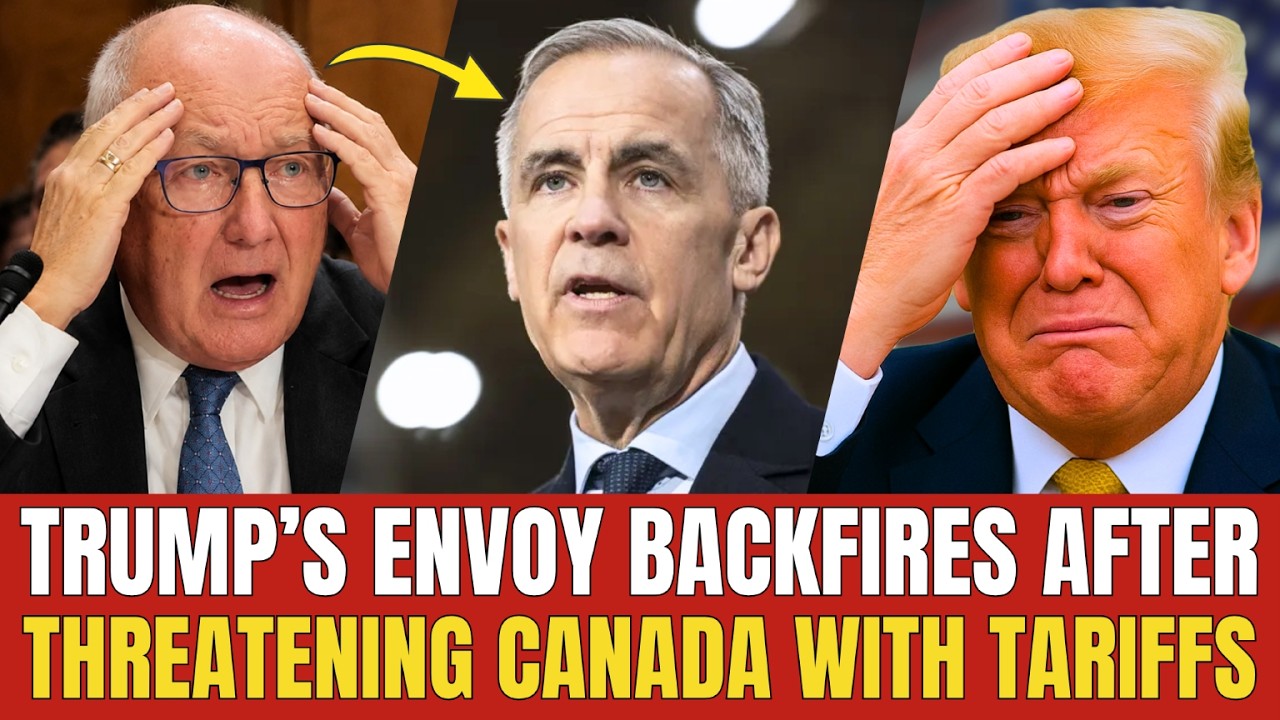
Political and business leaders in Canada are closely examining the implications of recent comments from the United States ambassador to Canada, remarks that have intensified debate over the future of North American trade relations ahead of the scheduled 2026 review of the Canada-United States-Mexico Agreement (CUSMA).
The controversy emerged after remarks attributed to Pete Hoekstra suggested that Canada should not expect substantial exemptions from the tariff policies being pursued by the administration of Donald Trump. The comments immediately attracted attention in Ottawa, where policymakers continue to assess the long-term implications of growing uncertainty in bilateral trade relations.
At the centre of the Canadian response is Mark Carney, whose government has been attempting to balance economic cooperation with the United States while simultaneously pursuing broader trade diversification efforts.
The discussion arrives during a period of heightened sensitivity for businesses operating across the Canada-U.S. border. Integrated supply chains remain deeply embedded in sectors including automotive manufacturing, energy production, natural resources, and industrial materials, making policy uncertainty a significant concern for investors and corporate planners.
For many industry observers, the ambassador’s remarks were notable not because tariffs exist, but because the comments appeared to frame them as a durable element of American trade policy rather than a temporary negotiating tool. That distinction quickly became a focal point of discussion among market participants.
Canada and the United States continue to move billions of dollars in goods across the border every day. Automotive components routinely cross the border multiple times before final assembly, while American refineries continue to rely heavily on Canadian crude oil and other resource exports.
According to the transcript, concerns intensified because many businesses had previously assumed that tariff measures were primarily intended as leverage ahead of future trade negotiations. The suggestion that such policies could remain in place for an extended period introduced new questions about long-term investment planning.
The timing of the remarks also coincided with a separate dispute involving Canada’s broadcasting and streaming regulations. The Canadian Radio-television and Telecommunications Commission announced an expansion of online streaming contribution requirements that would affect several major foreign digital platforms operating in Canada.
Under the proposed framework described in the transcript, large streaming companies would contribute a portion of Canadian-generated revenue toward domestic media production. Canadian regulators argued that the initiative would help support Canadian programming as traditional broadcasting revenues continue to decline.
The proposal immediately drew criticism from several American industry organizations. Some argued that the policy could create concerns under existing trade arrangements and potentially become part of broader discussions between Ottawa and Washington.
At the same time, Pierre Poilievre warned that additional trade disputes could expose Canadian industries to further economic pressure. His comments reflected broader concerns about sectors already dealing with uncertainty surrounding tariffs and future trade negotiations.


Meanwhile, Carney’s approach has attracted attention for focusing heavily on discussions with investors, financial institutions, and major American corporations. According to the transcript, the prime minister has increasingly emphasized engagement with business leaders rather than relying solely on public political exchanges.
Supporters of that strategy argue that it reflects an effort to reassure markets that Canada remains committed to predictable and rules-based economic governance despite growing uncertainty in Washington. The approach has also been viewed as an attempt to distinguish Canada’s investment environment from the volatility associated with ongoing tariff debates.
Economic analysts cited in the discussion suggested that prolonged uncertainty can itself become a significant business cost. Manufacturers may postpone expansion projects, procurement teams may reassess sourcing decisions, and institutional investors may begin pricing political risk into long-term forecasts.
The automotive sector was highlighted as one of the industries most exposed to potential disruption. Because production networks are highly integrated between Ontario and several American states, even modest increases in uncertainty can have implications for production planning and operating costs.
Beyond manufacturing, the dispute increasingly involves major technology and entertainment companies with substantial influence in Washington. As streaming platforms become more directly involved in trade discussions, the range of stakeholders affected by Canada-U.S. tensions continues to expand.
The transcript also emphasized Canada’s continuing importance to the American economy. Canadian exports remain critical in areas such as energy, potash, industrial materials, and numerous manufacturing inputs. That interdependence has created a complicated dynamic in which both countries retain significant leverage while remaining deeply connected economically.
Observers noted that Carney’s government has simultaneously accelerated discussions involving Europe and Asia. Initiatives related to liquefied natural gas, critical minerals, nuclear energy, and defence manufacturing have increasingly been framed as part of a broader diversification strategy.
In Ottawa, these developments have prompted renewed debate across Canada’s political landscape regarding the country’s long-term economic direction. While critics question whether diversification can sufficiently offset dependence on the U.S. market, supporters argue that reducing exposure to political volatility has become an economic necessity.
The broader political challenge is that uncertainty now extends beyond individual tariff measures. Businesses are increasingly focused on the overall predictability of North American trade policy and the outcome of the upcoming CUSMA review process.
As preparations continue for future negotiations, both governments face growing pressure from industries that depend on stable cross-border commerce. The ambassador’s remarks have therefore become more than a diplomatic controversy; they have become part of a larger conversation about investment confidence, economic integration, and the future of Canada-U.S. relations.
For now, Ottawa has offered a carefully measured response while continuing to emphasize economic stability and international diversification. Yet with trade disputes unresolved and negotiations still evolving, the debate remains unresolved within Canada’s broader political landscape.






