Trump’s Late-Night Grammy Meltdown Reveals a Familiar Political Reflex
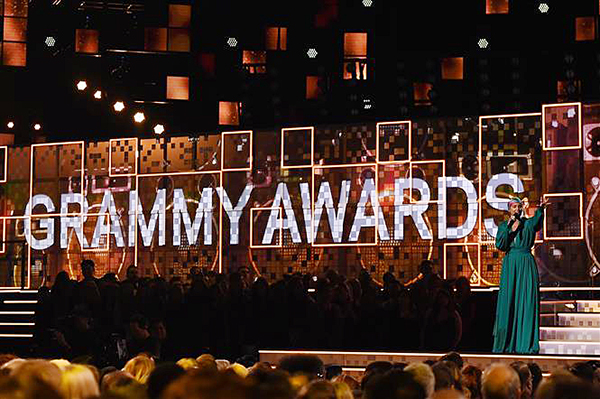
In the early hours of Monday morning, as the final applause from the Grammy Awards faded on the West Coast, Donald J. Trump was awake on the East Coast, posting furiously on social media. At approximately 1 a.m., the former president unleashed a lengthy rant attacking the Grammys, its host Trevor Noah, and the broader entertainment industry that, once again, had placed him squarely in its crosshairs.
The trigger was a joke — a pointed one, but hardly unprecedented in the history of award-show satire.
During his opening monologue, Noah quipped that pop star Billie Eilish’s Grammy win was coveted by artists “almost as much as Trump wants Greenland,” before adding a sharper line: “Because Epstein’s island is gone, he needs a new one to hang out with Bill Clinton.” The audience laughed. Trump did not.
Within hours, Trump denounced the awards show as “virtually unwatchable,” labeled Noah “a total loser,” and threatened legal action, claiming the joke falsely accused him of visiting Jeffrey Epstein’s private island. He insisted he had “never been to Epstein Island, nor anywhere close,” and warned that he would instruct his lawyers to sue Noah and CBS for defamation.
The episode — a comedian’s jab followed by an overnight presidential tirade — was entirely predictable. But it was also revealing, offering a clear window into Trump’s enduring political instincts, his fragile relationship with satire, and the contradictions at the heart of his movement’s rhetoric on free speech.
Comedy, Power, and the Thin Skin Paradox
For nearly a decade, Trump and his allies have argued that “woke culture” and liberal elites pose an existential threat to comedy. Conservative commentators regularly claim comedians are being silenced, censored, or “canceled” for offending progressive sensibilities. Trump himself has framed his political rise as a backlash against cultural policing and speech restrictions.
Yet when faced with mockery directed at him, Trump’s response has been remarkably consistent: anger, personal insults, and threats of legal retaliation.
This pattern is not new. He has publicly attacked comedians ranging from Jimmy Kimmel and Stephen Colbert to Saturday Night Live cast members, often demanding firings or cancellations. What sets the Grammy episode apart is its timing and intensity. Trump was not responding during a campaign rally or a daytime media appearance. He was reacting, in real time, to an awards show watched by millions — a reminder that cultural relevance, not electoral politics, remains one of his deepest fixations.
Comedy, after all, strips power of its armor. It reframes authority as absurdity. And for a political figure whose brand is built on dominance, grievance, and spectacle, being reduced to a punchline can feel more threatening than policy criticism.
The Legal Bluff

Trump’s threat to sue Trevor Noah also fits a familiar pattern. While he has repeatedly vowed to pursue defamation lawsuits against critics, such cases rarely materialize and almost never succeed.
Public figures face an extraordinarily high legal bar in defamation claims, particularly when the disputed speech is clearly framed as satire. Courts have consistently ruled that jokes, parody, and rhetorical hyperbole are protected forms of expression under the First Amendment.
Ironically, any serious lawsuit would likely expose Trump to legal discovery, including depositions and document requests — a process that could invite renewed scrutiny of his past associations with Epstein, a subject Trump has sought to downplay while simultaneously distancing himself from others implicated in the scandal.
Legal experts note that threatening lawsuits can function less as a genuine legal strategy and more as a political intimidation tactic, designed to signal toughness to supporters and deter criticism. In this case, it also served as a distraction — shifting attention from the substance of the joke to Trump’s outrage over it.
MAGA’s Cultural Counterattack
Trump was not alone in his fury. Senior White House communications director Steven Cheung quickly lashed out on social media, calling Noah a “giant loser” and mocking his tenure on The Daily Show. Trump adviser Alex Bruesewitz dismissed the Grammys as “irrelevant” while simultaneously criticizing its host and winners at length.
The contradiction was striking. If the Grammys were truly irrelevant, why were so many Trump allies watching closely enough to catalog specific jokes, impressions, and acceptance speeches?
The backlash extended beyond Noah’s Epstein joke. MAGA figures also bristled at Noah’s mockery of Trump’s recent public friendliness with Nicki Minaj, a superstar rapper who has increasingly aligned herself with conservative causes and appeared alongside Trump-friendly figures. Noah joked that Minaj was “still at the White House with Donald Trump discussing very important issues,” before delivering a satirical Trump impression.
To Trump’s allies, the joke was framed as disrespectful. To critics, the reaction underscored a recurring irony: a political movement that prides itself on toughness, irreverence, and cultural defiance often reacts with extraordinary sensitivity when confronted with ridicule.
Artists Take the Stage
What made the night particularly galling for Trump was that Noah’s jokes were only part of a broader cultural rebuke.
Several Grammy winners used their acceptance speeches to criticize Immigration and Customs Enforcement (ICE) and the Trump administration’s immigration policies. Bad Bunny declared, “We are not savages. We are not animals. We are humans, and we are Americans.” Billie Eilish urged audiences to keep “fighting and speaking up.” Justin and Hailey Bieber wore “ICE Out” pins in silent protest.
These moments mattered not because they changed policy, but because they reinforced a long-standing divide: Trump commands fierce loyalty among his base, but he remains deeply unpopular within much of the cultural mainstream. For an entertainer-turned-politician who once thrived on celebrity validation, that rejection continues to sting.
The Predictable Loop
Trump’s Grammy outburst followed a familiar loop: public mockery, personal grievance, escalation, and a reassertion of victimhood. The former president cast himself not as one of the most powerful figures in modern American politics, but as the target of unfair, “defamatory” attacks by elites who supposedly fear him.
This reflex has served him well politically in the past. Outrage energizes his supporters, dominates news cycles, and reframes cultural criticism as persecution. But it also reveals a limitation: Trump has never learned to ignore satire, and he has never learned to laugh at himself.
In a political environment saturated with spectacle, that inability may be his most human — and most exploitable — flaw.
By Monday morning, the Grammys had moved on. The jokes had landed, the awards had been handed out, and the cultural conversation had shifted. Trump, however, was still posting, still seething, still proving once again that when comedy comes for him, he cannot help but respond.
And in doing so, he ensures the punchline keeps repeating.






