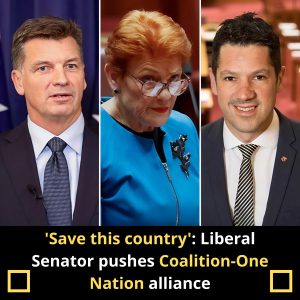
🚨 LABOR MINISTER BLASTS PAULINE HANSON OVER “CONFUSED” HOUSING POLICY 🇦🇺🏠🔥
A fresh political battle has erupted in Canberra after a senior Labor minister launched a direct attack on Pauline Hanson and One Nation, accusing the party of presenting what Labor describes as a confusing and inconsistent position on housing policy.
The clash comes at a time when housing affordability remains one of the most important issues facing Australians.
With home prices remaining high, rents continuing to climb, and many young Australians struggling to enter the property market, housing has become a major political battleground.
And now the debate is becoming even more heated.


The controversy emerged after recent discussions surrounding One Nation’s proposals on foreign ownership and housing availability.
Labor ministers argue that the party’s position has shifted multiple times, creating uncertainty about exactly who would be affected by proposed reforms.
According to government critics, voters deserve clear answers when it comes to policies that could affect property ownership, investment, and housing supply.
Labor representatives have suggested that changing explanations from One Nation figures raise questions about how practical the proposals would be if implemented.
Supporters of One Nation strongly reject those claims.
They argue the party has consistently focused on increasing housing availability for Australians and prioritizing local residents over foreign investors.
Many supporters believe the criticism is politically motivated rather than policy-driven.
In their view, One Nation is being targeted because it is gaining support among voters frustrated with housing affordability and the rising cost of living.
That disagreement has quickly expanded into a much broader debate.
For many Australians, the argument is no longer simply about One Nation.
It is about who has the most credible plan to address one of the country’s most serious economic challenges.
Housing affordability has become a defining issue across Australia.
Young families face growing obstacles to home ownership.
Renters continue dealing with rising costs.
Regional communities are experiencing increased pressure as population growth and housing shortages collide.
These concerns have fueled growing public frustration with both major parties.
As a result, alternative political movements have found larger audiences.


One Nation has sought to capitalize on those frustrations by promoting tougher policies regarding foreign ownership and housing access.
The party argues that Australians should have priority in the housing market and that government policy should focus on improving affordability for local residents.
Labor, meanwhile, maintains that housing solutions require a broader strategy involving increased supply, infrastructure investment, and support for new construction.
The dispute highlights a growing divide over how Australia’s housing crisis should be addressed.
Some voters favor stronger restrictions and tougher controls.
Others believe increasing supply remains the most effective long-term solution.
The political stakes are becoming increasingly significant.
Housing consistently ranks among the top concerns for Australian voters.
Any party perceived as offering a credible solution stands to gain political support.
Any party perceived as lacking clarity risks criticism from both opponents and the public.
That reality explains why the latest exchange has generated so much attention.
Neither side appears willing to back down.
Labor continues questioning the consistency of One Nation’s proposals.
One Nation continues accusing the government of failing to solve the housing crisis despite years in office.
The result is a political confrontation that extends far beyond a single policy disagreement.


As the war of words intensifies, many Australians are paying less attention to the political attacks and more attention to the practical outcomes.
They want lower housing costs.
They want greater affordability.
And they want confidence that future generations will still have a realistic path to home ownership.
Those expectations are placing enormous pressure on every political party.
The latest clash between Labor and One Nation demonstrates just how central housing has become to Australia’s political future.
But one thing is becoming increasingly clear.
The battle over housing is no longer simply about property policy—it is rapidly becoming one of the defining political contests that could shape Australia’s next election and the direction of the country for years to come.