Trump, Epstein Files, and a Nation on Edge: What the Latest Disclosures Reveal

WASHINGTON — The latest tranche of documents released from the federal government’s long-running investigation into Jeffrey Epstein has reignited a political firestorm around former President Donald J. Trump, raising renewed questions about transparency, accountability, and the use of government power at a moment when public trust in institutions is already deeply strained.
The documents, released Friday by the Department of Justice, represent roughly three million records connected to Epstein’s network of associates, communications, and financial dealings. Federal officials acknowledge the disclosure is incomplete. Internal estimates suggest millions more documents remain unreleased, potentially totaling tens of millions of pages once attachments and multipage records are accounted for.
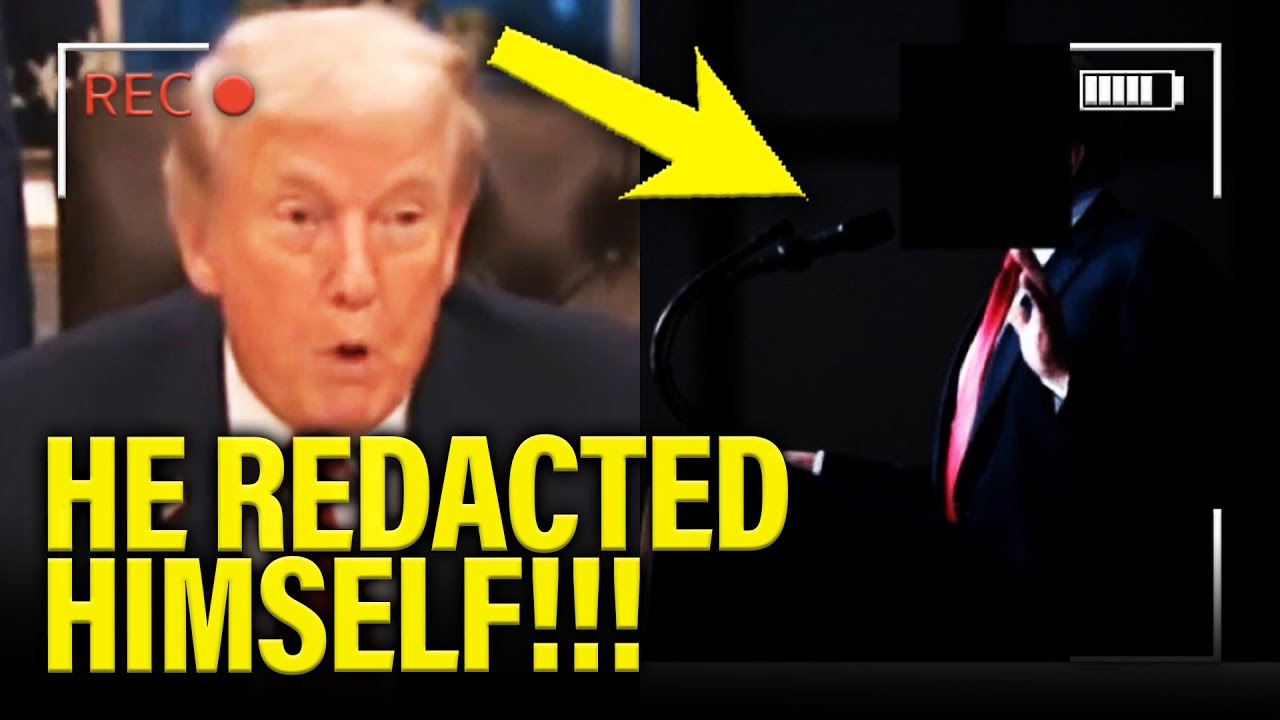
What has drawn particular attention is the appearance of heavily redacted photographs and communications that critics say obscure, rather than clarify, the identities of prominent figures — including Mr. Trump himself. In one image circulated widely online, a face appears blacked out in a manner critics describe as “sloppy,” leaving visible physical features that many say clearly identify the former president. The Justice Department has not commented on the rationale for the redaction or whether it was performed at the request of any individual.
A Familiar Name, Repeated Often
According to a review of the newly released material, Mr. Trump’s name appears thousands of times across the Epstein records. Legal experts caution that being named in such files does not, by itself, indicate criminal conduct. Still, the frequency and context of references have fueled renewed scrutiny, particularly given Mr. Trump’s history of public statements about Epstein — including his claim that he severed ties years before Epstein’s legal troubles became public.
Speaker of the House Mike Johnson reiterated that position in a weekend interview, stating that Mr. Trump had “nothing to hide” and had been candid both publicly and privately. “Appearing in the Epstein files does not imply wrongdoing,” Mr. Johnson said, echoing a point made by multiple legal analysts.
Yet critics argue that the scale of redactions, combined with the partial nature of the release, suggests an ongoing effort to control political damage rather than maximize transparency. Advocacy groups have called for an independent review of the redaction process, noting that the Justice Department has not provided a detailed explanation of its criteria.
International Repercussions
The disclosures have had consequences beyond U.S. borders. In Britain, Lord Peter Mandelson, a former U.K. ambassador to the United States, resigned from the Labour Party after earlier Epstein-related documents surfaced containing personal photos and correspondence. In Slovakia, the prime minister’s national security adviser stepped down following the emergence of communications linking him to Epstein.
The files also include extensive references to foreign leaders and intelligence-related claims. More than 1,000 mentions of Russian President Vladimir Putin appear in the documents, including emails in which Epstein claimed to be arranging or declining meetings connected to high-level conferences in Russia. In one 2013 email to Ehud Barak, the former prime minister of Israel, Epstein wrote that Mr. Putin had requested a private meeting in St. Petersburg — a claim that has not been independently verified.
British tabloids, citing unnamed intelligence sources, have speculated that Epstein’s operation functioned as a foreign “honey trap.” No U.S. intelligence agency has publicly endorsed that conclusion, and experts caution against drawing firm conclusions from Epstein’s self-described claims.
Domestic Distraction Amid Economic Anxiety
As the Epstein revelations dominate headlines, the Trump administration — now back in power — faces growing economic unease at home. Recent consumer confidence surveys show historically low public optimism, with economists noting that sentiment is weaker than at comparable points in any presidency since the early 1960s.
At the same time, investigative reporting by The Wall Street Journal revealed that just days before Mr. Trump’s inauguration, entities connected to an Abu Dhabi royal family agreed to purchase a 49 percent stake in World Liberty Financial, a firm linked to the Trump family, for $500 million. Documents reviewed by the Journal show that roughly $170 million flowed to Trump-affiliated entities, while additional funds went to partners associated with the venture.
National security analysts have raised alarms about subsequent U.S. decisions to approve the transfer of advanced semiconductor technology to the United Arab Emirates — transfers that previous administrations had blocked over concerns the technology could reach China. The administration has denied any quid pro quo, but the timing of the deal has intensified scrutiny.
The Kennedy Center Controversy
Another flashpoint has been Mr. Trump’s handling of the John F. Kennedy Center for the Performing Arts. After dismissing the existing board and installing new leadership, the president announced plans to close the center for up to two years, citing the need for renovation and fiscal reform.
Financial filings, however, show that the Kennedy Center — a nonprofit institution — reported positive net operating income in its most recent year. Arts organizations and former staff members say the closure followed mass resignations and cancellations by performers, leaving the center struggling to operate.
Senator Andy Kim of New Jersey likened the situation to Mr. Trump’s history with Atlantic City casinos. “We in New Jersey know what happens when he takes over a major institution,” Mr. Kim said in a statement. “Crash and burn.”
Power, Pressure, and the Justice System
The Epstein disclosures have also intersected with concerns about political influence over federal law enforcement. Todd Blanche, a former personal attorney to Mr. Trump and now a senior Justice Department official, has dismissed suggestions that presidential social media posts calling for prosecutions represent official policy.
“They are not priorities,” Mr. Blanche said in a televised interview. Civil liberties groups dispute that characterization, pointing to recent cases involving immigration enforcement and the removal of children from families as evidence of politicized decision-making.
An Unsettled Moment
Whether the unreleased Epstein documents will significantly alter the political landscape remains unclear. What is evident is that the combination of partial disclosures, opaque redactions, international fallout, and domestic economic anxiety has left the country in a state of heightened tension.
For now, the Justice Department says additional releases are forthcoming. Critics are skeptical. Supporters of the president say the controversy is politically motivated. And the American public, confronted once again with allegations involving wealth, power, and secrecy, is left waiting — not just for more documents, but for clearer answers about who governs, and in whose interest.






