TRUMP LOSES IT AFTER JIMMY KIMMEL EXPOSES JD VANCE ON LIVE TV — A HUMILIATION THAT WENT VIRAL
Jimmy Kimmel turned a routine late-night monologue into a political earthquake after dismantling Vice President JD Vance live on television, triggering a furious reaction from Donald Trump and igniting a viral media storm. What began as Vance’s attempt to downplay government pressure on Kimmel quickly unraveled when the host used clips, ratings data, and sharp timing to expose what many viewers saw as blatant gaslighting. Within minutes, Kimmel reframed the narrative, positioning Vance not as a defender of free speech, but as its most awkward apologist.
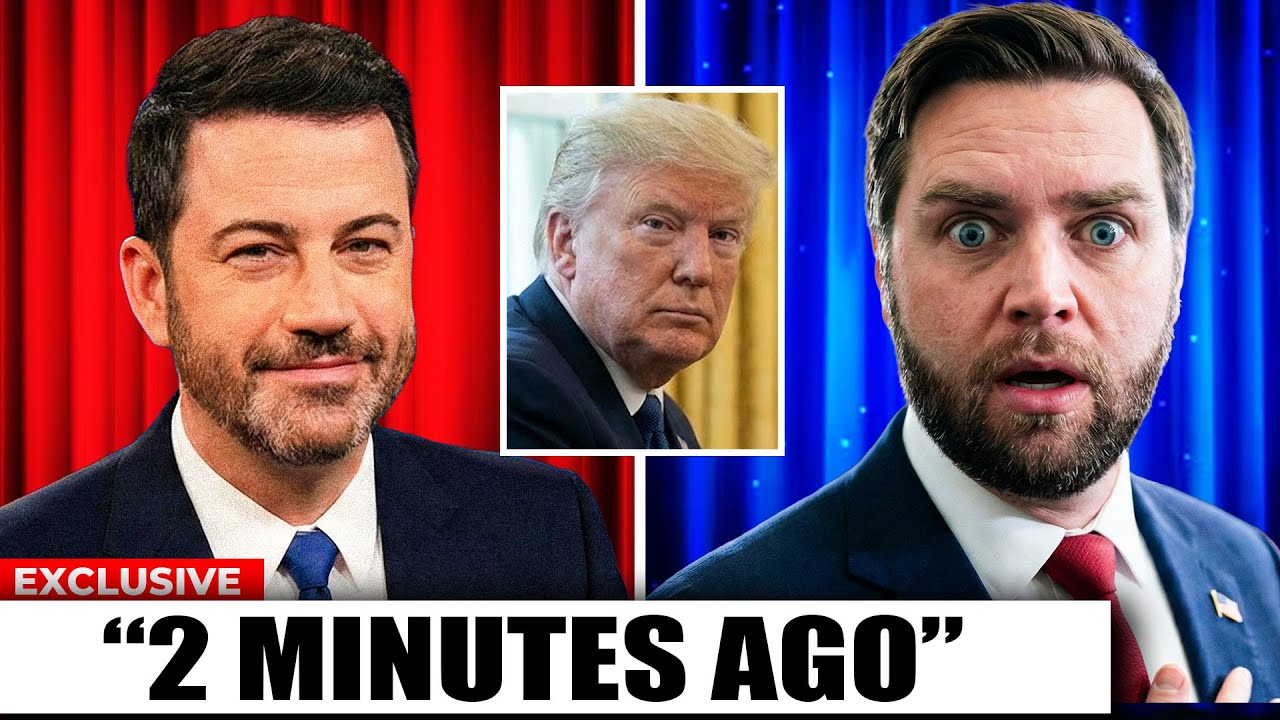
The clash traces back to Vance’s Fox News appearance, where he claimed Jimmy Kimmel Live had been suspended or dropped by stations simply because of “terrible ratings.” Kimmel responded by airing the clip and calmly presenting the facts: the show had just returned to full national broadcast, and its comeback episode delivered the highest ratings in the program’s history. By letting evidence speak louder than outrage, Kimmel made Vance’s defense collapse under its own weight.
Then came the moment that sealed it. Kimmel unveiled a nickname that instantly stuck, branding Vance as “Vice President Maybelline,” a reference to long-running internet speculation about his eyeliner. The audience erupted, not just because it was funny, but because it symbolized something larger. In one stroke, Kimmel reduced a sitting vice president’s media strategy to a punchline, transforming Vance from a culture-war messenger into a meme with legs across social media.
Ratings turned into the most brutal weapon. While Vance mocked Kimmel’s popularity, Kimmel revealed the numbers: millions of viewers on television, tens of millions more across YouTube and social platforms in less than 24 hours. The contrast was devastating. As Kimmel’s audience surged, polling showed the Trump–Vance administration sinking to historically low approval levels, making Vance’s attack on “bad ratings” look delusional rather than defiant.

Trump’s response only made matters worse. Instead of addressing the substance, he lashed out online, attacking Kimmel, defending Vance, and insisting no pressure had ever been applied to broadcasters. The contradiction fueled the story. If nothing happened, critics asked, why the rage? Media analysts noted that Trump’s inability to ignore the segment confirmed Kimmel’s core point: calm exposure is far more destabilizing than shouting matches.
By the next morning, the damage was done. “Vice President Maybelline” was trending, clips were everywhere, and JD Vance’s attempt to rewrite reality had backfired spectacularly. The episode underscored a familiar pattern in modern politics: when power tries to bully the narrative, a well-timed joke backed by facts can flip the entire frame. Trump didn’t just lose his temper — he lost control of the moment.