By XAMXAM
For decades, American late-night television has operated under an unspoken contract: the jokes may sting, but the posture remains playful. On Tuesday night, that contract was deliberately set aside.

What aired was not a punchline-driven monologue or a barrage of satirical impressions. It was a performance constructed to feel like an intervention—quiet, procedural, and unnervingly slow. Stephen Colbert, usually a master of escalation through humor, chose instead to dismantle the familiar rhythms of his show and replace them with something closer to a public reckoning.
The segment, framed as a dramatized response to newly released archival material related to Jeffrey Epstein, was built around a simple premise: that the public conversation surrounding powerful figures and scandal has become so hedged, so careful, that it risks becoming meaningless. Colbert’s target was not just any individual denial, but the broader culture of redaction, delay, and strategic ambiguity that often follows revelations involving elites—including Donald Trump, whose past associations with Epstein have long been a subject of public debate, speculation, and denial.
From the moment Colbert walked onstage without music, the message was clear. This was not entertainment as usual. He spoke without flourish, describing how massive document releases can paradoxically obscure more than they reveal—burying the public in volume while narrowing access to clarity. The studio audience, conditioned to laugh on cue, instead fell into an uneasy attentiveness.
What followed was not a claim of new proof, nor an assertion of guilt. Colbert was careful—almost conspicuously so—to frame what he showed as illustrative rather than adjudicative. A photograph, a timeline, a handwritten note were presented not as verdicts, but as challenges to a familiar defense: distance. The argument was not “this proves everything,” but “this makes the old story harder to sustain.”
That distinction mattered. In an era when misinformation spreads faster than fact-checks, Colbert avoided the trap of certainty. He did not allege crimes on air. He questioned narratives. He asked why proximity had so often been minimized, why memory failures and casual dismissals had become default responses whenever Epstein’s circle was discussed.
The audience reaction—audible gasps, a collective intake of breath—was less about shock at any single image than about the tonal shift. Late night, long dismissed as unserious, had adopted the cadence of an evidentiary hearing. The laughter that usually cushions discomfort was absent. What remained was the unsettling realization that humor had been doing more work than anyone cared to admit.
Colbert’s most pointed moment did not involve any visual at all. It came when he addressed the idea of patience. Viewers, he noted, are repeatedly told to wait—for investigations to conclude, for context to emerge, for institutions to speak. Patience, he suggested, becomes a shield when it is demanded only of the public, never of power.
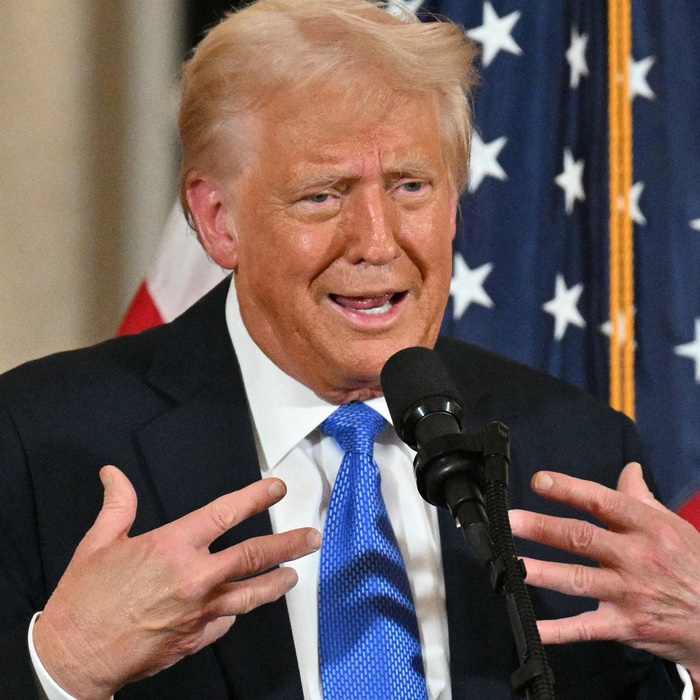
That critique resonated beyond the studio. Within hours, clips of the segment circulated widely, framed by supporters as a breakthrough and by critics as reckless theater. Trump, predictably, responded not to the substance but to the spectacle—attacking Colbert, questioning motives, and portraying the segment as a partisan attack rather than a challenge to transparency. The reaction itself reinforced the segment’s thesis: that scrutiny is often met not with answers, but with counteroffensives.
What made the moment culturally significant was not whether Colbert had “unlocked” anything in a literal sense. He had not. No sealed archive was suddenly made public on live television. What he unlocked was something less tangible and perhaps more consequential: permission. Permission to treat late-night platforms as spaces for sustained moral inquiry, not just satire. Permission to slow down, to read aloud, to let silence replace punchlines.
There is risk in that choice. When entertainers adopt the language of accountability, they invite accusations of overreach. Colbert seemed aware of this. He repeatedly emphasized that the role of judgment belongs to courts and investigators, not comedians. His argument was narrower and sharper: that the public deserves coherence, and that incoherence, when repeated long enough, becomes a form of deception.
The segment also underscored a deeper shift in media ecology. Trust in institutions has eroded, but attention has not. Figures like Colbert now operate in a strange middle ground—simultaneously dismissed as “just comedians” and watched by millions seeking clarity. When official channels hedge, the vacuum is filled elsewhere.
By the time Colbert stepped away from his desk, leaving the metaphorical “safe” open, the message was unmistakable. This was not about proving a case. It was about refusing to close it prematurely. In that sense, the most radical act of the night was not revelation, but insistence.
Insistence that some questions do not expire. Insistence that proximity matters. Insistence that silence, especially from the powerful, is not neutral.
Late-night television did not become journalism that evening. But it did something arguably more disruptive. It reminded viewers that accountability does not begin with certainty. It begins with refusing to look away.







