🔥 BREAKING: COLBERT PLAYS TRUMP’S MOST DAMAGING MOMENTS — THEN RUNS THEM BACK AGAIN FOR MAXIMUM DAMAGE ⚡
In the crowded arena of late-night television, where political commentary often relies on speed, satire, and exaggeration, Stephen Colbert has at times employed a quieter, more deliberate technique. Instead of sharpening the joke, he has slowed the moment down. Instead of adding commentary, he has simply repeated the words. In a recent breakdown of Donald J. Trump’s most controversial statements, Colbert demonstrated how repetition itself can function as a form of accountability.
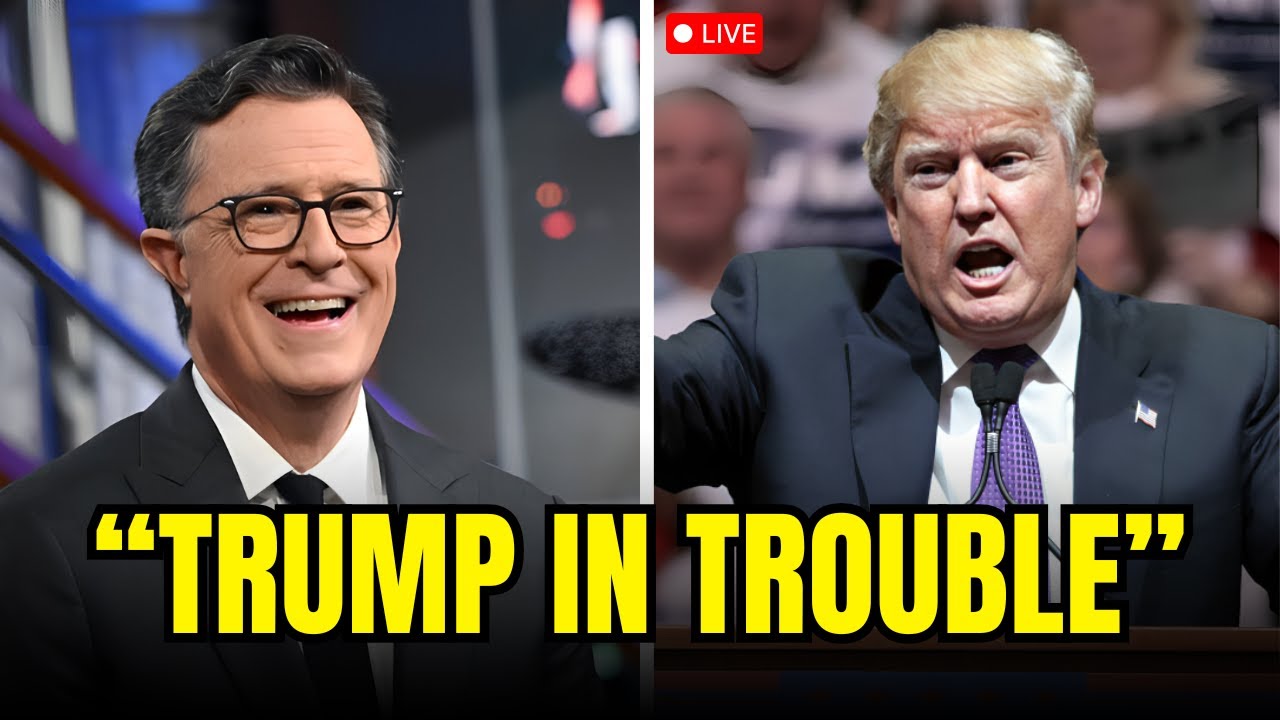
The segment drew from four episodes that have come to define Mr. Trump’s presidency in the public imagination: his response to the 2017 violence in Charlottesville, the release of the Access Hollywood tape during the 2016 campaign, the altered Hurricane Dorian weather map in 2019, and his declaration during the early days of the Covid-19 pandemic that he took “no responsibility at all.” Each moment was already familiar. What changed was how they were presented.
Colbert did not rush through the clips. He played them once, paused, and then played them again—sometimes more slowly, sometimes without commentary at all. The effect was striking. The audience reactions shifted from laughter to silence, from surprise to recognition. Hearing the words a second time stripped away the defenses that often accompany first exposure: claims of misinterpretation, context, or media bias.
The first example revisited August 2017, after a white supremacist rally in Charlottesville, Va., turned deadly. Asked to condemn the violence, Mr. Trump said there were “very fine people on both sides.” When Colbert replayed the remark, the studio fell quiet. There was no punchline to soften the impact, no framing beyond the president’s own words. By repeating the phrase, Colbert underscored what many critics had argued at the time: that moral equivalence, once stated plainly, could not be walked back by later clarifications.
The same approach was applied to the Access Hollywood tape, in which Mr. Trump was heard boasting about sexual assault. The recording, released weeks before the 2016 election, had already caused widespread outrage. Yet Colbert insisted that the audience listen again. Played a second time, more slowly, the language sounded less like bravado and more like admission. “That’s not locker-room talk,” Colbert said afterward. “That’s a confession.” The repetition transformed a scandal into something more enduring—a record that resisted reinterpretation.
In September 2019, Hurricane Dorian threatened the southeastern United States. After incorrectly stating that Alabama was at risk, Mr. Trump refused to acknowledge the error and instead displayed a weather map altered with a black marker to include the state. Colbert showed the image once, then again, zoomed in. The joke wrote itself, but the repetition made the underlying point clearer: a president unwilling to admit a minor mistake had chosen visual distortion over correction. The image, replayed, became emblematic of a broader pattern.
The fourth moment came from March 2020, as Covid-19 spread rapidly and testing failures mounted. Asked about the government’s response, Mr. Trump said, “I don’t take responsibility at all.” Colbert replayed the clip. Then he replayed it again, emphasizing each word. The laughter that followed was uneasy. In repetition, the sentence lost any remaining ambiguity. It stood as a stark declaration during a national emergency.
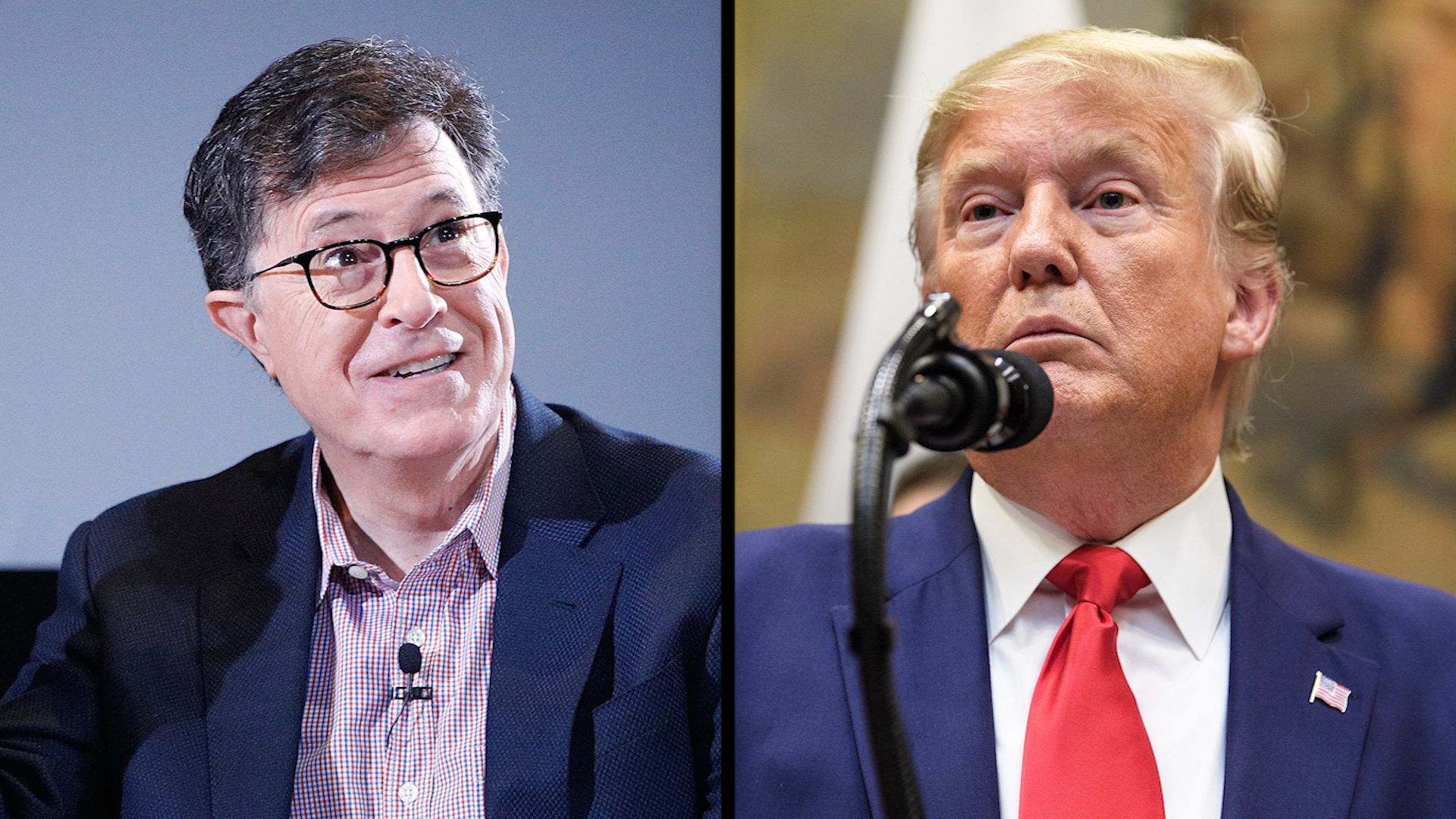
Media scholars often note that repetition shapes belief. A statement heard once can be dismissed as a slip or anomaly; heard twice, it becomes a pattern. Colbert appeared to understand this intuitively. By replaying Mr. Trump’s own words, he removed himself from the argument. The host did not need to persuade; the material did the work on its own.
Mr. Trump’s responses to these moments followed a familiar script. He denied, deflected, blamed the media, and accused critics of bad faith. But repetition blunted those defenses. It is difficult to argue misquotation when the quote is heard again, unchanged. It is harder still to claim distortion when the evidence is audiovisual and immediate.
What made the segment resonate was not just the content of the clips, but the method. In an age of constant commentary and instant reaction, Colbert chose restraint. He trusted the audience to draw conclusions once the noise was removed. The result was less satire than documentation.
The power of the segment lay in its simplicity. There were no new revelations, no leaked documents, no dramatic confrontations. Just familiar words, played twice. In doing so, Colbert illustrated a lesson that extends beyond comedy: sometimes the most effective critique is not to argue harder, but to listen more closely.
For a president whose political survival has often depended on reframing and repetition of his own, seeing his words turned back on themselves—unaltered and replayed—was quietly devastating. In the end, the most damaging moments were not created by comedy, but by memory.






