Jimmy Kimmel, Free Speech, and the Late-Night Line Trump Cannot Cross
By any conventional measure of television history, late-night comedy is a soft target. Jokes land, applause follows, and the news cycle moves on. But in the second Trump presidency, even a monologue can become a referendum on power, intimidation, and the limits of free speech. On a September night in 2025, Jimmy Kimmel demonstrated just how fragile—and how resilient—that line has become.
:max_bytes(150000):strip_icc():focal(999x0:1001x2)/Jimmy-Kimmel-db432376425b4b04a35852ec4fbd70b9.jpg)
Kimmel’s return to the air after a brief suspension was expected to be defiant. Few anticipated it would become one of the most consequential moments in the long collision between Donald Trump and American media. What unfolded was not merely a roast or a ratings stunt. It was an indictment—carefully constructed, emotionally restrained, and devastating in its clarity—of an authoritarian impulse playing out in real time.
“This show is not important,” Kimmel said, his voice steady but weighted. “What is important is that we live in a country that allows us to have a show like this.” The line landed not as a punchline but as a thesis. It reframed the entire conflict: not as a feud between a president and a comedian, but as a test of whether criticism itself remains permissible.
The context mattered. Days earlier, Trump’s Federal Communications Commission chairman had publicly mused about ABC’s broadcast license, and Kimmel’s show was quietly taken off the air for six days. The pressure was unmistakable, even if its defenders later described it as coincidence or “a joke.” Trump himself erased any ambiguity. Within minutes of the show’s conclusion, he posted on Truth Social, calling Kimmel talentless, accusing ABC of bias, and hinting—again—at retaliation.
Trump’s fixation on late-night television is not new. He has long viewed comedians not as entertainers but as threats to narrative control. He celebrated the cancellation of Stephen Colbert’s show, openly rooted for NBC to fire Jimmy Fallon and Seth Meyers, and repeatedly framed ratings as justification for silencing dissent. The subtext has been consistent: speech is acceptable only when it flatters power.
Kimmel, for his part, declined to meet bluster with bluster. Instead, he widened the frame. During his monologue, he thanked not only fellow hosts like Colbert, Jon Stewart, Fallon, and Seth Meyers for their solidarity, but also conservative voices who defended his right to speak despite opposing his politics. The gesture was strategic and disarming. By doing so, Kimmel isolated Trump—not as a conservative, but as an outlier willing to use state power to punish critics.
That distinction proved powerful. Free speech, Kimmel reminded viewers, is not a partisan indulgence. It is a shared civic principle. And when the president mocks or celebrates Americans losing their jobs because of jokes, that principle is already under strain.
The numbers underscored the moment’s resonance. Kimmel’s return episode drew more than six million television viewers, the largest audience in the show’s history. The monologue accumulated tens of millions of views online within 24 hours. Trump’s claim that Kimmel’s audience was “gone” was demonstrably false, but characteristic. Even in defeat, he could not resist rewriting reality.
As Trump lashed out, the broader implications became harder to ignore. At the same time Kimmel was defending free expression, the Justice Department was releasing a partial tranche of documents related to Jeffrey Epstein—millions of pages, with millions more reportedly withheld under disputed claims of privilege. Critics argued that the administration was using volume as camouflage, releasing enough to claim transparency while concealing the most damaging material. The pattern—flood the zone, obscure accountability, attack messengers—felt familiar.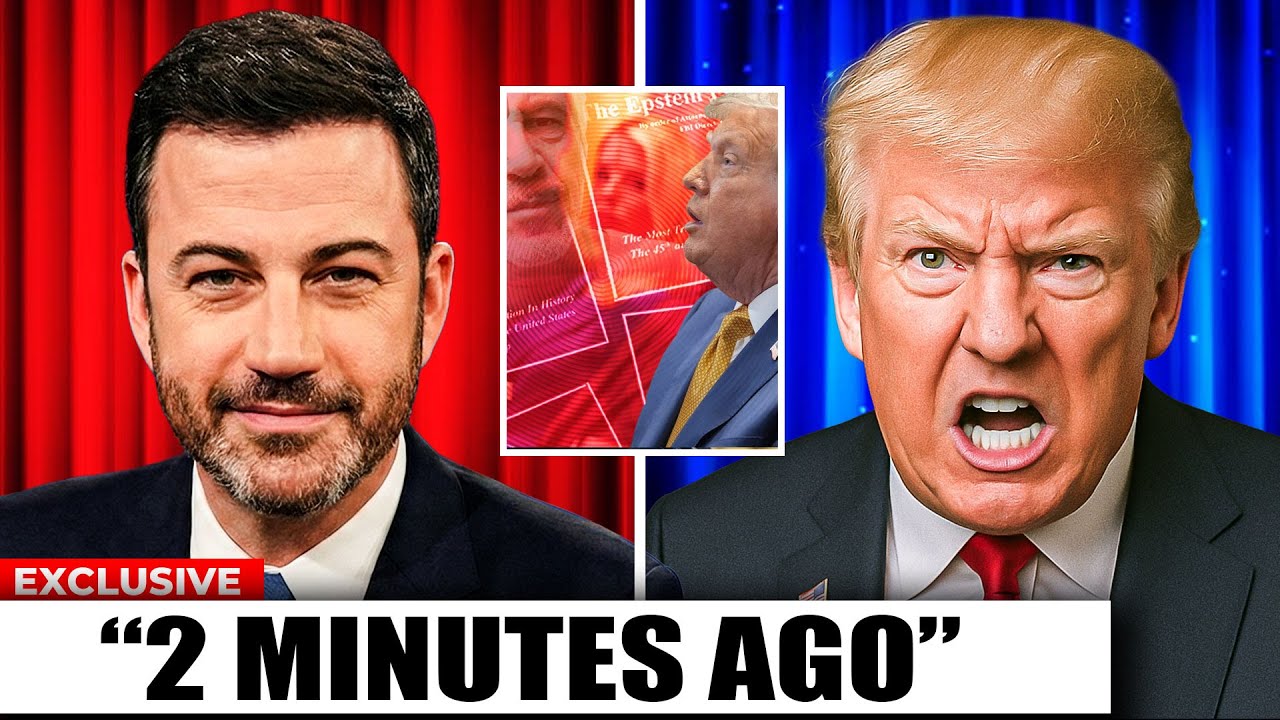
In that sense, Kimmel’s monologue functioned as more than commentary. It became a warning. When governments threaten licenses, when lawsuits are used as extortion tools, when critics are framed as enemies of the state, the erosion of democratic norms rarely arrives all at once. It arrives in increments, normalized through repetition.
Trump’s reaction only reinforced the point. He openly bragged about extracting money from ABC in the past and suggested future legal action for reinstating Kimmel. It was, as Kimmel later joked, an attempt to deny coercion by repeating the coercion. The irony was unmistakable.
By the end of the night, the roles were reversed. The president, armed with the powers of the state, appeared small and reactive. The comedian, armed only with a microphone and an audience, appeared resolute.
Late-night television did not defeat authoritarianism that evening. But it illuminated it. And in doing so, Jimmy Kimmel reminded millions of viewers—at home and abroad—that the right to laugh at power is not trivial. It is foundational.
In an era when silence is often safer than speech, that reminder may be the most subversive joke of all.






