Canada Declares Economic Independence: “No More Permission Slips from Washington”
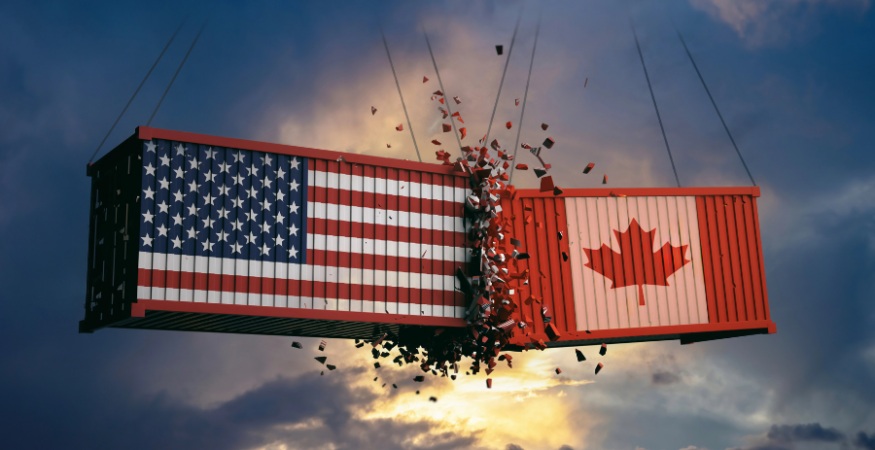
OTTAWA — In a defiant and historic address to the nation, Prime Minister Mark Carney has unequivocally declared Canada’s economic emancipation from the gravitational pull of the United States. The speech, delivered with a steely resolve that has reverberated across global capitals, came in direct response to the latest wave of aggressive tariffs imposed by the Trump administration, marking a tectonic shift in North American relations.
“For generations, our prosperity has been intertwined with that of our southern neighbor—a partnership of immense mutual benefit,” Carney stated from the podium, his tone measured but firm. “But when that partnership becomes a source of recurring instability, when our economic sovereignty is held hostage to unilateral whims and tariff tantrums, a recalculation is not just prudent—it is necessary. Canada will no longer beg for permission from Washington to pursue its own destiny.”
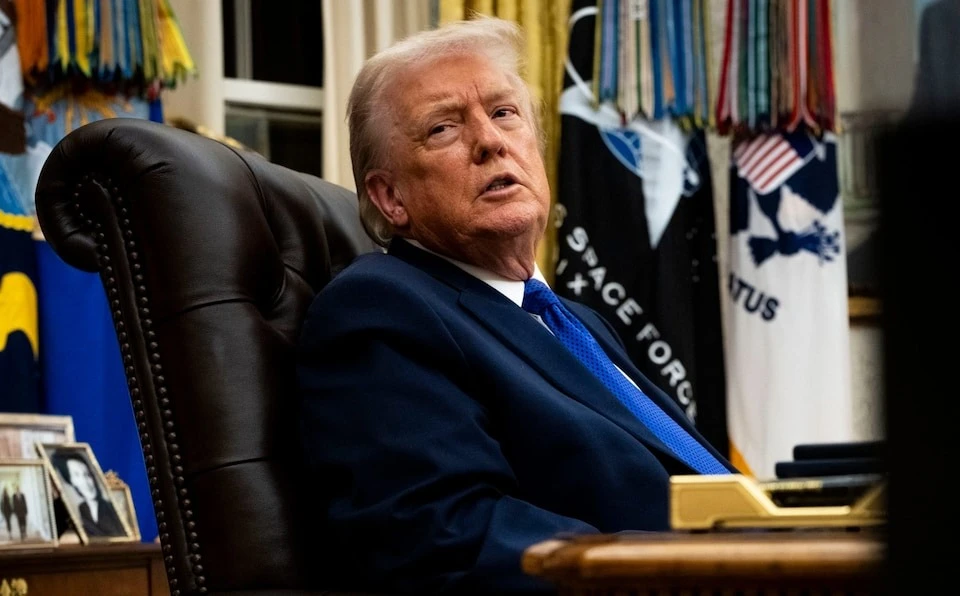
The declaration signals the dramatic collapse of the long-held policy of “quiet diplomacy” that has characterized Canada’s approach to the U.S. for decades. Instead, Ottawa is launching an audacious, multi-pronged strategy to permanently reduce its vulnerability to American political volatility.
The Carney Doctrine: Diversification and Sovereign Resilience
Dubbed the “Carney Doctrine” by analysts, the plan is a comprehensive blueprint for economic independence:
-
Accelerated Trade Diversification: The government is fast-tracking and expanding its trade agreements beyond the traditional U.S. sphere. This includes not only strengthening ties with the Comprehensive and Progressive Agreement for Trans-Pacific Partnership (CPTPP) nations but also pursuing ambitious new deals with the European Union, the United Kingdom, and key emerging economies. “The goal is to make the U.S. market a significant, but no longer dominant, pillar of our export economy,” explained Foreign Minister Mélanie Joly.
-
The “Maple Shield” Tariff Response: Canada will immediately match U.S. tariffs dollar-for-dollar, as it has done in the past. However, the new policy goes further. Revenue generated from these counter-tariffs will be funneled into a sovereign strategic investment fund. This “Maple Shield” fund will directly support sectors and industries hit hardest by U.S. actions, bolstering domestic capacity and innovation rather than merely retaliating.
-
Energy and Resource Sovereignty: In a move with profound geopolitical implications, Canada will pivot its vast energy and critical mineral exports away from the U.S. The plan involves significant federal investment in coastal LNG export facilities on the East and West coasts, aiming to supply European and Asian markets directly. “Our resources are a national asset, not a guaranteed subsidy to American consumers,” Carney asserted.
-
Defense & Security Reassessment: The most chilling line of the speech for Washington had nothing to do with lumber or aluminum. “Our national security cannot be predicated on an alliance with a nation whose commitment to collective defense waxes and wanes with electoral cycles,” Carney said. While not announcing a withdrawal from NORAD or NATO, he ordered an immediate strategic review of Canada’s defense partnerships and a significant increase in domestic military and Arctic sovereignty spending.
Washington Underestimates a “Polite Power”
The Trump administration, which believed its “America First” tariff strategy would force a compliant Canada back to the negotiating table on its knees, has been caught flat-footed. The expected pleas for exemption and conciliatory calls did not come. Instead, they were met with a resolve that has transformed Canada’s international image overnight from a “polite middle power” to a determined sovereign state.
“The Trump playbook relies on the assumption that allies are dependent and weak-willed,” commented geopolitical analyst Laura Preston. “He fundamentally misunderstood the Canadian character. This isn’t anti-Americanism; it’s pragmatic nationalism. The threat of volatility has proven more motivating than the threat of tariffs alone.”
Global Ripples and Domestic Unity
The international response has been one of quiet support mixed with apprehension. European allies, weary of U.S. unpredictability, see a potential new partner in a more assertive Canada. Markets initially wobbled but have since stabilized, with the Canadian dollar finding strength in the clarity of the government’s position.
Domestically, the move has forged a rare moment of unity. Opposition leaders, while critiquing aspects of the rollout, have endorsed the core principle. Provincial premiers, from Alberta to Quebec, have signaled support, enticed by promises of infrastructure investment and new global market access for their key industries.
A New Chapter for North America

The era of uncontested U.S. economic hegemony over North America is over. Canada has drawn a line in the sand, choosing the uncertainties of self-determination over the corrosive insecurity of dependency. While the economic disentanglement will be complex and costly in the short term, Ottawa has calculated that the long-term cost of perpetual vulnerability is far greater.
Prime Minister Carney’s message concluded with a resounding affirmation: “We are not merely a neighbor. We are not a dependent. We are a sovereign nation—confident, capable, and in control of our own future. The days of waiting for a nod from Washington are over. Canada is open for business, on our own terms.”
The world is now watching to see if this bold gamble pays off, and whether other nations feeling the sting of unilateralism might follow Canada’s lead. One thing is certain: the map of global economic power, long centered on Washington, is beginning to show new, independent coordinates in the North.