Democrats Flip a Deep-Red Texas Senate Seat, Sending Shock Waves Through Republican Ranks
Texas politics rarely delivers surprises of national consequence. But on Saturday night in the Fort Worth suburbs, voters in a district long considered safely Republican upended decades of assumptions—and sent a warning shot through the heart of the GOP.
In a special runoff election for Texas State Senate District 9, a Democratic candidate surged to a decisive victory in Tarrant County, a suburban region Republicans have dominated for generations. The outcome stunned party leaders not only because of the margin, but because of the stakes: Donald Trump personally intervened, urging turnout and endorsing the Republican nominee in a district he carried by 17 points in 2024. Voters rejected that appeal anyway.
“This doesn’t happen by accident,” said one veteran Texas strategist, watching returns roll in from Fort Worth. “This is what a political earthquake looks like.”
A Race Republicans Couldn’t Afford to Lose
The runoff drew national attention almost immediately. Republicans understood the symbolism: District 9 was not supposed to be competitive. It stretches across suburban neighborhoods north and east of Fort Worth, anchored by middle-class families, longtime homeowners, and voters who have reliably backed Republican candidates at every level of government.
In November, Trump won the district handily. Statewide GOP leaders—including Greg Abbott and Lt. Gov. Dan Patrick—threw their weight behind the Republican runoff candidate. Trump posted a last-minute appeal on Truth Social, framing the race as a test of loyalty to his movement.
Yet when ballots were counted, the Democrat not only led—he expanded his margin as the night went on. Early voting broke blue. Election Day turnout pushed the numbers further. With more than half the vote counted, the Democrat held a double-digit lead, hovering in the mid-to-high 50s while the Republican stalled in the low 40s.
At a crowded watch party in Fort Worth, cheers erupted as the gap widened. “This seat has been held by Republicans for decades,” one supporter said. “Tonight, history changed.”
The End of “Safe” Suburbs
Republicans were quick to urge caution. Special elections, they noted, often produce unpredictable turnout. Runoffs are quirky. The district will be contested again in November, when higher participation could reshape the electorate.
But party operatives privately conceded that dismissing the result would be a mistake.
“If this race truly didn’t matter,” one former GOP consultant said, “Trump wouldn’t have touched it. Abbott wouldn’t have touched it. Everyone knew what this was about.”
What it was about, increasingly, is the erosion of Republican dominance in suburban Texas. Fort Worth and its surrounding communities have been drifting away from the GOP for years, driven by demographic change, rising education levels, and growing frustration with national politics. This election accelerated that shift dramatically.
“When a district Trump won by double digits flips blue,” the consultant added, “every strategist in America starts running new models.”

Kitchen-Table Politics Versus Culture Wars
Interviews with voters and organizers suggest the result was less about ideology than daily life. Housing costs in Tarrant County have soared. Property taxes remain a top concern. Public schools face funding pressures, and health care access—particularly for families with children and aging parents—has become a recurring theme at town halls.
Democratic organizers leaned heavily into those issues, avoiding nationalized rhetoric in favor of what one campaign volunteer called “real-life math.”
“People don’t pay rent with slogans,” she said. “They vote based on whether they can afford groceries, child care, and a mortgage.”
Republicans, by contrast, stuck closely to national messaging—border security, cultural grievances, and loyalty to Trump. That approach energized the base but failed to expand it. Even some Republican-leaning voters acknowledged fatigue.
“I voted for Trump before,” said one suburban voter outside a polling location in Keller. “But this time, I was thinking about schools and taxes, not cable news fights.”
Trump’s Limits on Display
For Trump, the loss carried particular sting. He has sought to demonstrate that his endorsements remain decisive, especially in Republican primaries and special elections. In this case, his intervention may have underscored the opposite.
“This was supposed to show his strength,” said a Democratic strategist monitoring the race. “Instead, it showed the limits of it.”
The result echoes a broader pattern emerging across the country: in lower-profile elections where turnout is driven by motivated local organizing, Trump-backed candidates are no longer guaranteed victory—particularly in suburbs.
Not an Isolated Signal
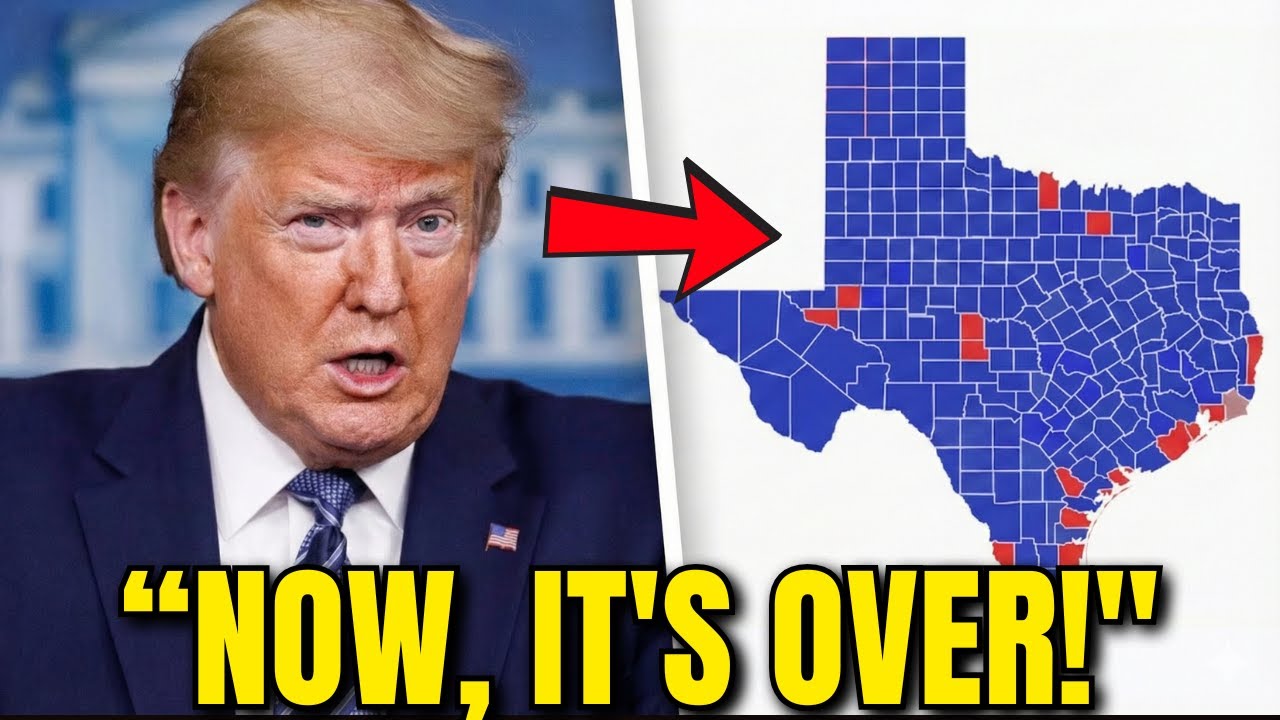
The Texas upset did not stand alone. On the same weekend, Democrats posted commanding margins in other key contests, including a primary landslide in Texas’s 18th congressional district, where Democratic voters delivered nearly two-thirds of the vote to their preferred candidate.
Taken together, the results suggest a party building confidence—and infrastructure—heading toward November. Wins create momentum, organizers say. Momentum fuels turnout. Turnout flips seats.
Republicans counter that November will look very different, with higher participation and more resources. That may be true. But one thing has already changed: the assumption that these districts are unwinnable for Democrats has collapsed.
“The hardest part is done,” said a longtime Texas Democratic organizer. “The myth of untouchable red districts is gone.”
A Warning Shot, Not a Wave—Yet
No serious analyst is declaring Texas blue. Republicans still control statewide offices and hold structural advantages, including district maps drawn to protect their power. But Saturday night’s result represents something harder to dismiss than speculation: a data point.
“It was a political temperature check,” said a political scientist at a Texas university. “And Republicans failed it.”
For voters in Tarrant County, the message was less abstract. They showed up, waited in long lines, and cast ballots in a race many were told didn’t matter. In doing so, they sent one of the clearest signals of the cycle so far.
Texas was supposed to be safe territory. On Saturday night, it wasn’t. And with November approaching fast, neither party is ignoring the implications anymore.






