Comedy as Resistance: How Jimmy Kimmel and Robert De Niro Turned Live Television Into a Rebuke of Trump’s Power
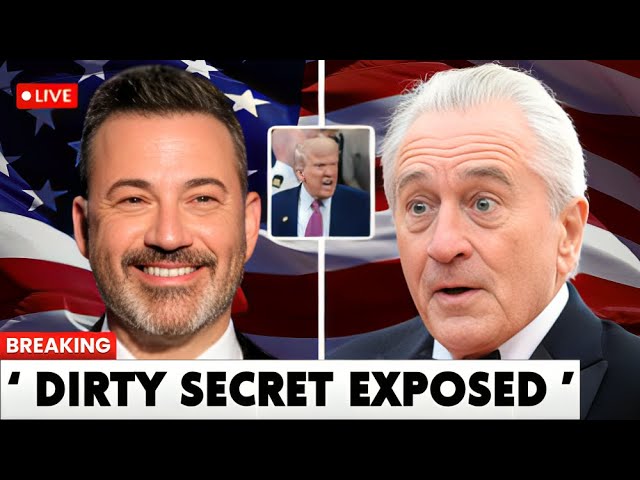
NEW YORK — Late-night television has long been a pressure valve for American politics, a place where jokes soften outrage and satire offers momentary relief. But on one recent night, Jimmy Kimmel Live! crossed a different threshold. What unfolded was not merely comedy, nor even celebrity criticism, but a televised act of defiance that reframed entertainment as a test of democratic resilience.
Jimmy Kimmel returned to the air after an abrupt suspension that followed criticism of Donald Trump and his supporters. The circumstances surrounding the hiatus — threats from a Trump-aligned Federal Communications Commission chairman toward ABC and its parent company, Disney — raised immediate alarms among free speech advocates. When Kimmel came back, he did not do so quietly. He brought with him Robert De Niro.
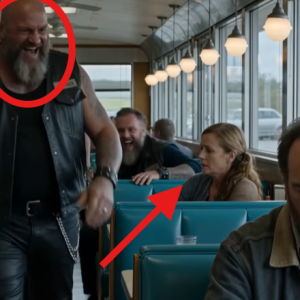
De Niro, one of Hollywood’s most celebrated actors and one of Trump’s most vocal critics, did not appear as a conventional guest. Instead, he arrived as a symbol. In a satirical sketch portraying a mob-boss version of a government regulator, De Niro distilled a warning about how intimidation works in modern America: not through overt censorship, but through pressure, threats, and the quiet expectation of compliance.
The audience reaction was immediate. Laughter, applause, and an undercurrent of recognition filled the studio. Viewers understood the message. Praise the president and nothing happens. Criticize him, and consequences follow.
De Niro’s criticism of Trump was blunt, even profane at moments, but it was rooted in something deeper than insult. He framed Trump not as a political opponent, but as a danger to civic norms — someone who treats institutions as personal weapons and dissent as a crime. Kimmel, often known for broad humor, adopted a noticeably restrained tone, letting the contrast between power and accountability speak for itself.

The episode shattered records. More than 26 million people watched across platforms, with over 15 million views on YouTube within 24 hours, making it the most-watched episode in the show’s history. The scale of the response suggested that viewers were not tuning in for jokes alone. They were watching because something fundamental was being articulated aloud.
Trump responded as he often does: with insults. He attacked De Niro personally, mocked his intelligence, and celebrated the temporary silencing of Kimmel as if it were a political victory. But the reaction only reinforced the central point of the broadcast. There was no rebuttal to the substance of the criticism, only volume.
The timing mattered. Just days earlier, special counsel Jack Smith had publicly defended his decision to prosecute Trump, stating plainly that the evidence showed criminal conduct beyond a reasonable doubt. “No one should be above the law,” Smith said — a sentiment echoed, indirectly but unmistakably, throughout Kimmel’s monologue and De Niro’s performance.
What elevated the episode beyond ordinary political satire was its clarity about power. De Niro compared Trump to a gangster, not as a metaphor for toughness, but for something more corrosive: loyalty demanded, rules bent, consequences outsourced to underlings. “He thinks he’s a gangster,” De Niro said. “But real gangsters don’t respect people who don’t keep their word.”
The sketch also alluded to January 6 without naming it directly, highlighting how leaders can incite action without issuing explicit commands. They point. Others act. Responsibility dissolves upward, while damage spreads outward.
Major broadcast groups reportedly hesitated to amplify the episode, wary of political retaliation. Yet the show’s reach exploded regardless. As The New York Times later described it, the broadcast was “extraordinary” — not because of production value or shock humor, but because of its refusal to be intimidated.
This was not a victory lap for Hollywood liberals, as critics framed it. It was a reminder that democratic norms do not defend themselves automatically. They survive only when individuals are willing to absorb risk.
Comedy, on that night, became a vehicle for civic memory. Kimmel and De Niro did not argue policy. They did not debate ideology. They exposed a pattern: silence enforced through fear, and loyalty demanded without accountability.
Viewers did not leave entertained so much as unsettled — and that was the point. The laughter faded quickly. What remained was a question hovering over the studio and the country alike: If criticism can be punished and satire threatened, how free is speech really?
For one night, at least, intimidation failed. A comedian and an actor stood on live television and refused to look away. In doing so, they reminded millions that democracy does not disappear all at once. It erodes quietly — unless someone, somewhere, decides to speak anyway.