FORT WORTH, Texas — In a part of North Texas that Republicans have treated as safe ground for a generation, voters delivered a result that instantly set off alarms inside the state’s GOP: a Democrat, Taylor Rehmet, won a special-election runoff for Texas Senate District 9, defeating Republican Leigh Wambsganss by a comfortable margin and flipping a seat that had been reliably red for decades.
The outcome was striking not only for its margin — Rehmet finished with more than 57% of the vote, according to local reporting and election coverage — but for what it suggested about the political mood in the Fort Worth suburbs at the start of 2026, with both parties already treating November’s contests as a referendum on President Trump’s second-term agenda.
Republican leaders moved quickly to frame the result as an outlier, the product of a low-turnout runoff held amid winter weather disruptions. About 95,000 ballots were cast in the runoff, down from nearly 119,000 in November, as parts of the region contended with ice during early voting. But Democrats argued the same numbers pointed to something more durable: if the GOP could lose here — in a district Trump carried by 17 percentage points in 2024 — then other seats once thought immune could be newly contested.

A race nationalized in the closing hours
The contest drew national attention because it offered a rare, measurable test of where persuasion and turnout are moving in a suburban Texas district that includes most of Fort Worth and conservative northern communities in Tarrant County.
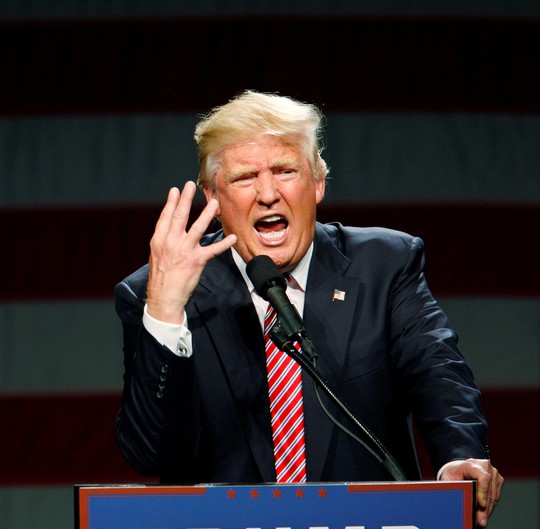
It also became a proxy fight over Trump’s political leverage. In the final stretch, the former president urged Republicans to rally behind Wambsganss, writing on Truth Social that Texas Lieutenant Governor Dan Patrick “needs a strong conservative Republican in SD-9 to KEEP TEXAS RED.”
Wambsganss, an executive at the conservative wireless company Patriot Mobile, ran as a culture-war-aligned activist with support from the state’s top Republicans. Rehmet, an aircraft mechanic and union leader running his first campaign, presented himself as a kitchen-table Democrat — emphasizing wages, health care costs and public services, while attacking what he described as “billionaire-backed” politics.
Money flowed in lopsidedly. Campaign finance filings cited by local outlets showed Wambsganss outspent Rehmet roughly 10 to 1 in the final reporting window — more than $736,000 to Rehmet’s roughly $70,000. It did not change the outcome.
Why this district, why now?
To Republicans, the most comforting explanation was procedural: a special runoff with unusual turnout dynamics is a poor predictor of a general election. Several Republican strategists pointed to weather, calendar timing and the typical difficulty of motivating base voters in stand-alone contests.
But Democratic operatives argued the result fit a broader pattern they say has been building in the suburbs: voters who may still lean conservative culturally are increasingly volatile on economic performance, health care access and the perceived chaos of national politics. The race became, in effect, a local vessel for national frustrations.
Local coverage described the district as “reliably red,” with Republicans holding the seat for decades and winning it comfortably as recently as 2022. That history made the margin of the Democratic win — not just the win itself — especially unsettling for GOP leaders.
The seat became vacant after former state Sen. Kelly Hancock resigned to take a role as acting state comptroller, prompting the special election. An open seat is always more vulnerable, but Texas Republicans have typically viewed SD-9 as the kind of territory where their nominees can survive even adverse conditions.
This time, they didn’t.
Social media, messaging, and the “meaning” fight
Within hours of the results, a second contest began: not another election, but the battle to define what the election meant.
Democrats and liberal media figures circulated the margin as evidence that the Trump-era brand is weakening in places that once rewarded it. Republicans and conservative commentators countered that the runoff was an imperfect snapshot — and, in some corners, attacked the idea that the outcome reflected voter backlash at all.
The debate played out across cable news, X, YouTube clips, email fundraising appeals and influencer-driven political newsletters — a now-standard post-election cycle in which narrative can travel faster than the underlying data. In that environment, a single local contest can be framed as either a warning siren or a statistical fluke, depending on which side is speaking.
Yet even the most cautious Republican analyses acknowledged the basic reality: if a district Trump won by 17 points can flip in February, then campaigns cannot afford to take turnout for granted — especially in suburban areas where ticket-splitting has become more common and local issues can override partisan identity.
What happens next
The most important caveat is also the simplest: this was a special-election runoff, not November.
Both candidates are expected to face each other again in the fall for a full four-year term. Turnout will almost certainly be higher, outside money will be larger, and messaging will sharpen. Republicans will make the case that the runoff was an anomaly; Democrats will try to prove it was an early sign of suburban realignment.
For the Texas Senate, the shift changes the arithmetic slightly but not control: the chamber remains firmly Republican, with an 18–12 GOP advantage and one additional vacancy noted in recent tallies. Still, even a modest seat flip carries symbolic weight in a state where both parties have spent years arguing over whether Texas is “trending purple” or merely producing isolated surprises.
And for national Republicans, the lesson may be less about Texas ideology than about political physics: backlash can show up first in off-cycle elections — when motivated voters decide that sending a message is worth braving bad weather, long lines or the inconvenience of a standalone date on the calendar.
Whether that message endures into the midterms is the question that will shape strategy on both sides from now until November.






