By XAMXAM
Late-night television has long thrived on ritual. The monologue. The laugh. The wink that reassures viewers nothing on screen will truly disturb the balance of power. But on a recent night, that unwritten contract broke. What unfolded was not merely comedy, but a carefully staged reckoning—one that exposed how fragile power can look when confronted not by politicians, but by artists who know how to hold a mirror steady.
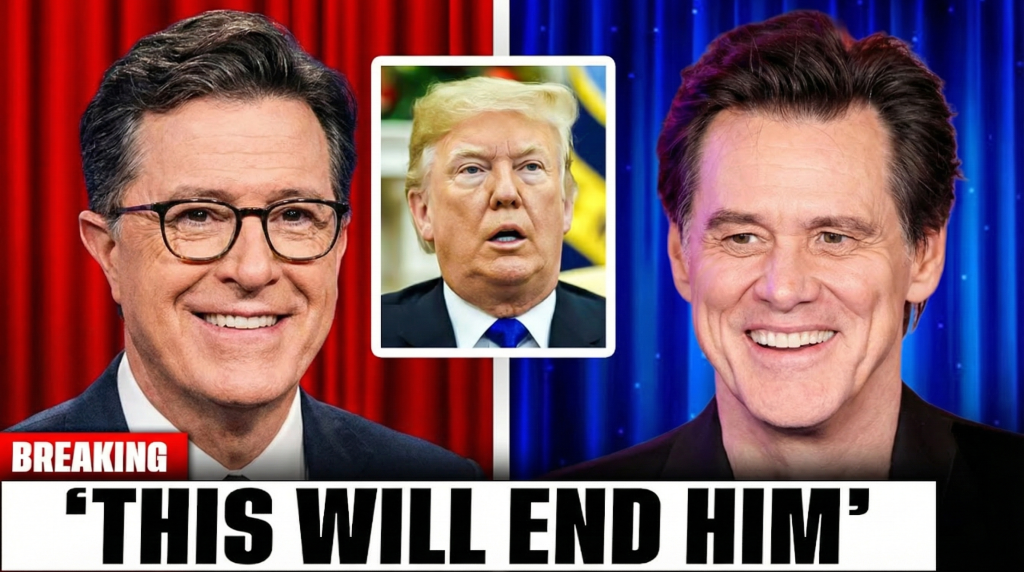
The pairing was deliberate. Stephen Colbert, the meticulous satirist of The Late Show with Stephen Colbert, opened with restraint. He did not shout. He did not insult. Instead, he quoted Donald Trump—old boasts, familiar denials, late-night social media eruptions—arranged like evidence on a table. The laughs came slowly, almost nervously, as the audience realized the punchline was not Colbert’s invention. It was the record.
Then the tone shifted. Jim Carrey entered not as a stand-up comic, but as something closer to a political cartoonist come to life. Where Colbert reduced the spectacle to words, Carrey expanded it into images—grotesque, exaggerated, impossible to ignore. He spoke about drawing “the monster” so people would remember what it looked like, a line that landed with an unsettling calm. This was not mockery for sport. It was documentation.
The contrast between the two men sharpened the effect. Colbert’s method is precision. He exposes vanity by letting it speak for itself, turning obsession with ratings, photographs, and applause into a running audit of ego. Carrey’s approach is expressionistic. His art does not argue; it confronts. It takes the emotional residue of politics—fear, rage, division—and freezes it into color and line.
Together, they created something television rarely attempts: a sustained moment where satire and moral judgment occupied the same space without canceling each other out.
The immediate reaction was predictable. According to aides and observers, Trump watched—and erupted. Within hours, denunciations flooded social media. Ratings were mocked. Talent was questioned. Motives were impugned. Each response only reinforced the premise of the broadcast: that criticism could still provoke, that ridicule still had the power to pierce.
But the deeper story was not the reaction. It was the audience’s recognition. The laughter that night was not carefree. It had weight. It carried the sound of release, even relief. For years, viewers had been asked to process political chaos as spectacle, to scroll past outrage and treat absurdity as background noise. Here, absurdity was isolated, slowed down, and examined.
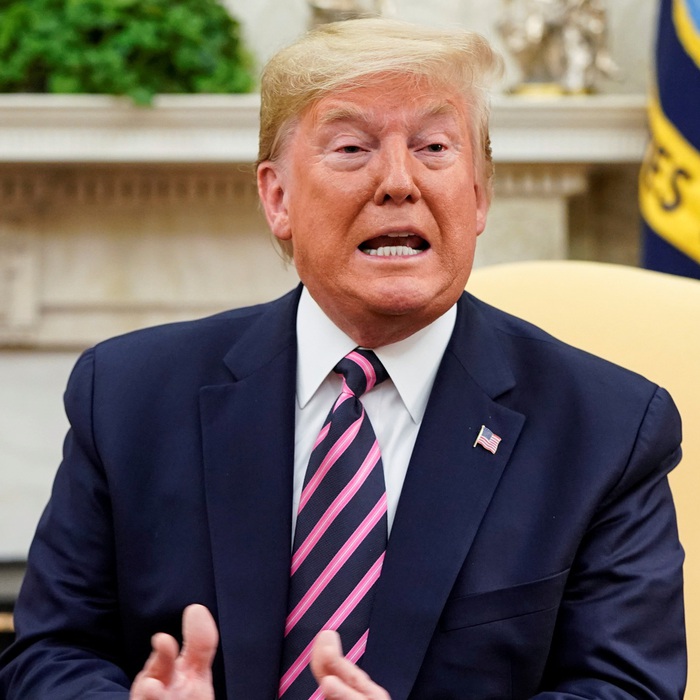
Colbert framed the words. Carrey framed the feeling. Between them, a pattern emerged: performance over substance, grievance over governance, attention as currency. No accusations were necessary. The image assembled itself.
There is a temptation to dismiss such moments as cultural sideshows, distractions from “real” politics. Yet history suggests otherwise. Political cartoons once shaped public opinion more forcefully than speeches. Satire has always flourished where formal accountability falters. What felt different this time was the clarity. The show did not pretend neutrality. It did not hedge with irony. It chose a point of view and defended it with craft.
This was not a call to vote or protest. It was something subtler and, in its way, more destabilizing. It reminded viewers that power depends on perception—and perception can be altered by humor that refuses to look away.
In the days that followed, clips ricocheted across platforms. Commentators debated whether comedy had gone “too far,” a familiar refrain whenever laughter stops being comfortable. But comfort was never the goal. Exposure was.
What Colbert and Carrey demonstrated is that late-night television, often written off as disposable, can still function as a civic instrument. Not by shouting slogans, but by insisting that words mean what they say, images mean what they show, and reactions reveal more than intentions.
The spectacle of anger that followed—the posts, the denials, the insults—only completed the circle. The mirror had been raised. The reflection objected.
And that, perhaps, was the most telling punchline of all.







