Jack Smith’s Testimony Leaves a Record — and a Reckoning — Even as the Law Stands Still

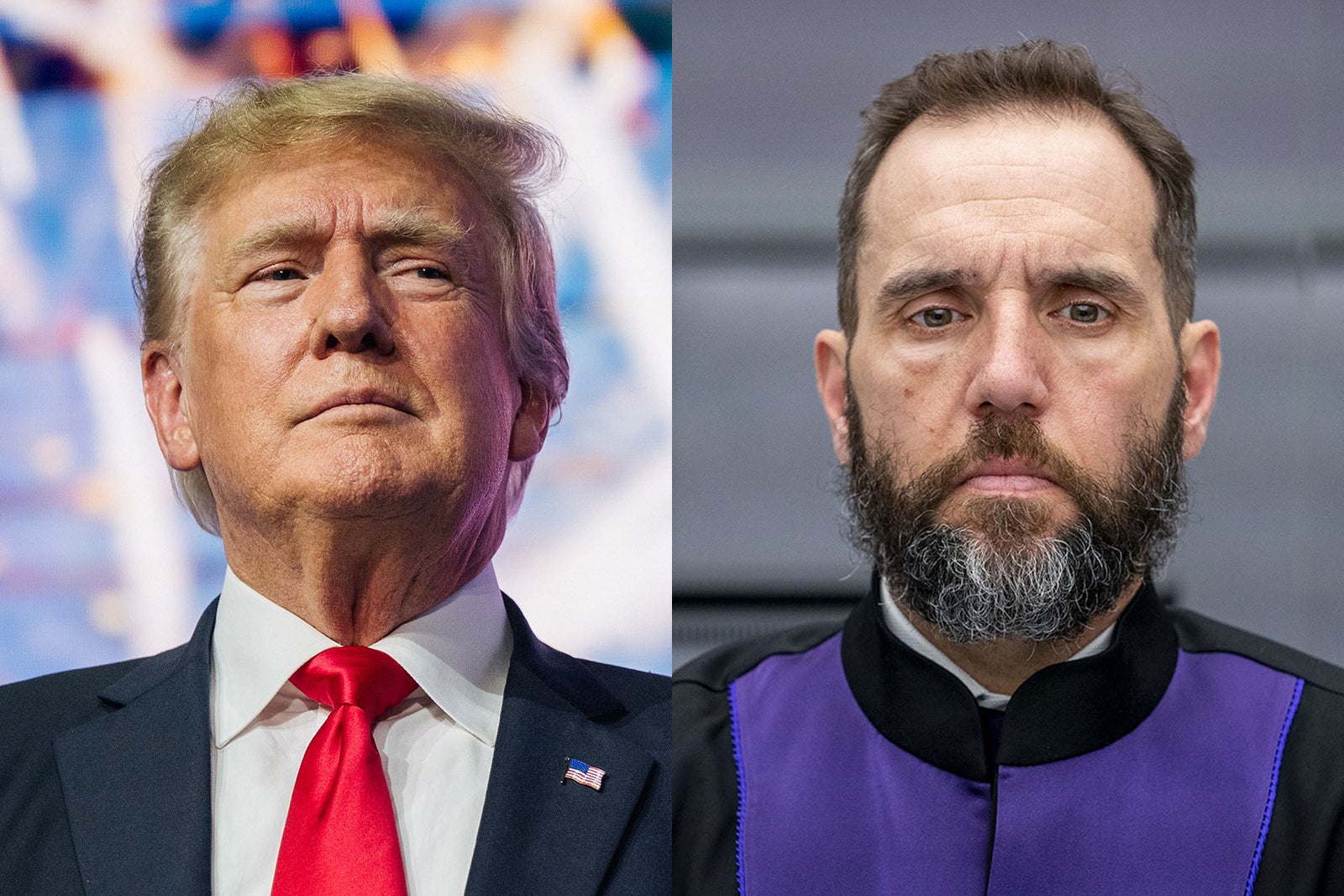
Washington, Jan. 22, 2026 — When Jack Smith, the former special counsel who investigated Donald J. Trump, sat before the House Judiciary Committee this week, he did not announce new charges, nor did he offer any dramatic legal maneuver. What he did instead was something quieter and, in some ways, more consequential: he placed a detailed account of alleged presidential criminal conduct into the permanent public record — under oath, before Congress, and largely without qualification.
Mr. Smith’s two days of testimony marked the first time since President Trump’s return to the White House that the architect of the federal prosecutions against him had spoken publicly, in detail, about the evidence he assembled. Those prosecutions — one centered on efforts to overturn the 2020 election, the other on the retention of classified national defense documents — were abandoned after Mr. Trump won the 2024 election, in accordance with long-standing Justice Department policy barring the prosecution of a sitting president.
But if the cases were halted, Mr. Smith made clear that the conclusions behind them were not.
“President Trump was charged because the evidence established that he willfully broke the law,” Mr. Smith told lawmakers, emphasizing that his decisions were guided by facts and legal standards, not politics. He stated unequivocally that, absent Mr. Trump’s current office, the cases would have proceeded to trial.
For a country long accustomed to the churn of Trump-era controversies, the moment was striking not for its drama, but for its clarity. Mr. Smith did not hedge. He did not suggest ambiguity. He did not invoke speculation. He said the evidence was sufficient — beyond a reasonable doubt — and that the outcomes were halted by institutional constraint, not evidentiary weakness.
A Prosecutor’s Record, a System’s Limits
Mr. Smith, a career prosecutor who has served under Republican and Democratic administrations, presented himself not as a partisan actor, but as a functionary of the law. His résumé includes domestic violent crime, public corruption, election interference cases, and war crimes prosecutions abroad. That background lent weight to his insistence that the Trump investigations were routine in method, if extraordinary in subject.
In his testimony, Mr. Smith described a case built not only on documentary evidence, but on testimony from high-ranking Republicans — some of whom had supported Mr. Trump’s 2020 campaign — who later cooperated with investigators. He characterized their accounts as among the most compelling evidence his office obtained.
The investigation into the 2020 election, he said, led to the conclusion that Mr. Trump engaged in a coordinated scheme to obstruct the lawful transfer of power after losing the election. The classified documents case, meanwhile, involved 31 felony counts under the Espionage Act, each carrying potential prison sentences of up to ten years, tied to the retention of sensitive national security materials at Mar-a-Lago.
Mr. Smith was careful to note that prosecutors cannot control verdicts — only the integrity of the process. “Our responsibility is to do the right thing the right way for the right reasons,” he said.
That statement, however, underscored a paradox now confronting American governance: the law can establish facts, but it cannot enforce consequences against a sitting president unless the political system acts.
Impeachment as a Failing Mechanism
Under the Constitution, impeachment is the sole mechanism for holding a sitting president accountable for alleged crimes. Yet the events of the Trump era have exposed its limits. Mr. Trump was impeached twice during his first term and acquitted both times by the Senate, largely along party lines.
Nothing in Mr. Smith’s testimony alters that arithmetic. Republicans control the House, making new impeachment proceedings improbable. Conviction in the Senate would require a two-thirds majority — a threshold widely viewed as unattainable in the current political environment.
The result is a situation in which evidence of alleged criminal conduct exists, is documented, and is publicly affirmed under oath — yet produces no immediate legal outcome.
“This is not a failure of evidence,” said one former federal prosecutor who reviewed the testimony. “It’s a failure of political will.”
Public Reaction: Polarization Without Shock
Perhaps most revealing has been the public response. Despite the gravity of Mr. Smith’s statements, polling suggests little movement in Mr. Trump’s approval ratings. His supporters dismiss the testimony as partisan warfare. Many independent voters appear more focused on economic concerns than on legal accountability for past conduct.
At the same time, the information vacuum has fueled misinformation. False rumors circulated online claiming Mr. Trump was preparing to resign so that Vice President J.D. Vance could pardon him — claims unsupported by any evidence and consistent with previous viral hoaxes.
That such rumors gain traction speaks less to their plausibility than to the country’s collective unease. There is a widespread sense that the system is strained — that facts exist without consequence, and that accountability is conditional.
A Historical Record That Cannot Be Erased
If Mr. Smith’s testimony changes little in the present, its importance may lie in the future.
The testimony, combined with the special counsel’s final report, now forms an official historical record — a detailed account of conduct that prosecutors deemed criminal, preserved beyond political spin or selective memory. For historians, legal scholars, and future policymakers, it provides a primary source that cannot easily be dismissed or erased.
Authoritarian systems, scholars note, often rely on historical revision — blurring facts, discrediting institutions, and exhausting the public until truth becomes negotiable. In that sense, Mr. Smith’s testimony serves as a counterweight: a clear, documented statement of what federal investigators concluded, and why.
A Stress Test Still Underway
More broadly, the episode functions as a stress test for American democracy — one whose results remain unsettled.
The framers assumed that impeachment would serve as a meaningful check on executive abuse. That assumption rested on a belief that lawmakers would, at times, prioritize institutional integrity over partisan survival. Whether that belief still holds is an open question.
What is clear is that the current system allows a president to remain in office despite sworn testimony asserting criminal conduct, so long as political allies remain loyal.
Mr. Trump has shown no inclination to retreat. He continues to govern, issue executive orders, and shape federal policy. His refusal to concede wrongdoing — once viewed as norm-breaking — has become a defining political asset among his supporters.
Beyond One Presidency
Ultimately, Mr. Smith’s testimony may matter less for what it does to Donald Trump than for what it reveals about the country.
It raises uncomfortable questions: Can a democracy sustain accountability when legal standards collide with partisan reality? What happens when evidence no longer compels action? And what precedent is set for future presidents watching this unfold?
For now, the law stands still. The politics grind on. But the record is written.
And long after today’s rumors fade and today’s headlines pass, that record will remain — waiting for a moment when accountability is once again more than a principle.