Treasury Secretary Caught in Tariff Contradiction as Trump Faces Mounting Economic and Legal Turmoil
WASHINGTON — A bruising morning for the Trump administration spiraled into deeper crisis on Capitol Hill on Tuesday after Treasury Secretary Scott Bessant appeared to contradict his own written statements under oath, triggering accusations of perjury and intensifying scrutiny of the White House’s economic credibility.
The flashpoint came during a contentious congressional hearing on tariffs, inflation, and market manipulation, as lawmakers confronted Bessant with a January 2024 letter he signed while leading a private equity firm. In that letter, addressed to investors at KeySquare Capital Management, Bessant wrote plainly: “Tariffs are inflationary and would strengthen the dollar — hardly a good starting point for a U.S. industrial renaissance.”
Yet under questioning from Rep. Maxine Waters, the Treasury Secretary denied ever making such a statement.
Asked directly whether he had written to investors warning that tariffs were inflationary, Bessant replied, “No.” When pressed again moments later on whether tariffs cause inflation, he doubled down, asserting they do not — citing selective interpretations of Federal Reserve data.
Lawmakers quickly produced the signed letter on the record.
The exchange immediately set off alarms on Capitol Hill, where lying to Congress can constitute a felony. While no formal referral has yet been announced, senior aides in both parties acknowledged privately that the contradiction poses serious legal and political risks for an administration already struggling with collapsing public confidence.
The hearing unfolded against a grim economic backdrop. New data from the University of Michigan shows consumer confidence at its lowest level since the Great Recession, while headlines across the ideological spectrum painted a bleak picture: U.S. manufacturing in retreat, softening retail demand, and agriculture leaders warning of widespread collapse if current trade policies persist.
Even traditionally conservative outlets echoed the concern. The Wall Street Journal reported that tariffs meant to revive domestic manufacturing have instead weighed on producers and consumers alike. The Financial Times noted that food and beverage companies are cutting prices amid slumping sentiment, while farm groups warned Congress of cascading failures across rural America.
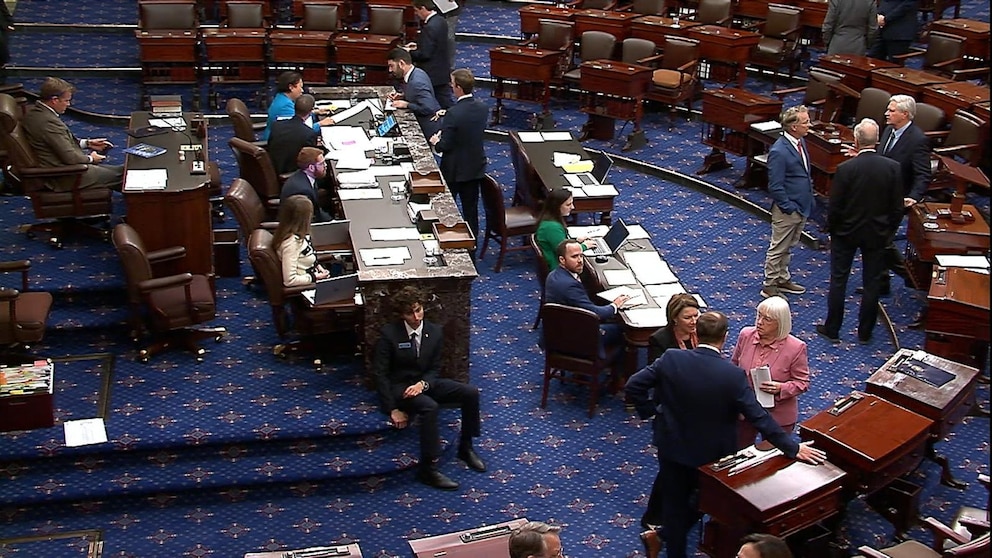
As the economic narrative darkened, the administration’s messaging appeared increasingly erratic.
During the same hearing, Bessant dismissed calls to investigate whether President Trump manipulated markets by promoting his own publicly traded media company, DJT, on social media — a move that preceded a single-day stock surge worth an estimated $415 million. Asked whether such conduct merited scrutiny, the Treasury Secretary flatly answered, “No,” arguing vaguely that “all Americans benefited” from a market rebound.
Democrats reacted with disbelief. “That answer alone undermines the integrity of the Treasury Department,” one senior House aide said afterward.
The turmoil extended beyond economic policy. Earlier in the day, Trump ally Steve Bannon claimed on his podcast that Immigration and Customs Enforcement would “surround the polls” during the November elections — a statement voting rights groups immediately denounced as voter intimidation. The White House declined to comment.
Meanwhile, the administration continues to face renewed scrutiny over its ties to Jeffrey Epstein, following partial releases of documents containing thousands of references to Trump and close associates. Trump has repeatedly urged the public to “turn the page” on the scandal, but critics note that millions of pages remain unreleased.
“This is not ancient history,” said one former federal prosecutor. “The documents keep pointing forward, not backward.”
Inside the hearing room, frustration was palpable. When Democratic members pressed Bessant on conflicts of interest involving financial regulators and Trump-linked entities, he repeatedly deflected, attacked questioners, or cited supposed limits on his authority. At one point, a lawmaker remarked that the Secretary appeared to be reading from White House-prepared talking points rather than answering questions directly.
Republicans, too, showed signs of strain. Senator Thom Tillis of North Carolina publicly criticized Trump’s habit of insulting his own allies, calling it counterproductive and juvenile. “We could act like adults and get things done,” Tillis said on CNBC, drawing a sharp contrast with the president’s social media outbursts.
By mid-morning, Trump himself was posting online about unrelated topics, even as his administration faced allegations of dishonesty before Congress, deepening economic anxiety, and growing fears over democratic norms ahead of the midterms.
For critics, the episode encapsulated a broader pattern.
“This wasn’t a slip of the tongue,” said one Democratic lawmaker. “This was a documented statement denied under oath. It speaks to a culture where facts are treated as optional.”
Whether the contradiction leads to formal consequences remains to be seen. But as markets wobble, consumer confidence sinks, and congressional patience wears thin, the administration’s margin for error appears to be rapidly shrinking.
What began as another combative hearing ended as a stark reminder: in Washington, paper trails matter — and contradictions have consequences.






