Trump’s Legal Victory Proves Illusory as Testimony and Missteps Reignite Peril
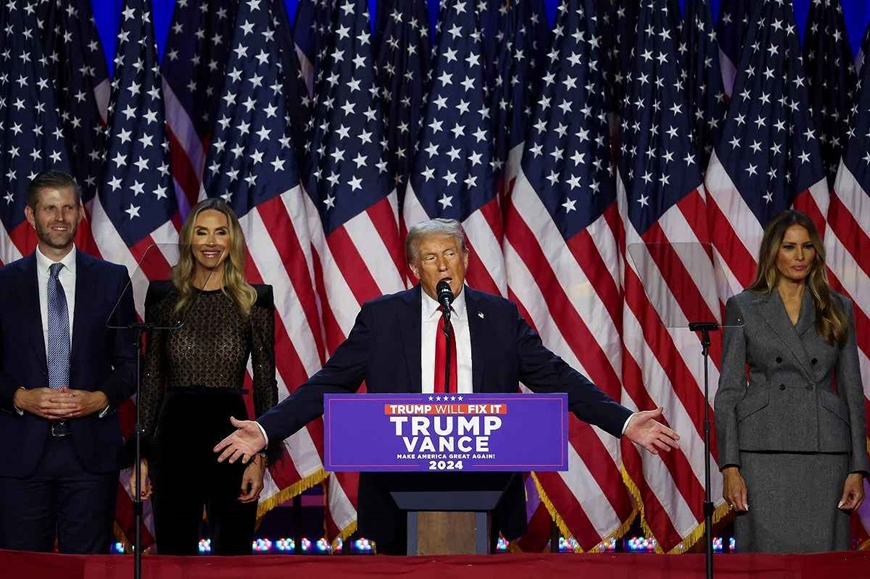
WASHINGTON — When President Donald Trump returned to the White House after winning the 2024 election, he declared the end of his legal troubles. Federal prosecutions vanished. The special counsel was sidelined. Investigations that once threatened prison time were dropped or paused under long-standing Justice Department policy barring the indictment of a sitting president. To Mr. Trump and his supporters, it was total vindication — proof that the investigations had been, as he long insisted, a “witch hunt.”
But two years into his second term, that victory is proving far more fragile than it first appeared.
In a striking reversal, Mr. Trump’s own political strategy — particularly the decision by his Republican allies to summon former special counsel Jack Smith to testify before Congress — has re-exposed the very allegations he sought to bury. Combined with a pattern of high-profile errors by Trump-appointed Justice Department lawyers, the result is a growing legal and political vulnerability that threatens to loom over the 2026 midterm elections and beyond.
A Hearing That Backfired
Republicans called Mr. Smith to Capitol Hill hoping to discredit him. The former special counsel had led the investigations into Mr. Trump’s handling of classified documents and his role in efforts to overturn the 2020 election. For years, Mr. Trump had portrayed Smith as a partisan operative, an avatar of what he called a corrupt justice system weaponized against him.
Instead, Mr. Smith delivered a methodical and devastating defense of his work.
Testifying under oath before the House Judiciary Committee in January 2026, Mr. Smith stated repeatedly that his investigation had produced evidence “beyond a reasonable doubt” that Mr. Trump committed serious federal crimes. He said the evidence showed Mr. Trump “willfully violated the very laws he swore to uphold,” language that in legal terms denotes clear criminal intent. And he emphasized that, given the same facts, he would again choose to prosecute.
The effect was immediate and lasting. Rather than weakening Mr. Smith’s credibility, the hearing amplified it. Democrats seized on his testimony as authoritative confirmation that the cases against Mr. Trump had not collapsed for lack of evidence, but because of the legal shield afforded by the presidency.
“The Republicans handed him a national platform,” said a Democratic aide familiar with the hearing preparations. “And he used it to put the case against Trump into the permanent record.”
A Permanent Record

That record now matters in ways Mr. Trump appears to have underestimated.
Congressional testimony given under oath becomes part of an enduring public archive, one that can be cited by future prosecutors, civil litigants and lawmakers. While Mr. Trump remains protected from federal indictment while in office, that protection is temporary. When it expires, Mr. Smith’s testimony offers a detailed roadmap — laying out evidence, intent and legal theory — that could be revived by a future Justice Department.
It also bolsters ongoing legal threats outside federal court. State prosecutors in Georgia continue to pursue an election interference case against Mr. Trump. Civil lawsuits tied to Jan. 6 and other matters remain active. In each arena, Smith’s sworn statements strengthen the argument that credible, exhaustive investigations found criminal conduct.
“This wasn’t rhetoric,” said a former federal prosecutor. “This was a career prosecutor saying, on the record, that the evidence met the highest standard in our system.”
Trouble Inside the Justice Department
At the same time, Mr. Trump’s own Justice Department is struggling to maintain credibility with the courts.
A recent Reuters investigation documented an unusually high number of serious procedural errors by Justice Department lawyers during Mr. Trump’s second term. Judges have cited botched indictments, mishandled evidence, inaccurate filings and missed deadlines — mistakes that legal experts say are rare in an institution that prides itself on rigor and professionalism.
In one especially costly example reported by Vox, government lawyers failed to meet a filing deadline in a Supreme Court case involving a foreign aid contract related to HIV and AIDS vaccines. The lapse allowed a lower-court ruling to stand, potentially exposing taxpayers to as much as $2 billion in liability.
Federal judges have responded with increasing skepticism. Some have quashed subpoenas. Others have threatened contempt sanctions or dismissed cases outright. In rulings and hearings, judges have openly questioned representations made by government attorneys — a warning sign for any administration, but particularly for one whose legal strategy depends heavily on deference to executive authority.
“When judges stop trusting you, everything gets harder,” said a former Justice Department official. “You lose the benefit of the doubt, and that can be fatal to complex legal arguments.”
Political Consequences
The legal setbacks are intersecting with political headwinds.
Mr. Trump has made no secret of his obsession with retaining Republican control of Congress in the 2026 midterms, repeatedly warning allies that losing the House could invite a third impeachment. Recent election results have sharpened those anxieties. In a Texas special election earlier this year, Democrats flipped a deeply Republican state senate seat, winning by 14 points in a district Mr. Trump had carried by 17 points in 2024.
Democrats are already weaving Mr. Smith’s testimony into campaign messaging, portraying Mr. Trump as a president shielded not by innocence, but by technicality. The narrative threatens Republicans in swing districts, who face voters increasingly weary of legal chaos and institutional dysfunction.
“Innocent presidents don’t need Congress to discredit prosecutors,” said one Democratic strategist. “This just reinforces the sense that Trump is a liability.”
A Victory That Didn’t Last

Politically, Mr. Trump continues to insist that the dropped prosecutions amounted to exoneration. Legally, the picture is far murkier. The evidence Mr. Smith described did not disappear. It was not refuted in court. It was merely paused.
Now, it exists in sworn testimony, preserved in congressional transcripts and video clips that circulate widely online. It exists alongside a growing record of judicial frustration with Mr. Trump’s Justice Department. Together, they form a contradiction at the heart of his second presidency: the claim of total victory against a backdrop of unresolved, meticulously documented allegations.
Mr. Trump’s decision to attack the investigations head-on — to summon the prosecutor who built the case against him — may prove to be one of the most consequential miscalculations of his career. Rather than closing the book on his legal past, he has reopened it, page by page, under oath.
For now, the presidency protects him. But as allies and adversaries alike acknowledge privately, that protection has an expiration date. When it does, the record will remain — and so will the consequences.






