🔥 BREAKING: TRUMP LOSES IT After JIMMY KIMMEL DESTROYS Him LIVE ON TV — SAVAGE LATE-NIGHT TAKEDOWN SENDS STUDIO INTO TOTAL CHAOS ⚡
What began as a late-night monologue has escalated into a broader confrontation over free expression, political power, and the role of satire in American democracy.
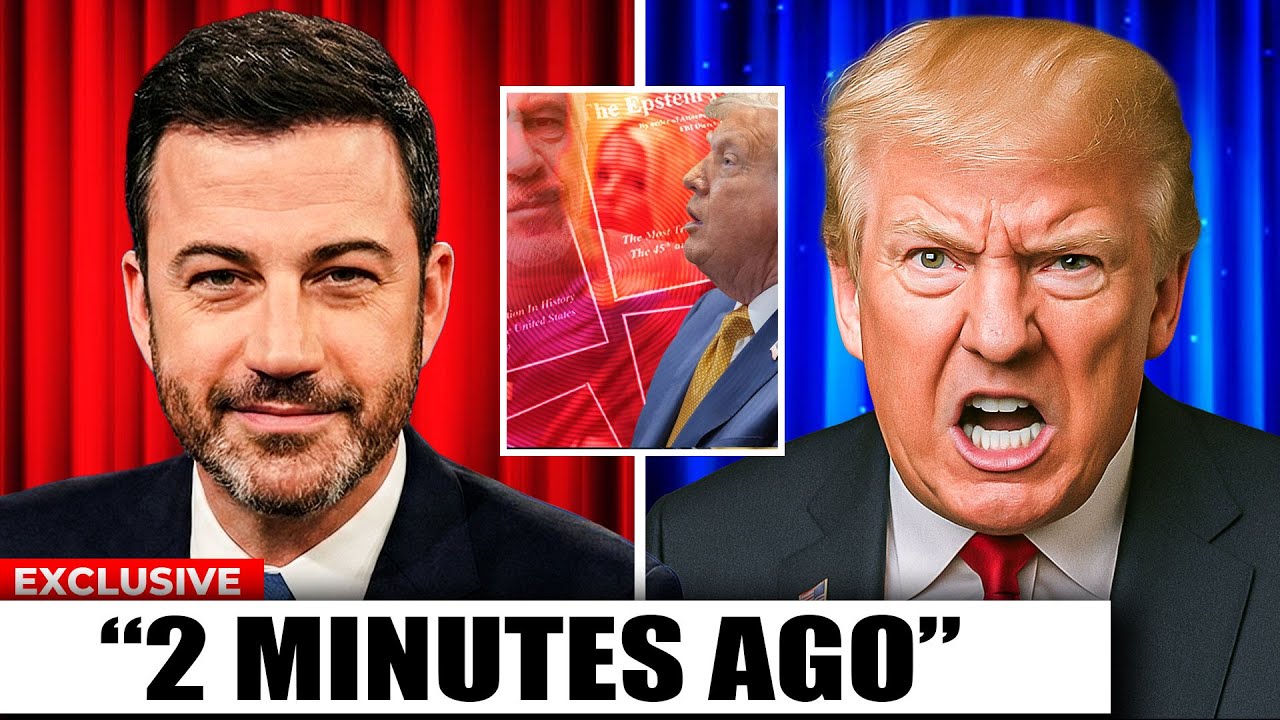
In late September 2025, Jimmy Kimmel returned to the air after a six-day suspension of his ABC program, a pause that followed public criticism from President Donald J. Trump and comments from the administration’s Federal Communications Commission chairman that were widely interpreted as threatening the network’s broadcast license. When Kimmel walked onstage, the studio audience greeted him with a prolonged standing ovation. His response was not defiance but restraint.
“This show is not important,” Kimmel told viewers. “What is important is that we live in a country that allows us to have a show like this.”
The remark framed what followed not as a personal dispute but as a civic one. Over the next 18 minutes, Kimmel delivered a carefully structured monologue that avoided personal insult and instead examined the pattern of presidential behavior behind the controversy. He described efforts by Mr. Trump to publicly pressure media organizations, celebrate the cancellation of critical programs, and portray dissent as disloyalty.
Within hours, the president responded. Posting on Truth Social shortly after midnight, Mr. Trump accused ABC of reinstating Kimmel despite “terrible ratings” and called the comedian “untalented,” while suggesting the network had put itself “in jeopardy.” The claim was demonstrably false. The episode became the most-watched regular broadcast in the history of Jimmy Kimmel Live, drawing more than six million television viewers and tens of millions more online.
Mr. Trump’s reaction followed a familiar pattern. Rather than engaging with the substance of Kimmel’s remarks, he attacked the messenger and implied regulatory consequences for the platform. In subsequent posts, he suggested ABC might face renewed scrutiny, referencing a prior legal settlement as evidence of leverage.
Media analysts noted that the exchange went beyond the customary friction between presidents and comedians. Mr. Trump has long bristled at late-night satire, but this episode raised questions about the use of governmental authority to intimidate critics. Legal scholars pointed out that even indirect threats to broadcast licenses, when linked to political content, risk violating core First Amendment principles.
Kimmel, for his part, declined to escalate. In subsequent broadcasts, he addressed the controversy briefly, then moved on. He thanked fellow late-night hosts—including Stephen Colbert, Jon Stewart, Jimmy Fallon, and Seth Meyers—for publicly defending his right to speak, and he went further, acknowledging conservative commentators and lawmakers who had also criticized the administration’s actions.
That moment, media observers said, may have been the most consequential. By framing free speech as a shared American value rather than a partisan weapon, Kimmel isolated Mr. Trump’s response as exceptional rather than ideological.

The conflict unfolded alongside another politically sensitive issue: the administration’s release of documents under the Epstein Transparency Act. While the Justice Department announced the production of approximately three million pages, critics—including former prosecutors—argued that millions more records remained withheld under privilege claims not explicitly permitted by the statute. Kimmel referenced the discrepancy as an example of what he described as selective transparency: releasing volume without completeness.
The White House rejected those accusations, insisting the disclosures complied with the law. Still, the juxtaposition of aggressive rhetoric toward entertainers and cautious disclosure of sensitive records fueled broader concerns about accountability.
By year’s end, the cultural resonance of the episode extended beyond the United States. In December, Kimmel was invited by Britain’s Channel 4 to deliver its alternative Christmas message, a platform previously given to figures associated with political dissent. In his address, Kimmel spoke directly to international audiences about the importance of a free press and an independent culture, apologizing for what he called the global consequences of American political dysfunction.
The invitation drew criticism from Trump allies, who accused Kimmel of exaggeration. But the broader reaction suggested something else was at work. Polling data showed rising concern among Americans about political interference in media, even as partisan divisions remained deep.
For Mr. Trump, the episode reinforced a governing style that treats criticism as opposition and opposition as threat. For Kimmel, it became an unexpected moment of civic symbolism. He did not claim martyrdom. He did not call for resistance. He simply insisted that satire, disagreement, and even mockery remain lawful—and necessary.
In a political environment increasingly shaped by spectacle, the clash underscored an older truth: the strength of democratic institutions is often tested not by formal laws, but by how leaders respond when they are laughed at.






