By XAMXAM
For years, Donald Trump cultivated an image of relentless confidence: a leader who thrived on confrontation, brushed aside scandal, and dominated press conferences with ease. In recent weeks, that posture has faltered. As newly released records connected to Jeffrey Epstein enter the public domain, Trump has found himself visibly constrained—short on answers, quick to deflect, and increasingly defensive when reporters raise questions he once promised to welcome.
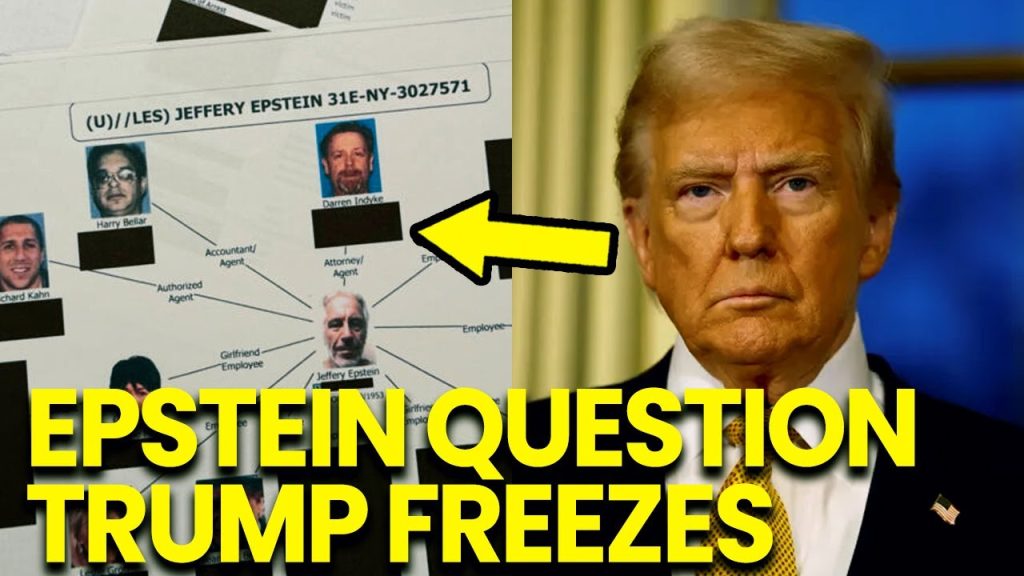
The shift has been subtle but unmistakable. At press gaggles and formal appearances, Trump’s responses to questions about the Epstein files have grown terse. He pivots, criticizes the media, or labels the material a hoax, but often avoids engaging directly with specifics. For a politician whose instincts favor counterpunching, the hesitation has drawn attention in its own right.
The backdrop is an extraordinary document release. The Justice Department recently completed what it described as the final disclosure of Epstein-related materials: millions of pages encompassing investigative summaries, internal memos, and references gathered over years. Officials emphasized that inclusion in the files does not imply wrongdoing and that many entries reflect unverified tips or secondhand information. Still, the scale of the release has fueled intense scrutiny of anyone prominently mentioned.
Trump’s name appears repeatedly in the records, a fact that has become central to the political storm. He insists the documents exonerate him, arguing that they demonstrate political bias and misrepresentation rather than misconduct. “They’re good for me,” he told reporters, casting the release as confirmation of his long-standing claims of persecution.
But the documents have also revived questions Trump previously sought to close. Among them are references to past social interactions with Epstein and travel records that contradict earlier public statements. Trump has denied any improper conduct and has said he cut ties with Epstein long before the financier’s legal downfall. No charges have been brought against Trump in connection with Epstein, and the Justice Department has said its review did not result in criminal action against him.
That distinction—between being named and being accused—has not eased the political pressure. Reporters now arrive armed with page numbers and timelines, pressing Trump to reconcile discrepancies between earlier denials and what the records suggest. It is in these moments that his trademark bravado has given way to irritation or silence.
The controversy carries a note of irony. Trump was among the loudest voices calling for the release of Epstein-related files, framing transparency as both a moral imperative and a political weapon. He signed legislation requiring disclosure and campaigned on the promise that openness would expose elites who believed themselves untouchable. When his administration later slowed the pace of release, critics accused it of backtracking. Trump countered that careful review was necessary to protect privacy and due process.
Now, the very transparency he championed has become a liability. The documents do not offer the neat resolution he promised supporters. Instead, they raise unresolved questions while stopping short of conclusions—an outcome that leaves room for speculation without providing definitive answers.

Administration officials have tried to narrow the focus. A senior Justice Department representative said publicly that the files should not be read as an indictment of those mentioned and cautioned against conflating references with findings. Legal experts echo that warning, noting that large investigative troves often include names of people tangentially connected to inquiries. “Presence in a file is not proof,” one former prosecutor said. “It’s context, not a verdict.”
Yet politics rarely waits for verdicts. Images of a president sidestepping questions have become fodder for critics who argue that Trump’s reaction speaks louder than the documents themselves. In their telling, the discomfort suggests vulnerability. Supporters, by contrast, see a leader harassed by a media ecosystem determined to revive old associations despite the absence of charges.
The episode underscores a broader tension facing Trump as he governs in a polarized environment. He has built his political identity on defiance—on meeting controversy head-on and reframing it as evidence of strength. The Epstein files resist that approach. They are sprawling, technical, and morally fraught, ill-suited to sound bites or easy dismissal.
They also arrive at an awkward political moment. With midterm elections approaching and public fatigue with scandal evident in polling, every appearance that reinforces an image of evasion risks alienating voters beyond Trump’s core base. Republican strategists privately worry that continued focus on Epstein will distract from economic and legislative priorities they would prefer to emphasize.
For Democrats, the situation presents an opportunity tempered by caution. Party leaders have largely avoided making direct accusations, instead highlighting process and accountability. They point to Trump’s earlier promises of transparency and ask why the release required pressure from Congress. The contrast between rhetoric and reality, they argue, is itself revealing.
Whether the controversy deepens or fades will depend partly on what journalists uncover as they continue to review the material. Millions of pages take months, if not years, to fully contextualize. For now, no new charges have emerged, and the Justice Department has reiterated that its role is complete.
What has changed is the tone of the presidency’s interaction with the press. The Epstein files have transformed routine questions into flashpoints and turned transparency into a trap. Trump, once eager to dominate the room, now seems intent on escaping it.
In the end, the documents may not determine guilt or innocence. But they have already reshaped the narrative. A president who promised fearless disclosure now confronts the limits of that promise—learning, in public view, that openness can expose not only enemies, but the unresolved complexities of one’s own past.