By XAMXAM
Late-night television rarely changes the political weather. Most nights, it comments on the storm, offering jokes as umbrellas and punchlines as shelter. But on a recent broadcast, that boundary blurred. What unfolded on live television was not merely satire or celebrity outrage. It was a collision of tone and temperament that left an unmistakable imprint on the public conversation.
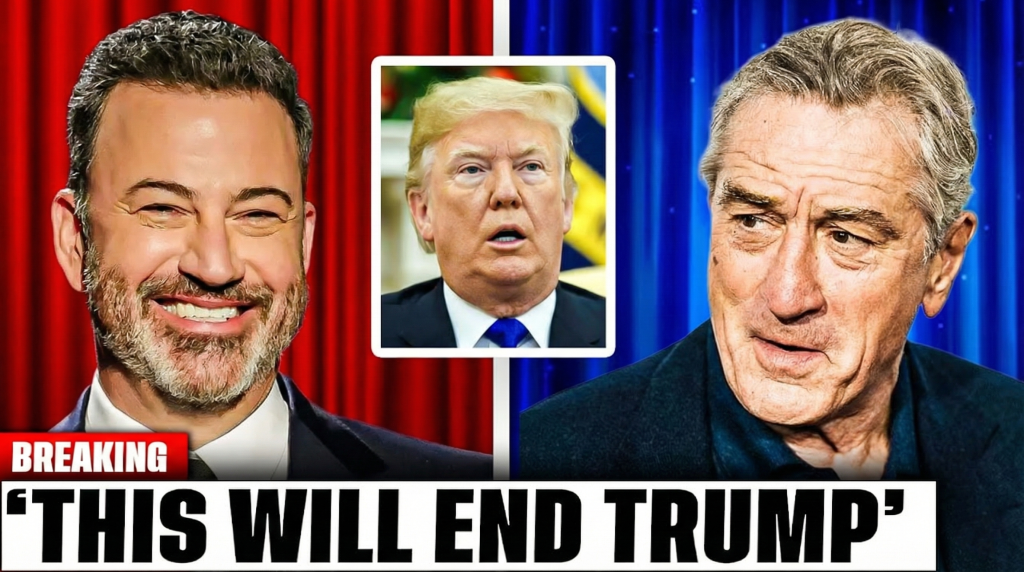
The setting was Jimmy Kimmel Live, hosted by Jimmy Kimmel, whose approach to politics has long relied on restraint rather than bombast. Kimmel does not shout. He edits. He queues the clips, pauses at the right moment, and lets repetition do the work. On this night, he lined up Donald Trump’s own words—boasts, grievances, reversals—and replayed them without adornment.
The audience laughed, then grew quiet, then laughed again. The humor was less about punchlines than accumulation. A claim contradicted itself. A grievance undercut a boast. Vanity emerged as habit. Kimmel did not accuse Trump of excess; he documented it. The studio’s reaction served as a barometer of recognition.
Then the tone shifted.
Enter Robert De Niro, a figure whose public interventions rarely aim for subtlety. De Niro did not arrive to trade jokes. He arrived carrying anger—undiluted, unapologetic, and unmistakably personal. Where Kimmel offered irony, De Niro offered indictment. He spoke of danger, of democracy under strain, of a country flirting with consequences it once believed itself immune to.
The contrast was jarring and deliberate. Late-night comedy often relies on distance; De Niro erased it. His language was blunt, at times profane, and impossible to smooth into a soundbite. The effect was less comedic than catalytic. Viewers were no longer watching a monologue. They were watching a confrontation with tone itself.
What made the pairing so effective was not agreement but division of labor. Kimmel’s satire functioned like a mirror, reflecting Trump’s words back at him in high definition. De Niro’s fury functioned like punctuation, insisting that the reflection mattered. One exposed the pattern; the other named the stakes.
Trump’s response followed a familiar arc. Within hours, he lashed out publicly, attacking both men’s relevance and motives. Ratings were questioned. Elitism was alleged. Bias was declared. The outburst became, in effect, a sequel to the segment itself—another example of the behavior under scrutiny. The reaction confirmed the premise without refuting it.
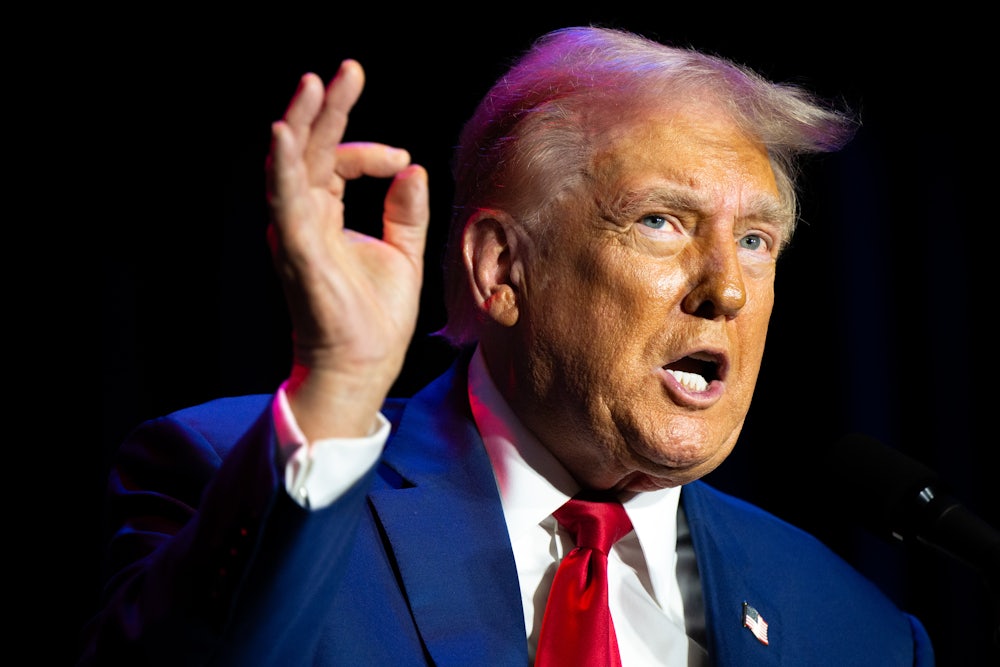
Online, the clips traveled fast. Viewers did not share a single joke so much as a sequence: Kimmel’s calm setup, De Niro’s eruption, the audience’s oscillation between laughter and unease. Commentators noted how rarely late-night television produces moments that feel irreversible. This one did, not because it changed minds wholesale, but because it clarified positions.
Critics argued that entertainers had crossed into advocacy. Supporters countered that silence is also a choice. Both sides missed the more revealing detail: the segment did not ask viewers to adopt a position. It asked them to observe a pattern. Kimmel trusted that observation would do the persuading. De Niro trusted that urgency would do the rest.
There is a long American tradition of comedians serving as informal auditors of power. From court jesters to modern hosts, humor has provided a sanctioned space to say what formal institutions hesitate to articulate. What made this moment different was its refusal to soften. It did not balance anger with reassurance or outrage with apology. It allowed dissonance to stand.
For Kimmel, the method was familiar. He has long treated Trump’s public statements as raw material, believing that repetition is the sharpest critique. For De Niro, the method was personal. His opposition to Trump has been explicit for years, but rarely delivered with such immediacy or reach. Together, they collapsed the usual separation between satire and sermon.
The result was not consensus, but clarity. Power was presented not as invincible or inscrutable, but as performative—and therefore vulnerable to exposure. The laughter that followed was not carefree. It carried an edge of recognition, even discomfort.
Late-night television will return to its usual rhythms. Jokes will reset. Headlines will move on. But moments like this linger because they reveal something structural: when formal accountability feels distant, culture steps in to fill the gap. Not with policy, but with perspective.
In the end, the segment’s impact lay less in what was said than in how it was staged. Calm beside fury. Irony beside indictment. A mirror held steady, then struck.

That combination unsettled its subject. It also unsettled the audience—in a way that laughter alone rarely does.






