Late-Night Satire as a Mirror: How Jimmy Kimmel Turned Donald Trump Jr. Into a Recurring Punchline
By now, the pattern is familiar. Jimmy Kimmel delivers a monologue. Donald Trump Jr. reacts—often online, often instantly. And with that reaction, a new cycle of satire begins. What might look like a simple late-night feud has, over time, evolved into something more enduring: a sustained public narrative shaped by repetition, contrast, and the peculiar power of comedy to define character.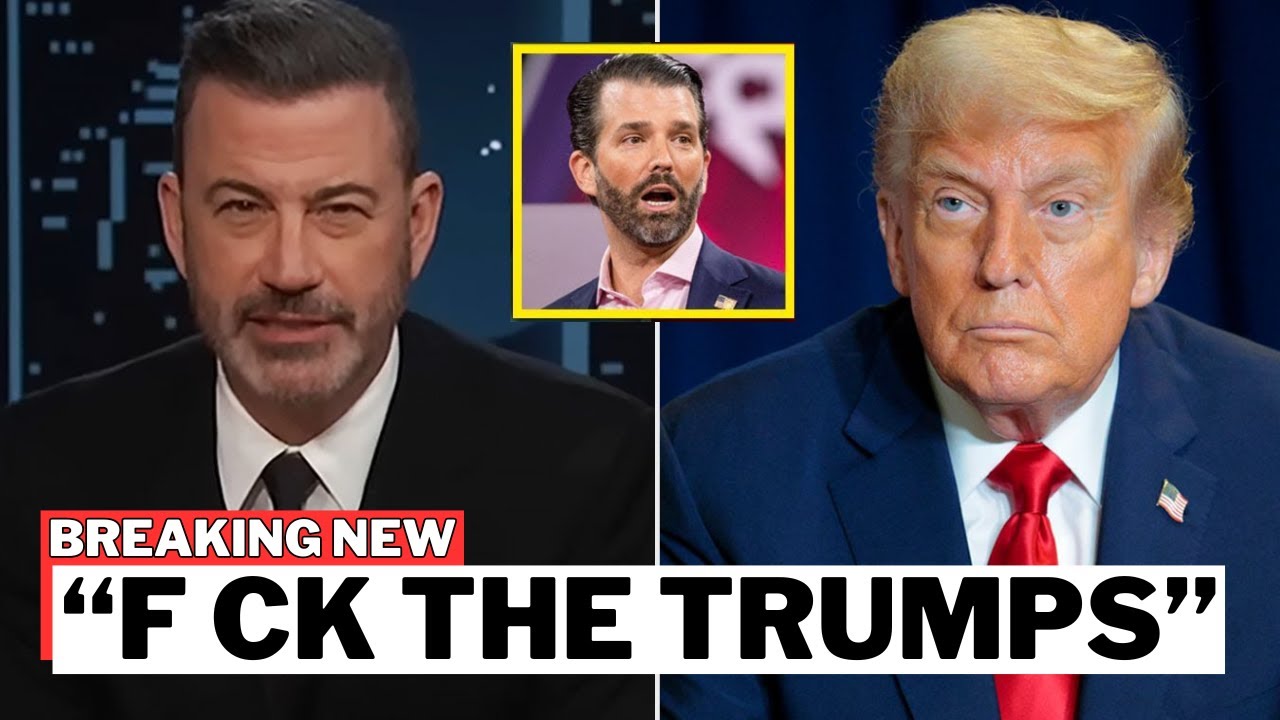
For years, Kimmel has trained his focus not only on Donald Trump, but increasingly on the former president’s eldest son. The result is less a series of isolated jokes than a long-running commentary that has slowly reframed Trump Jr.’s public image—from political surrogate to emblem of inherited privilege and performative outrage.
The approach is methodical. Kimmel rarely relies on a single viral moment. Instead, he accumulates them. A boastful interview clip here, a social-media outburst there, a public appearance meant to project authenticity but undercut by excess. Each fragment is small, even trivial on its own. Together, they form a portrait that audiences recognize almost instinctively.
In recent weeks, that portrait has sharpened. While Trump has delivered erratic, rambling speeches—most notably during a high-profile appearance abroad—Kimmel has continued to return to Trump Jr. as a kind of supporting character in the broader drama. The comedy does not hinge on policy disagreements. It hinges on contrast: between the image Trump Jr. attempts to project and the background he cannot escape.
Trump Jr. has spent years cultivating a persona meant to signal rugged normalcy. He appears in hunting gear, posts about sports and fast food, and positions himself as a plainspoken defender of “real America.” Kimmel’s satire punctures that image by reminding viewers of the Manhattan penthouses, elite schools, and lifelong insulation from consequence that define Trump Jr.’s biography. The laughter comes not from cruelty, but from recognition. The gap between performance and reality is wide, and comedy thrives in that space.
What makes the dynamic especially potent is Trump Jr.’s predictability. Each joke is followed by a response—sometimes defensive, sometimes indignant, almost always public. Those reactions become raw material for the next monologue. Kimmel does not need to invent hypocrisy; he waits for it to announce itself. In this way, Trump Jr. becomes an unwitting collaborator in his own satire.
This pattern extends beyond personal jabs. Kimmel frequently situates Trump Jr.’s behavior within the larger chaos of the Trump family brand. The former president’s speeches—filled with grandiose claims, bizarre tangents, and frequent self-praise—create an atmosphere in which exaggeration feels normal. Trump Jr.’s attempts to mirror that style only emphasize its hollowness. When he boasts about crowd reactions or cultural relevance, Kimmel juxtaposes those claims with footage that tells a different story. The joke is not that Trump Jr. speaks loudly, but that loudness substitutes for substance.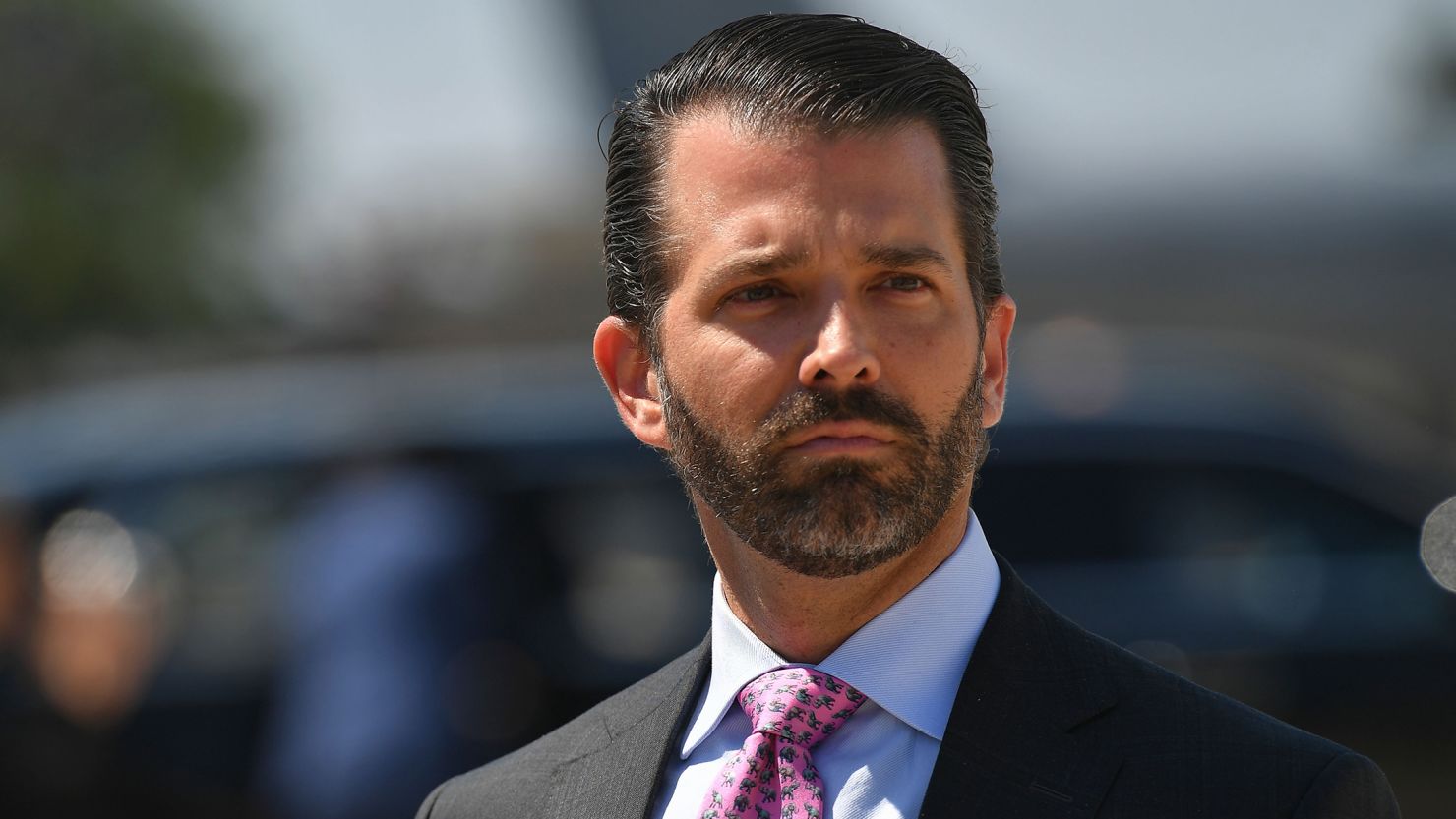
Over time, the effect compounds. Trump Jr. is no longer encountered by many viewers as a political actor in his own right. He is encountered as a recurring punchline. That transformation matters. Public figures are not only shaped by their actions, but by the frames through which those actions are interpreted. Late-night television, with its nightly repetition and massive reach, is one of the most powerful framing devices in American culture.
Critics of Kimmel’s approach argue that it is unfair or excessive, that it crosses from satire into personal attack. Kimmel’s defenders counter that the material is drawn almost entirely from Trump Jr.’s own words and conduct. The show does not invent statements; it replays them. It does not manufacture outrage; it highlights it. In that sense, the comedy functions less as accusation than as aggregation.
The family dynamic adds another layer. Trump Jr.’s public life has unfolded under the long shadow of a father who prizes dominance, loyalty, and constant validation. Kimmel’s jokes frequently hint at that relationship, suggesting a son perpetually performing for approval that rarely arrives. The humor lands because it resonates with a broader truth: that power, when withheld, can be as formative as power bestowed.
Meanwhile, Trump’s own behavior continues to supply context. Each erratic speech, each grandiose claim about ballrooms, borders, or global admiration reinforces the sense of a political brand untethered from reality. Trump Jr., positioned as both heir and amplifier, absorbs the fallout. His defenses of his father often sound less like conviction than obligation, and Kimmel seizes on that tension.

What emerges is not just entertainment, but a form of informal accountability. Comedy distills complexity. It reduces sprawling controversies into moments that are easy to remember and hard to unsee. In doing so, it shapes public perception in ways traditional reporting sometimes cannot. Facts inform, but narratives endure.
The enduring lesson of this saga is not about who wins a feud. It is about how images are built—and dismantled—over time. Trump Jr. continues to step into the spotlight, insisting on relevance, authenticity, and grievance. Kimmel continues to hold up the mirror. As long as that dynamic persists, the narrative will deepen, joke by joke.
In the end, late-night satire does not merely mock power. It documents it—capturing the habits, insecurities, and contradictions that define public figures when the script falls away. For Donald Trump Jr., that documentation has become cumulative. And for millions of viewers, the punchline has already landed.