Bessent Faces Senate Grilling Over Trump’s $10 Billion IRS Lawsuit, Fed Pressure Campaign and Tariff Fallout
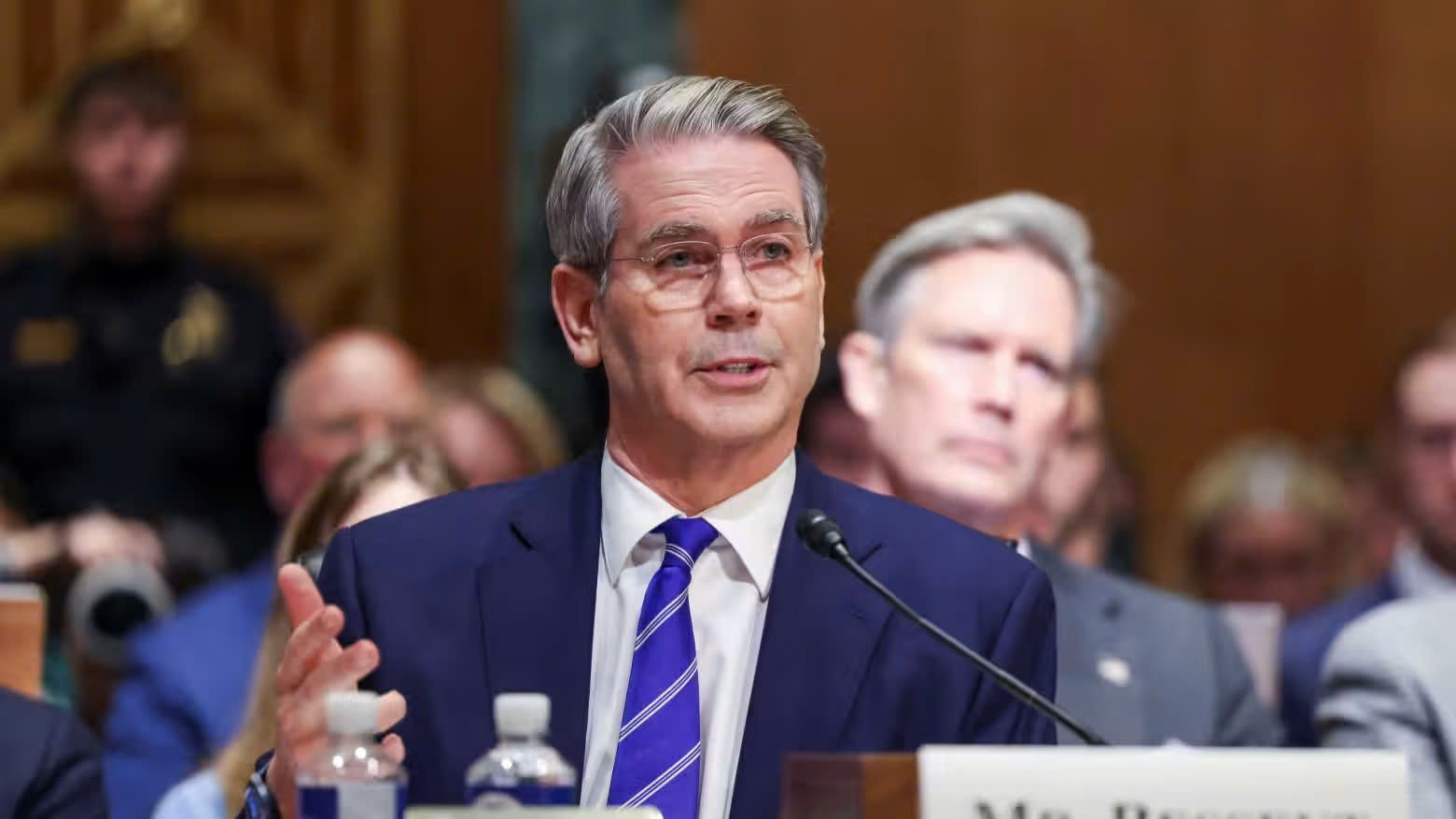
WASHINGTON — Treasury Secretary Scott Bessent returned to Capitol Hill this week for a combative Senate hearing that underscored the unusual bind facing a cabinet official serving under a president who is both shaping federal policy and personally litigating for potentially enormous taxpayer-funded payouts.
At the center of the clash was President Donald Trump’s $10 billion lawsuit against the Internal Revenue Service and the Treasury Department—an extraordinary claim that, if successful or settled, could result in a payment drawn from the Treasury’s general account. Under sharp questioning from Democratic senators, Bessent repeatedly said the matter is controlled by the Justice Department, not by him, and that Treasury would function essentially as “paymaster” for any court-ordered or negotiated payment.
The exchange—widely circulated in clipped segments across major U.S. political social media accounts and YouTube—captured a broader pattern of the hearing: Democrats pressed on conflict-of-interest concerns and the independence of economic institutions; Bessent countered that legal decisions belong to Justice Department lawyers and that economic policy requires time. Republicans largely emphasized trade enforcement and China policy, though at least some lines of questioning suggested discomfort with the administration’s escalating rhetorical pressure on the Federal Reserve.
“Who Pays?” and the Conflict Question
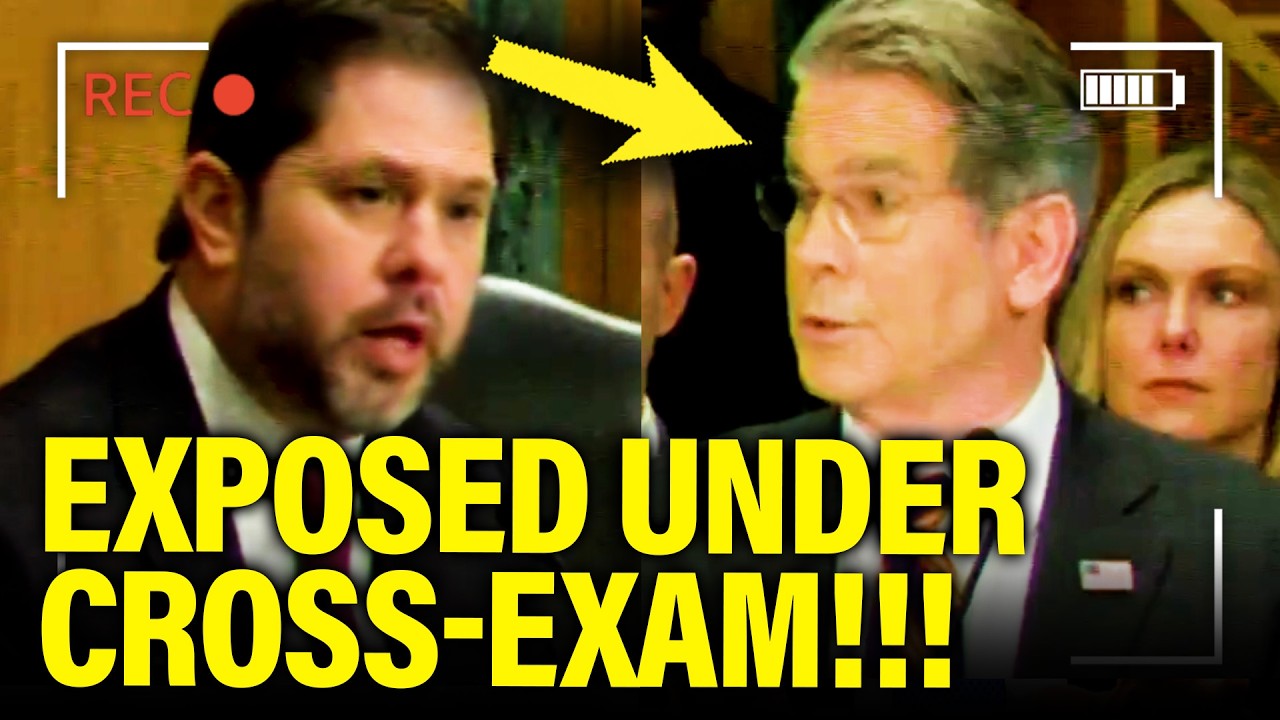
In one of the hearing’s most pointed lines of questioning, Senator Ruben Gallego, Democrat of Arizona, asked Bessent whether anyone at the White House had spoken to him about Trump’s lawsuit. Bessent said no, adding that Trump has said he would donate any proceeds to charity. Gallego then pivoted to the mechanics: if Trump were to prevail, where would the money come from?
Bessent replied that the payment would come from Treasury’s general account—meaning taxpayers ultimately bear the cost.
The questioning quickly became about more than bookkeeping. Gallego and other Democrats framed the situation as an inherent conflict: Trump is suing an agency within the executive branch while also possessing the power to dismiss the officials who would execute the government’s financial obligations.
Bessent’s response was consistent: Justice Department attorneys represent Treasury in litigation, Justice Department decisions would determine whether and how to resolve the case, and the Treasury Department would “follow the law.”
The Associated Press noted that the lawsuit has intensified concerns about conflicts of interest precisely because the president could personally benefit from a settlement or judgment paid out with public funds, even as administration lawyers insist standard processes apply.
The Backstory: A Massive Claim Tied to a Tax Leak
Trump’s lawsuit stems from the unlawful disclosure of private taxpayer information—an incident that affected hundreds of thousands of people. In his testimony, Bessent referenced a figure of roughly 440,000 taxpayers, a number also cited in press coverage of the dispute.
What makes Trump’s case singular is not that taxpayers can sue over privacy violations—those suits exist—but the magnitude of the demand, and the fact that the claimant is the sitting president. That combination has turned what would ordinarily be a technical legal matter into a high-voltage test of norms: whether the executive branch can impartially defend the Treasury and IRS against the president’s own claim and whether the public can trust the integrity of the settlement process.
Warren’s Fed Questions—and the Warsh Episode
Senator Elizabeth Warren, Democrat of Massachusetts, used her time to press Bessent on a different front: the administration’s posture toward the Federal Reserve and Trump’s comments about his nominee to lead it, Kevin Warsh.
In recent days, Trump joked publicly that he might sue Warsh if interest-rate decisions did not match Trump’s preferences, prompting Warren to seek a clear assurance that the nominee would not face legal retaliation for monetary policy choices. Bessent declined to provide that guarantee, saying it would be up to the president.
The Wall Street Journal reported on Trump’s “sue Warsh” joke, which became a flashpoint for lawmakers who see it as another attempt to politicize a central bank that is designed—by statute and tradition—to be insulated from direct presidential command.
Fox News, covering the Warren-Bessent exchange, emphasized the combative tone and framed it as a partisan clash—while still highlighting that Bessent did not rule out the prospect of legal action, a posture that alarmed some Democrats who argue that even joking threats can chill institutional independence.
Tariffs, “Liberation Day,” and Manufacturing Job Losses
The hearing also became a proxy debate over the administration’s tariff strategy—promoted by Trump as a reset of trade relationships and a catalyst for domestic manufacturing. Democrats cited data suggesting that manufacturing employment has weakened in the months after the administration’s April 2025 tariff rollout, sometimes described by the White House as “Liberation Day.”
Senator Raphael Warnock of Georgia, in a post-hearing statement, pointed to 72,000 lost jobs and argued that the tariff agenda has increased costs for small businesses and families.
Investopedia, summarizing Bessent’s recent testimony, reported the same 72,000 figure and described Bessent’s defense: that new factory announcements and groundbreakings indicate a longer-term shift that takes time to materialize in payroll data.
Bessent’s core argument—repeated in multiple hearings—has been that the tariff program is intended to build resilience and bargaining power even if the near-term adjustment is painful, and that some indicators should be read as “beginnings” rather than final outcomes.
Why This Hearing Matters
The testimony offered a rare window into an administration governing through both policy and personal legal claims—while pushing against traditional boundaries of bureaucratic independence. Three issues, in particular, are now colliding:
-
Accountability and conflicts: Can the government credibly defend itself in a lawsuit brought by the president seeking a massive payout?
-
Institutional independence: Are presidential threats—joking or not—changing the behavior of the Fed or other agencies?
-
Economic credibility: With tariffs and affordability at the center of political messaging, hearings like this have become arenas where senators attempt to anchor the debate in measurable outcomes—prices, jobs and investment.
For Bessent, the challenge is structural: he is Treasury secretary, but the lawsuit and any settlement strategy belong to Justice Department lawyers; he is a top economic adviser, but many outcomes depend on global supply chains and private-sector reactions; and he is expected to reassure markets and the public even as the administration’s rhetoric tests long-standing norms.
For Congress, the hearings are increasingly about whether laws and guardrails built for ordinary presidencies can withstand a presidency willing to blur the line between public power and private interest—especially when the potential dollar figures are measured in billions.






