BY CUBUI
When Presidential Fury Met Late-Night Satire, Stephen Colbert Had the Last Laugh
NEW YORK — For a time during the Trump presidency, it appeared that Donald Trump had singled out a late-night comedian as a personal adversary. His target was Stephen Colbert, the sharp-tongued host of The Late Show with Stephen Colbert on CBS.
Trump’s attacks were not subtle. From rally stages and social media posts, he branded Colbert a “low life,” a “no-talent guy,” and repeatedly suggested the network should fire him. At various points, the president appeared to celebrate regulatory scrutiny of the show, treating it as proof that pressure might finally silence a critic he openly despised.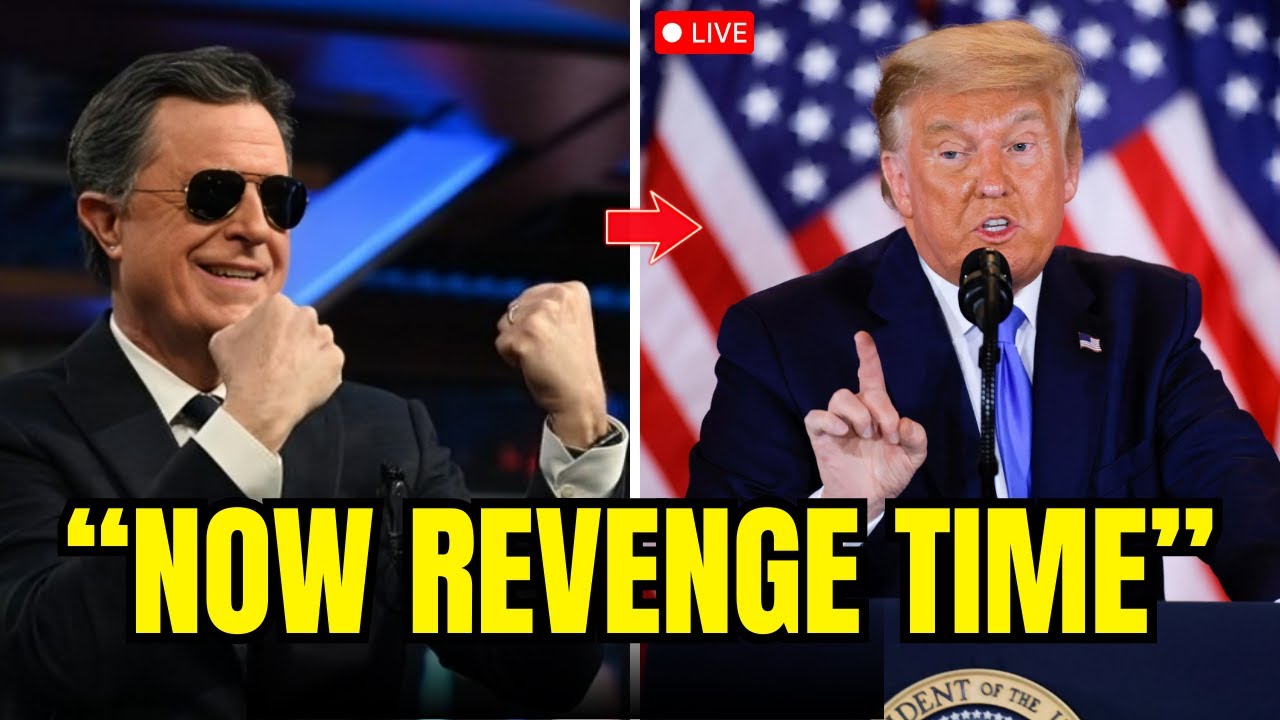
In Washington, such language would normally be understood as an attempt at intimidation. In late-night television, it turned out to be something else entirely: a catalyst.
Colbert did not retreat. Instead, he did what seasoned entertainers do when confronted with an unexpected spotlight — he leaned into it. Trump’s insults became material. His tweets were read aloud, printed on props, even placed on coffee mugs. Each attack was repurposed as comedy, delivered with a tone that suggested amusement rather than outrage.
“Tastes like freedom of speech,” Colbert quipped on air after quoting one of Trump’s insults, drawing a roar from the studio audience.
What followed was one of the more ironic reversals of the Trump era. Before the president’s sustained attacks, Colbert’s show had struggled to dominate the fiercely competitive late-night field. Jimmy Fallon, with a softer, less political tone, was leading the ratings. That changed rapidly.:max_bytes(150000):strip_icc():focal(742x313:744x315)/stephen-colbert-late-show-012726-2-e8a9da783b284008993571c9d01286bf.jpg)
As Trump’s criticism intensified, so did Colbert’s visibility. Viewership climbed week after week. By the fall of 2017, The Late Show had overtaken its competitors to become the most-watched program in late-night television — a position it would hold for years.
Media analysts saw a clear cause-and-effect relationship. Each presidential attack generated headlines, social-media chatter, and curiosity. Viewers tuned in not only for Colbert’s jokes, but to see how he would respond. Trump, in effect, had elevated a critic he wanted marginalized.
“The president didn’t just pick a fight,” said one television executive at the time. “He became the show’s most effective promoter.”
Colbert’s strategy was notable not only for its success, but for its restraint. He did not try to outshout Trump or match his anger. Instead, he treated the attacks as absurdities — proof that satire had landed close enough to provoke a reaction. In doing so, he reframed the power dynamic. Trump’s fury looked excessive. Colbert’s calm looked confident.
Even commentators who disagreed with Colbert politically acknowledged the effectiveness of the approach. Conservative media critics, while condemning his content, conceded that he had turned controversy into a sustainable ratings engine. The more Trump complained, the stronger Colbert’s position became.
Throughout Trump’s presidency, the pattern repeated. A tweet or rally insult would appear. Colbert would respond that night, often addressing the president directly through the camera with a mix of mock gratitude and irony. “Thank you for watching,” he once said. “I’m honored to live rent-free in your head.”

Behind the jokes was a deeper lesson about modern media. Attention — even hostile attention — is a valuable currency. Trump, a former reality-television star himself, had long understood this principle. In this case, however, it worked against him. By focusing so much energy on Colbert, he validated the comedian’s relevance and amplified his reach.
Awards followed. Emmy nominations accumulated. The Late Show became a cultural reference point, not just for political satire but for how entertainment could absorb and neutralize political pressure. When Trump’s presidency ended, Colbert’s platform remained intact, its audience loyal, its influence undiminished.
Trump’s effort to silence a critic had produced the opposite result. The comedian he tried to undermine emerged stronger, richer in audience and stature, while the attacks themselves became footnotes — remembered mainly as the fuel that powered Colbert’s rise.
In retrospect, the episode reads less like a feud and more like a case study. Power does not always win through volume. In a media environment built on attention, attempts at suppression can become acts of promotion. Colbert did not defeat Trump by matching his aggression, but by converting it — transforming hostility into humor and outrage into ratings.
The presidency ended. The late-night show went on.
For Colbert, the revenge was not loud or vindictive. It was quieter, steadier, and far more enduring: success.






