By XAMXAM
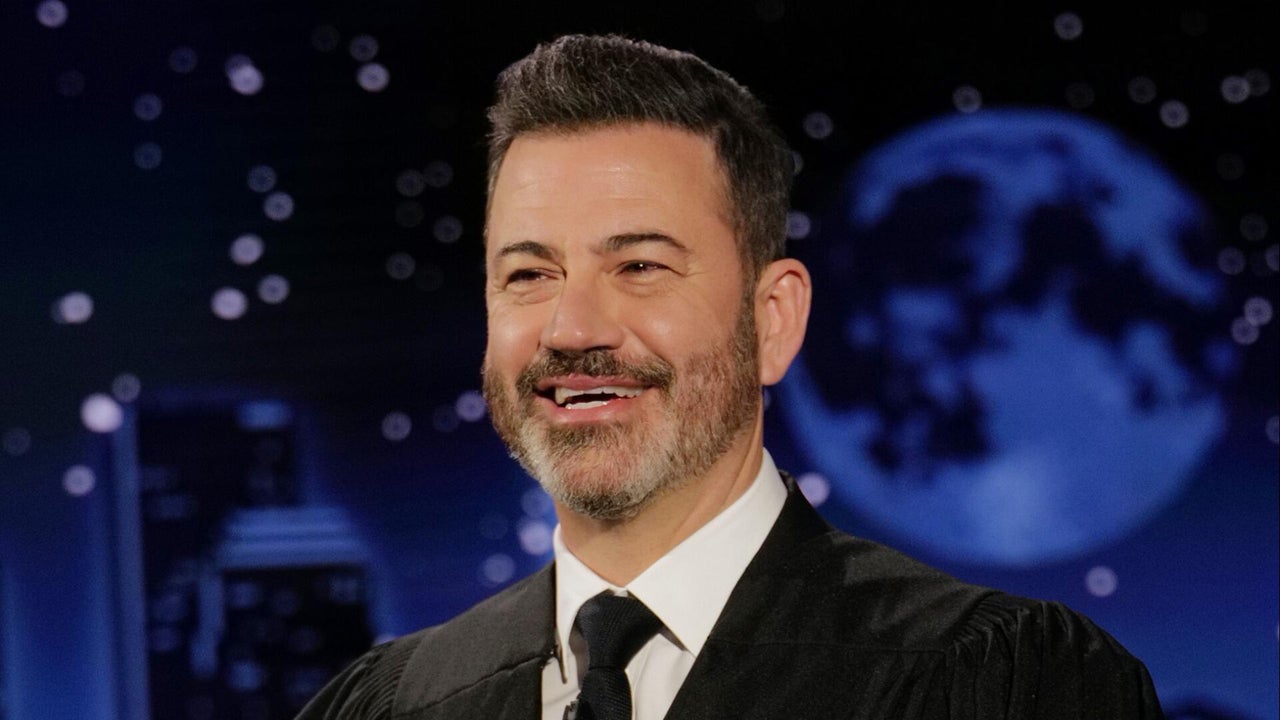
Late-night television rarely claims the authority of a courtroom or the permanence of a ledger. Its tools are timing and tone, not exhibits and oaths. Yet, over time, repetition can harden into record. That is what happened during a recent broadcast when Jimmy Kimmel trained his attention not on Donald Trump himself, but on the figure who has increasingly come to embody the family’s contradictions: Donald Trump Jr..

The segment was not explosive in the way viral clips promise to be. There was no shouted accusation, no single line engineered to travel alone. Instead, Kimmel did what he has done for years—assembled a sequence. Clips, quotes, social posts, public appearances. Each was familiar on its own. Together, they formed a pattern that was difficult to dismiss.
The pattern is the point. Kimmel has not reduced Trump’s eldest son to a punchline through a single insult, but through accumulation. Don Jr. appears, again and again, attempting to perform a version of himself that clashes with the circumstances of his life: the rhetoric of grievance paired with the privileges of inheritance; the posture of the outsider delivered from the center of power. The comedy does not invent the gap. It illuminates it.
What made the moment resonate beyond the studio was the reaction it appeared to provoke elsewhere. According to people familiar with the matter, Trump watched the segment and responded in the way he has so often responded to perceived slights against his family—by escalating. Public attacks followed, denouncing Kimmel’s talent and relevance, reframing satire as persecution. The familiar spiral resumed.
This response is instructive. Trump’s political persona depends on dominance of the frame. When criticism is loud, he can answer loudly. When opponents posture, he can out-posture them. Kimmel did neither. He let Don Jr.’s words sit alongside Don Jr.’s biography. He allowed the audience to do the arithmetic.
The jokes landed not because they were cruel, but because they were legible. Viewers recognized the references: the performative outrage, the conspicuous displays of relatability, the constant proximity to power paired with claims of marginalization. Each callback reinforced the last. By the end of the segment, Don Jr. was not being mocked for a single mistake; he was being defined by a series.
This is how satire exerts pressure without spectacle. It replaces shock with familiarity. The audience stops asking, “Is this fair?” and starts thinking, “Yes, that again.” Over time, the laughter changes pitch—from surprise to recognition. The jokes no longer introduce an idea; they confirm one.
For Trump, that confirmation is dangerous. His defense of his son has often mirrored his defense of himself: deny, counterattack, distract. But the material resists those moves. A pattern cannot be sued. A sequence cannot be yelled down. The more Trump reacts, the more he validates the premise that something substantive is being exposed.
The family dynamic intensifies the effect. Don Jr.’s public performance frequently reads as an audition—for relevance, for approval, for proximity to the authority his father commands. Kimmel does not psychoanalyze this on air. He does not need to. He simply shows the attempts and lets the audience infer the motive. In doing so, he transforms private speculation into public observation.

There is also a broader media lesson embedded here. Late-night comedy is often dismissed as ephemeral, but its power lies in continuity. Traditional reporting breaks news; satire curates behavior. When a figure returns to the same posture, the same claim, the same misstep, night after night, comedy becomes a ledger of habits. It documents what repetition reveals.
The Trump family’s response has been to frame this documentation as hostility. Yet hostility would require exaggeration. Kimmel’s method is restraint. He rarely raises his voice. He rarely invents. He quotes, plays, recalls. The result is a portrait assembled from the subject’s own materials.
Public perception shifts not because viewers are persuaded, but because they are reminded. Memory is refreshed. Context is restored. A tweet that once seemed isolated is reattached to a chain. A performance that once felt convincing is placed beside its predecessors and begins to wobble.
In that sense, the “meltdown” matters less than the mechanism that produced it. Trump’s reaction confirmed the vulnerability Kimmel had highlighted: that the family’s image depends on constant management, and that unmanaged moments—replayed, remembered, and recombined—can undermine even the loudest counterattack.
Comedy, at its most effective, does not argue. It arranges. It trusts the audience to notice the throughline. In this case, the throughline was not scandal but sameness—the repeated attempt to claim authenticity while surrounded by artifice.
As long as Don Jr. continues to perform this role, the material will continue to present itself. And as long as Trump responds with fury rather than reflection, the cycle will feed itself. What remains after the laughter fades is a durable impression, built slowly and reinforced nightly.
Late-night television did not create that impression. It archived it.