By XAMXAM
For a figure who has long thrived on noise, confrontation, and spectacle, Donald Trump has always appeared most comfortable when the room is loud and polarized. Conflict gives him shape. Outrage gives him momentum. What unsettled him this week was not a shouted accusation or a viral ambush, but something far more disorienting: calm.
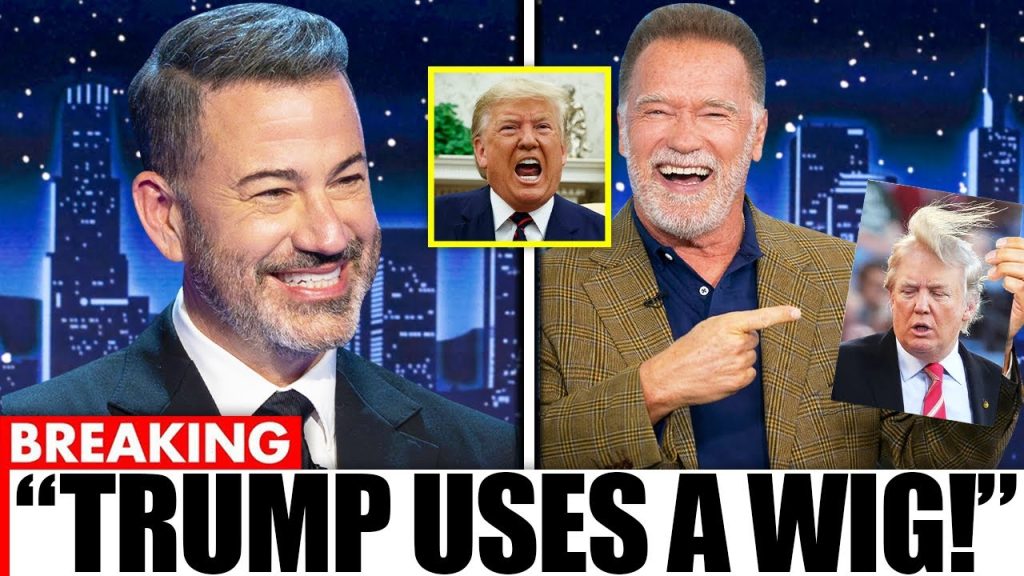
The late-night appearance that set off another Trump eruption was framed, at first glance, as routine entertainment. Jimmy Kimmel opened his show with the familiar rhythm of topical humor, easing the audience into a conversation that felt loose and unthreatening. Then Arnold Schwarzenegger entered the picture, carrying with him a cultural authority that required no explanation. What followed was not an attack in the conventional sense, but a methodical exposure that worked precisely because it refused to behave like one.
There were no raised voices. No dramatic confrontations. No theatrical outrage. Instead, there was pacing, restraint, and an almost academic patience. Kimmel lined up Trump’s own words—past statements, public performances, familiar boasts—and allowed them to sit in the open. Schwarzenegger responded not with insults, but with measured reflections rooted in experience: leadership, accountability, and the quiet discipline of governance. The effect was cumulative and unsettling.
Trump has built his public identity on overwhelming presence. His strategy depends on flooding the environment with certainty, repetition, and emotional intensity until contradiction is drowned out. That strategy falters when no one takes the bait. On Kimmel’s stage, neither host nor guest attempted to dominate Trump. They did not argue with his mythology; they treated it as something fragile enough to be handled gently—and therefore exposed.
Schwarzenegger’s role proved especially destabilizing. As a former governor and a self-made cultural icon, he represents a version of American success Trump often gestures toward while insisting he does not care about comparisons. Schwarzenegger does not announce his authority; it arrives with him. When he spoke about leadership, inclusivity, and responsibility, he did so without framing Trump as an enemy. He simply described an alternative model—one grounded in accountability rather than grievance. The contrast required no commentary.
Kimmel, meanwhile, employed a tactic honed over years of political satire: letting irony do the work. His tone remained conversational, even curious. He did not push for dramatic reactions or chase viral moments. Each transition felt smooth, almost casual, while quietly tightening the screws. Viewers began to realize—slowly—that they were not watching a series of jokes, but the careful dismantling of a narrative.
The audience reaction told its own story. Laughter arrived first, then hesitation, then something closer to recognition. This was no longer the laughter of punchlines, but of realization—the sound people make when they see a familiar image crack in an unexpected way. Trump’s persona, long sustained by repetition and volume, looked oddly brittle when left unsupported.

That brittleness is what reportedly triggered Trump’s response. According to people familiar with the reaction, he watched the segment live and erupted almost immediately, pacing and lashing out as clips spread across social media. The irony is familiar. Each outburst extends the life of the moment, ensuring that what might have faded instead hardens into a narrative of loss of control.
What made this episode distinct was the absence of hostility. Trump understands hostility. He feeds on it. Hostility allows him to frame criticism as persecution. This encounter offered no such escape hatch. There was no obvious villain, no sneering elite, no shouting crowd to rally against. There was only indifference mixed with amusement—a tone that denies him the drama he needs to regain footing.
In political theater, silence can be more damaging than outrage. When Trump’s claims were allowed to float without reinforcement, they began to wobble. When repetition was stripped away, substance—or the lack of it—became visible. This is the danger of calm scrutiny: it does not provoke a defensive surge, but invites reflection. Reflection lingers.
The broader reaction online underscored that point. Clips circulated not because of a shocking line or an explosive confrontation, but because viewers sensed something quietly significant had occurred. Commentators struggled to categorize the moment. It was not a roast in the traditional sense, nor a debate. It was closer to an unveiling.
Trump’s appeal has always depended on control of the narrative environment. Rallies, social media, and combative interviews allow him to dictate tempo and tone. Kimmel and Schwarzenegger denied him that control. They provided a neutral stage where bravado had to stand on its own. It did not.
This episode also hinted at a broader shift in audience appetite. Spectacle still draws attention, but fatigue is evident. Increasingly, viewers respond to moments that respect their intelligence—moments that trust them to connect the dots without being told what to think. The quiet dismantling on Kimmel’s stage did exactly that.
In the end, this was not about winning an argument. It was about revealing how dependent certain political personas are on constant reinforcement. Trump did not lose because he was shouted down. He lost because no one felt the need to shout at all. Sometimes, the most destabilizing critique is simply allowing a performance to continue without applause.