By XAMXAM
What began as a late-night joke metastasized into a family drama that exposed the uneasy boundary between satire and power. After Donald Trump Jr. contacted police over a remark made on Jimmy Kimmel’s show, the episode escalated quickly—drawing in Donald Trump himself and reigniting a broader argument over free expression, sensitivity, and the reach of late-night television.
The spark was familiar. Kimmel, a longtime critic of Trump, delivered a joke that framed the former president’s family as emblematic of excess and grievance. The punch line landed with his studio audience, but its aftershocks traveled well beyond Hollywood. According to accounts discussed on air, Trump Jr. contacted authorities to report the joke, a move that surprised even seasoned observers of the family’s combative relationship with the press.
Late-night comedy has long relied on exaggeration and ridicule, particularly of presidents and their relatives. What made this moment unusual was not the joke itself, but the response. Calling the police over a quip suggested a lowered threshold for offense—and, critics argued, an impulse to translate personal irritation into institutional pressure.
Kimmel addressed the incident directly, framing it as a misunderstanding of satire rather than a threat. Comedy, he noted, thrives on discomfort; its function is to provoke, not to endanger. He contrasted the call to law enforcement with the routine hostility he and other hosts have endured, from lawsuits to public shaming, often celebrated by Trump on social media.
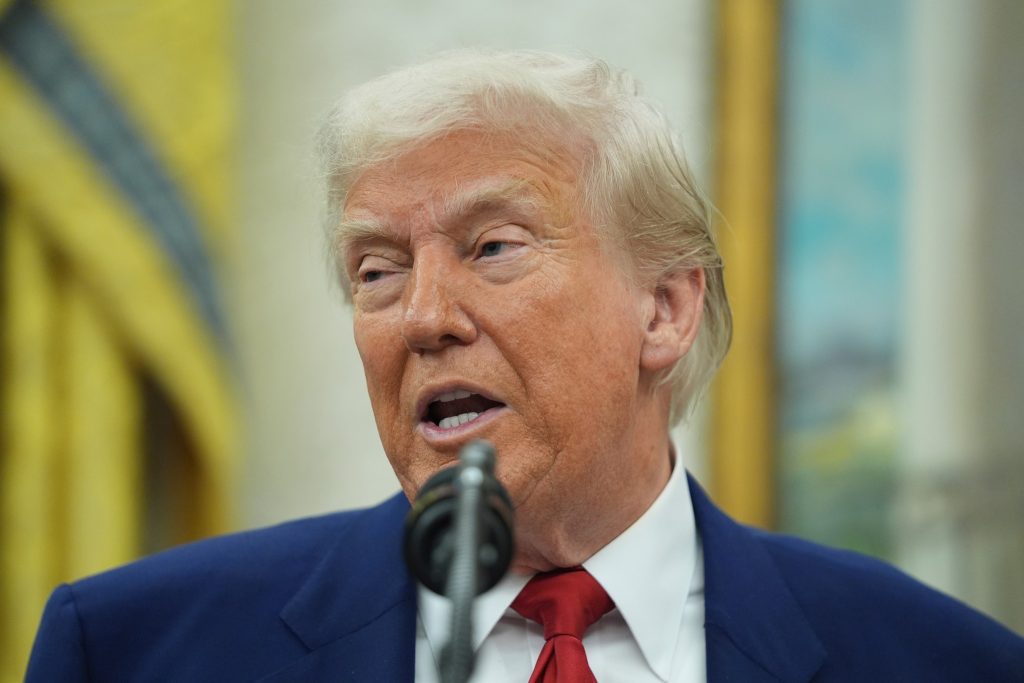
That celebration soon followed. Trump reacted on camera and online, denouncing Kimmel and renewing claims that late-night television functions as a partisan arm of the media. The tone was familiar: allegations of bias, assertions of victimhood, and the suggestion that entertainers wield unfair influence. What differed was the immediacy. The former president appeared visibly agitated, treating the joke—and his son’s response—as evidence of a broader campaign against his family.
The exchange illuminated a recurring tension in American culture. Satire occupies a peculiar position: protected speech that can nonetheless provoke consequences. When targets of jokes are private citizens, the backlash is usually social. When they are political figures with access to power, the stakes change. A call to police, however brief, carries symbolic weight; it raises the specter of coercion even when no action follows.
Media scholars note that late-night television has become a surrogate public square, especially for audiences disengaged from traditional news. Hosts replay clips, contextualize statements, and translate policy disputes into accessible narratives. That visibility makes them lightning rods. Politicians who feel misrepresented often lash out, but few escalate to involving law enforcement over humor.
The Trump family’s sensitivity to mockery is not new. Trump has long responded aggressively to criticism, particularly when it targets perceived weakness or hypocrisy. His children, thrust into public roles during his presidency, have alternated between embracing notoriety and decrying it. The police call, in that sense, fit a pattern: a demand that lines be drawn around acceptable speech.

Yet the incident also exposed a contradiction. Trump frequently champions toughness and resilience, mocking opponents for fragility. The spectacle of authorities being summoned over a joke sat uneasily alongside that posture. Kimmel seized on the irony, arguing that power should absorb ridicule rather than attempt to suppress it.
Networks and legal analysts were quick to temper speculation. No charges were filed; no investigation followed. The episode, they emphasized, was less a legal matter than a cultural one. Still, it fed into a larger debate about how far political families should go to counter satire—and whether such reactions ultimately amplify the very speech they oppose.
Viewers responded along predictable lines. Supporters of Trump framed the joke as irresponsible and the response as protective. Critics saw it as an overreach that underscored insecurity. Clips circulated widely, often stripped of nuance, turning a brief late-night moment into a proxy battle over censorship and criticism.
For Kimmel, the episode reinforced a role he has cultivated for years: not merely a comedian, but a commentator willing to test boundaries. He closed his segment by reiterating a basic principle—that jokes are not warrants, and discomfort is not danger. The audience applauded, though the applause felt less like laughter than assent.
The broader implications linger. Late-night television has always needled presidents, from Nixon to Reagan to Obama. What has changed is the velocity of response and the willingness to invoke authority in disputes once settled by boos or counter-jokes. In that sense, the call to police was not an anomaly, but a symptom of an era in which offense is swiftly escalated and performative outrage becomes strategy.
As the cycle moved on, the incident left behind a familiar residue: heightened attention, hardened positions, and a reminder that humor remains one of the few arenas where power can still be punctured—sometimes at the cost of provoking it. Whether that dynamic chills speech or sharpens it will depend less on the jokes than on how those in power choose to respond to them.