Dispute Over Epstein Testimony Exposes Deepening Rift in Congress
WASHINGTON — A dispute over how former President Bill Clinton and former Secretary of State Hillary Clinton should testify in Congress has escalated into a broader confrontation about transparency, precedent, and political accountability, following the release of documents connected to Jeffrey Epstein.
At issue is whether the Clintons’ testimony before the House Oversight Committee should take place in a public hearing or behind closed doors as filmed, transcribed depositions. Republican leaders on the committee, including Chairman James Comer, have argued that depositions are the appropriate and standard investigative tool, emphasizing that transcripts and video recordings would eventually be released to the public.

The Clintons, through public statements and allies, have countered that a fully open hearing would better serve transparency, allowing the public to see questioning and responses in real time rather than through selectively released excerpts. They have said they are willing to testify under oath and answer questions, but prefer to do so in a public forum.
The disagreement has quickly taken on a partisan edge. Democrats argue that limiting testimony to closed-door sessions gives congressional leaders excessive control over timing, framing, and release of information. Republicans respond that depositions are designed to gather facts efficiently and reduce what they describe as performative political theater.
“This is about substance, not spectacle,” Mr. Comer said in a recent television interview, adding that public hearings are often “more for entertainment than investigation.” He has also said that every deposition conducted by the committee under his leadership has ultimately been made public.
Yet the controversy has not remained confined to procedure. Instead, it has revived a larger debate over how Congress is handling the Epstein files — and whether its approach is consistent across political lines.
Several Democrats have pointed out that the files include references to numerous prominent figures from both parties, including former President Donald Trump. They argue that if the committee is invoking the principle that “no one is above the law” in compelling testimony from the Clintons, the same principle must apply universally.
House Speaker Mike Johnson, when asked whether Trump should also face questioning under oath, has said the president answers questions from the press regularly, though critics note that press exchanges are not conducted under oath and do not carry the same legal weight as sworn testimony.
The dispute has also intersected with concerns about how the Epstein documents were released. Survivors and their attorneys have criticized what they describe as flawed redactions that exposed identifying information, prompting the Justice Department to remove and revise thousands of pages. Legal experts have said the episode has raised serious questions about institutional competence and victim protection.
Republicans insist their investigation is focused on understanding how Epstein was able to evade accountability for years and whether government failures contributed to that outcome. They say testimony from high-profile witnesses, including the Clintons, could help lawmakers assess gaps in enforcement and oversight.
Democrats, however, argue that the process has increasingly appeared selective. They point to statements from Republican officials emphasizing the Clintons’ relevance while downplaying scrutiny of others named in the files. Some lawmakers say this risks undermining public trust in the investigation’s stated goal of impartial accountability.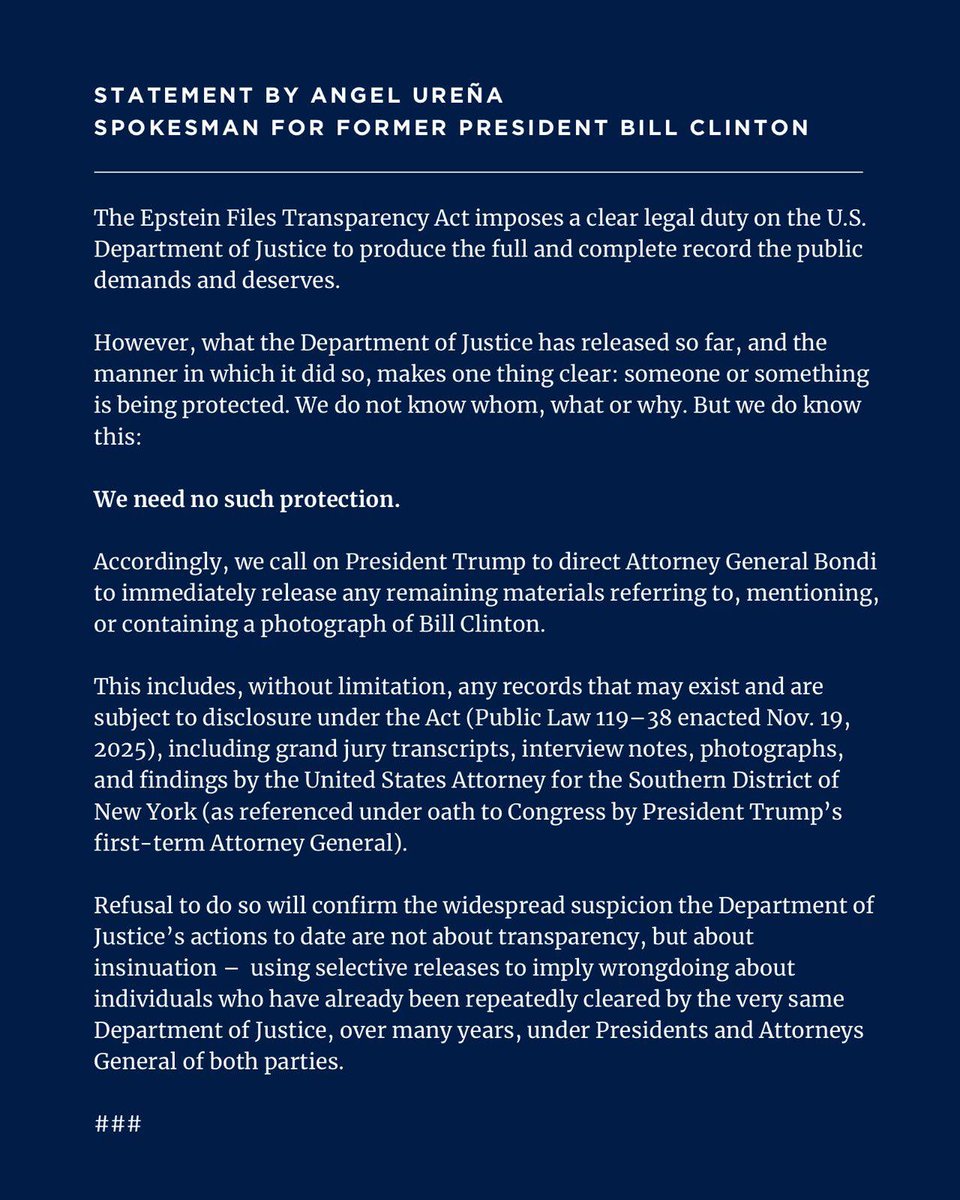
The political stakes are significant. By compelling former presidents and senior officials to testify, Congress reinforces its investigative authority — but it also creates precedent. Once that precedent is established, future committees may be expected to apply it consistently, regardless of party affiliation.
Trump has offered mixed reactions. In recent interviews, he has criticized what he called excessive focus on the Clintons while also expressing personal respect for them. Analysts say the comments reflect an effort to distance himself from the investigation without directly challenging its legitimacy.
For now, the Oversight Committee is moving forward with depositions rather than public hearings. Committee officials say the recordings and transcripts will be released, though they have not specified a timeline. Democrats have said they will continue pressing for public proceedings and for equal treatment of all individuals referenced in the Epstein materials.
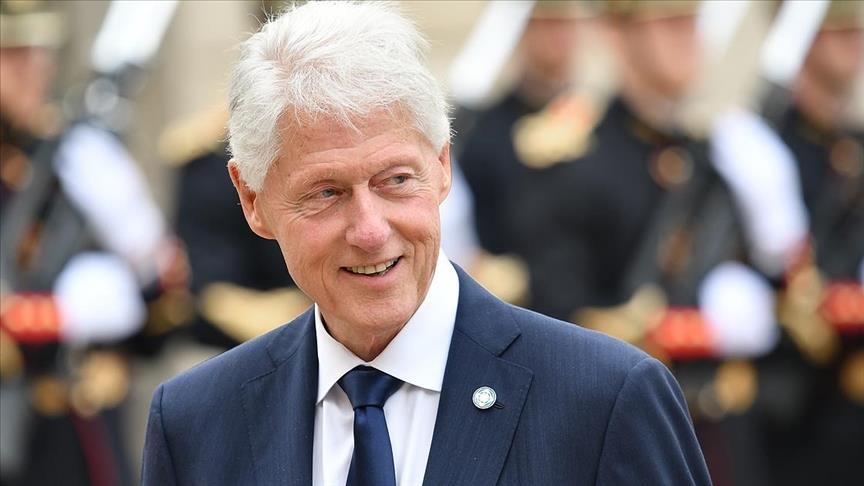
What began as a procedural disagreement has thus become a test of congressional norms. It raises questions about who decides the terms of accountability, how transparency is defined, and whether investigations involving politically powerful figures can escape the gravitational pull of partisan conflict.
As the depositions approach, both sides are framing the outcome as a matter of principle. Republicans say they are defending investigative integrity. Democrats say they are defending openness. The public, meanwhile, is left to judge whether Congress can navigate one of the most sensitive investigations in recent memory without reinforcing the very distrust it claims to address.
In Washington, precedent often matters as much as outcome. And in the unfolding debate over the Epstein testimony, lawmakers are not just arguing about the past — they are shaping the rules that will govern future reckonings.






