Washington, D.C. — An extraordinary series of developments in the U.S. Senate has thrust President Donald Trump into a new political crisis, as lawmakers openly debate constitutional emergency measures to contain what they describe as increasingly dangerous behavior from the Oval Office.
Within the same week, senators have publicly discussed invoking the 25th Amendment to remove Trump for alleged mental unfitness while also introducing a resolution designed to prevent the president from using military force to seize Greenland, an autonomous territory of Denmark and a U.S. ally.
The convergence of these actions marks a dramatic escalation — not routine partisan opposition, but lawmakers signaling that they believe the president poses a direct risk to national and international security.

Senate Impeachment Vote Underscores Deepening Divide
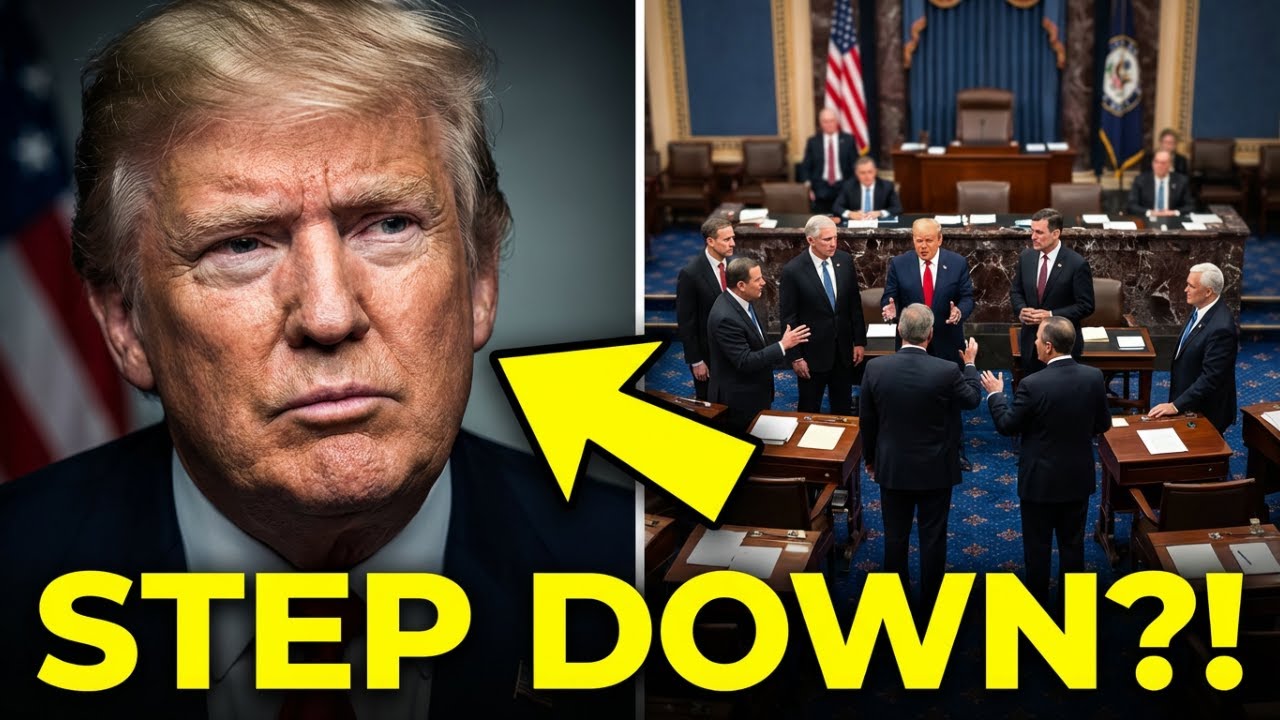
The alarm intensified as senators conducted a roll-call vote under Senate impeachment rules, standing in their seats and declaring “guilty” or “not guilty” when their names were called, as required by Article I, Section 3 of the Constitution.
While conviction requires a two-thirds majority — a threshold not reached — the spectacle itself underscored how aggressively lawmakers are now using constitutional mechanisms to confront Trump.
“This is not symbolic theater,” one Senate aide said privately. “This is Congress testing every tool it has.”
Greenland, the Nobel Prize, and Leaked Texts
At the center of the storm are leaked communications reportedly showing Trump telling Norway’s prime minister that he no longer felt compelled to focus on peace-oriented policies after failing to win the Nobel Peace Prize — and that he could now pursue what “benefits the United States,” including acquiring Greenland.
Critics argue the messages reveal a deeply troubling motivation: a president openly tying foreign policy decisions to personal resentment over not receiving an international award.
Senator Ed Markey (D–Mass.) reacted swiftly, posting “Invoke the 25th Amendment” alongside reports of the texts. In a follow-up statement, Markey said Trump’s fixation on Greenland and his grievance-driven decision-making “demonstrate he is unfit for office and a danger to our safety.”
Calls for 25th Amendment Removal Grow
Markey was not alone. Several Democratic lawmakers echoed the call, with some arguing that Trump’s behavior meets the standard for Section 4 of the 25th Amendment, which allows for removal when a president is “unable to discharge the powers and duties of his office.”
Representative Yassamin Ansari described Trump as “extremely mentally ill” and said the amendment exists precisely for moments like this. Representative Eric Swalwell posted simply “25,” widely interpreted as shorthand support for invoking the amendment.
While legal experts agree such removal is unlikely — requiring the vice president and a majority of the cabinet to act, followed by two-thirds approval in both chambers of Congress — the significance lies in the fact that sitting members of Congress are openly discussing it at all.
“This is emergency language,” said a constitutional law professor. “It signals lawmakers believe something has gone fundamentally wrong.”
Resolution to Prevent Military Action Against Greenland
Running parallel to the 25th Amendment discussion is a separate but related effort led by Senator Ruben Gallego (D–Ariz.), who introduced a resolution explicitly barring Trump from using military force to seize Greenland.
Gallego said Trump’s repeated statements about “needing Greenland for defense,” combined with his past actions, justified congressional intervention.
“Trump is openly declaring his intentions,” Gallego said. “We must intervene before he recklessly invades another nation.”
The senator pointed to Trump’s prior authorization of military operations in Venezuela, aimed at capturing Nicolás Maduro, as evidence that the president is willing to deploy force without congressional approval.
Congress Reasserts War Powers
Under the Constitution, Congress holds the power to declare war, but modern presidents have increasingly used military force without formal authorization. Lawmakers argue Trump has pushed those boundaries further than most.
Gallego’s resolution, while not legally binding, would establish a clear congressional prohibition. Legal analysts say such a move would create a political and constitutional “trip wire.”
“If Trump ignored this resolution and acted anyway, impeachment would be unavoidable,” said a former national security lawyer. “Congress would have explicitly told him not to do it.”
Why These Moves Matter Even If They Fail
Neither the 25th Amendment effort nor the Greenland resolution is expected to succeed immediately. Trump’s vice president and cabinet remain loyal, and resolutions do not carry the force of law.
But politically, the implications are profound.
First, Democrats are deploying multiple constitutional tools simultaneously — impeachment, removal discussions, and war powers constraints — to construct a narrative that Trump is unstable and dangerous.
Second, the Greenland–Nobel Prize connection is especially damaging. Critics say it portrays a president making global security decisions based on personal ego rather than national interest.
Third, these actions give Republicans space to distance themselves without fully breaking ranks. Supporting limits on military power is far easier politically than endorsing outright removal.
Fourth, the public discussion of the 25th Amendment changes internal dynamics within the administration, potentially making cabinet members more cautious about enabling extreme actions.
Finally, the Greenland resolution creates a clear red line. If Trump crosses it, Congress has already laid the groundwork for immediate consequences.
A Presidency Surrounded by Crisis
All of this unfolds amid a cascade of other controversies — court setbacks, government shutdown threats, collapsing approval ratings, and investigations dominating headlines.
The cumulative effect is what concerns lawmakers most.
“Each crisis alone might be survivable,” said one Democratic strategist. “Together, they paint a picture of a presidency in meltdown.”
What Comes Next
As midterm elections approach, Democrats are expected to elevate Trump’s Greenland rhetoric and 25th Amendment calls into campaign messaging, arguing that flipping Congress is necessary to contain the president.
Whether voters agree remains to be seen. But one thing is clear: it is no longer fringe to hear U.S. senators openly discuss removing a sitting president or preventing him from launching a military action against an allied nation.
That alone marks a stunning moment in American political history.
As one senior aide put it: “This isn’t normal politics anymore. This is Congress trying to prevent a catastrophe.”