Republican Whistleblower Exposes Trump’s Alleged Plan to Destroy the Kennedy Center
A prominent Republican critic has stepped forward with a bombshell claim that is sending shockwaves through Washington and the American arts community: Donald Trump may be preparing to permanently destroy the John F. Kennedy Center for the Performing Arts, not to renovate it — but to erase it.
The allegation comes as the Kennedy Center, America’s premier national cultural institution and a living memorial to a murdered president, faces unprecedented turmoil under Trump’s influence. Ticket sales have declined, artists have withdrawn, staff members have resigned, and now the former president has announced a sudden, sweeping shutdown of the center for a two-year “renovation.”
But according to a Republican insider, that explanation may be a smokescreen.
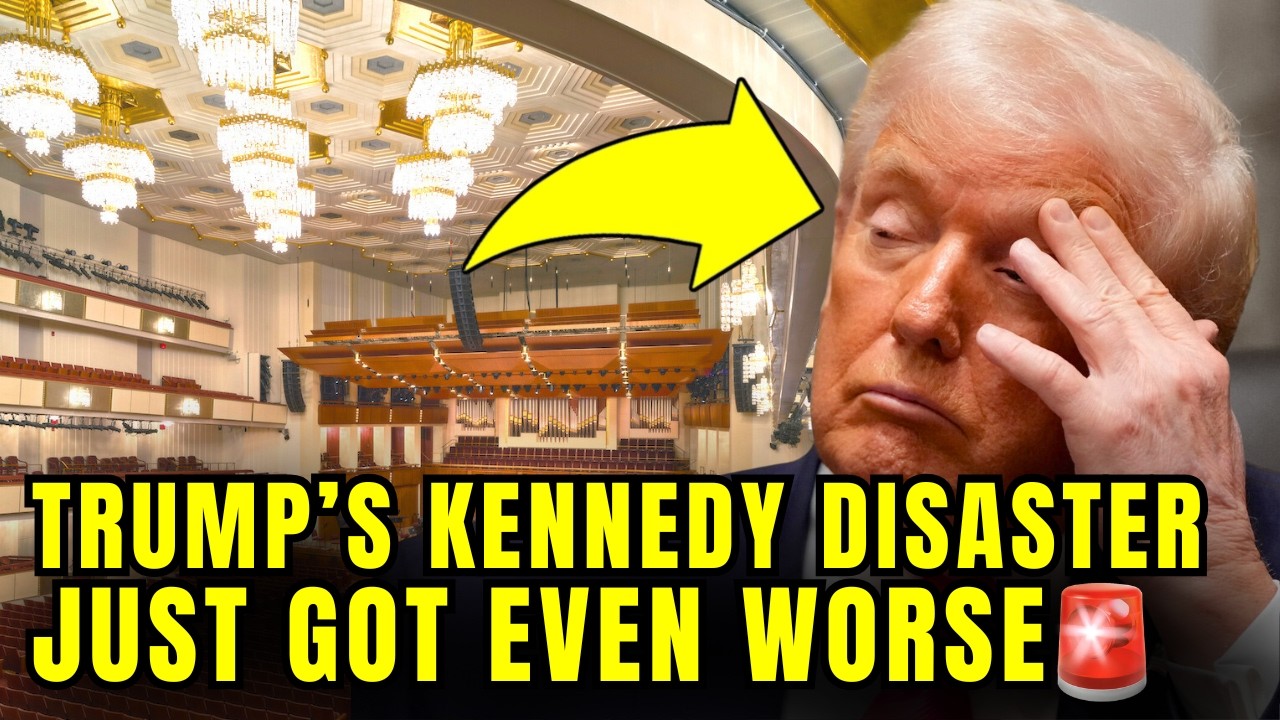
The Kennedy Center Controversy Explained
The Kennedy Center was conceived as a national memorial to President John F. Kennedy following his assassination in 1963. For decades, it has stood as a bipartisan symbol of American cultural life, hosting world-class performances in music, theater, dance, and opera.
That tradition has been severely disrupted since Donald Trump inserted himself into the institution.
Earlier, Trump declared himself chairman of the Kennedy Center and pushed to rename it after himself — a move that legal experts noted would require congressional approval. The effort alone sparked outrage among artists, historians, and members of the Kennedy family, who saw it as a violation of the site’s purpose and legacy.
The backlash was swift. High-profile performers, including renowned soprano Renée Fleming, the cast of Hamilton, and composer Philip Glass, canceled appearances. Audience attendance dropped sharply. The Kennedy Center, once a unifying cultural space, became a political flashpoint.
Trump’s Sudden Shutdown Announcement
Earlier this week, Trump escalated the situation by announcing that the Kennedy Center would be closed for two years for what he described as a “top-to-bottom renovation.” He characterized the building as “run down,” “dilapidated,” and even “dangerous” — claims disputed by those familiar with the facility, which is widely regarded as well-maintained.
The proposed renovation reportedly carries a price tag of $200 million.
Trump insisted that he was not “ripping it down,” claiming that the structure, steel, and marble would largely remain intact. Critics, however, immediately pointed to Trump’s track record — particularly his promise to preserve the White House East Wing before ultimately tearing it down to construct a massive ballroom.
Members of the Kennedy family expressed outrage, with Maria Shriver suggesting the closure was an attempt to distract from the growing list of artists canceling performances in protest.
Adding to the confusion, productions such as Mrs. Doubtfire and Back to the Future: The Musical still have tickets on sale, raising questions about whether the shutdown plan was coordinated internally at all. Reports also suggest Kennedy Center leadership was blindsided by the announcement.
A Republican Sounds the Alarm
Now, a new and far more alarming claim has emerged.
Rick Wilson, a lifelong Republican strategist and co-founder of the Lincoln Project, has published a detailed essay on his Substack alleging that Trump’s true intention is not renovation — but demolition.
According to Wilson, bulldozers could arrive as early as this summer to begin tearing down the Kennedy Center entirely.
“Not because Trump has a plan,” Wilson writes, “not because it needs to be razed — just to hurt people.”
Wilson argues that Trump’s behavior follows a familiar pattern: destroy something beloved, culturally significant, and symbolic, then replace it with a gaudy, self-referential substitute that bears his name and reflects his personal aesthetic.
He draws direct comparisons to Trump’s destruction of historic architectural features in New York during the 1980s and his recent reconstruction of the White House complex.
Vanity, Power, and Architectural Control
Wilson goes further, framing Trump’s alleged plans as part of a larger obsession with forcing a legacy through physical monuments.
From gilding the Oval Office to reshaping the White House grounds, from proposing territorial expansion to repeatedly campaigning for the Nobel Peace Prize, Trump appears consumed by how history will remember him.
Wilson compares Trump’s fixation to authoritarian leaders who attempted to remake national capitals in their own image, writing that Trump’s imagined Washington skyline resembles the failed architectural fantasies of dictators like Adolf Hitler and Joseph Stalin.
Such projects, Wilson notes, are rarely remembered with pride — but with shame and regret for what was lost.
A Sense of Urgency — and Decline
One of the most disturbing aspects of Wilson’s argument is the sense of urgency behind Trump’s actions.
Trump’s moves appear rushed, reckless, and unconcerned with long-term consequences. Some observers suggest this mirrors the behavior of leaders who believe time is running out — whether due to political vulnerability, legal peril, or declining health.
Trump has shown repeated signs of cognitive and physical decline in recent years, fueling speculation that his increasingly extreme actions are driven by a fear that his window to cement a legacy is closing.
If so, the Kennedy Center may represent not just another institution under attack, but a final target in a broader effort to impose Trump’s name and image on American history — regardless of the damage done.
What’s at Stake
If Wilson’s claims are accurate, the destruction of the Kennedy Center would represent an unprecedented assault on American cultural heritage.
This is not simply about a building. It is about the erasure of a national memorial, the silencing of artistic expression, and the transformation of a shared civic space into a monument to one man’s ego.
It would also mark a dangerous escalation in the use of political power to punish dissent and rewrite history.
The Bigger Picture
Trump’s critics argue that this moment exposes a fundamental truth: authoritarian impulses are not limited to laws and elections. They extend to culture, memory, and identity.
Institutions like the Kennedy Center exist precisely to transcend partisan politics. Their destruction — literal or symbolic — signals a deeper rupture in American democracy.
One day, Trump will no longer wield power. Names can be removed. Gold plating can be stripped away. Buildings can be restored or rebuilt.
But the damage done in the meantime may be permanent.
As this story continues to unfold, one question looms large: will Americans allow a national cultural monument to become collateral damage in one man’s quest for immortality?






