When a Roast Became a Mirror, and the President Couldn’t Look Away
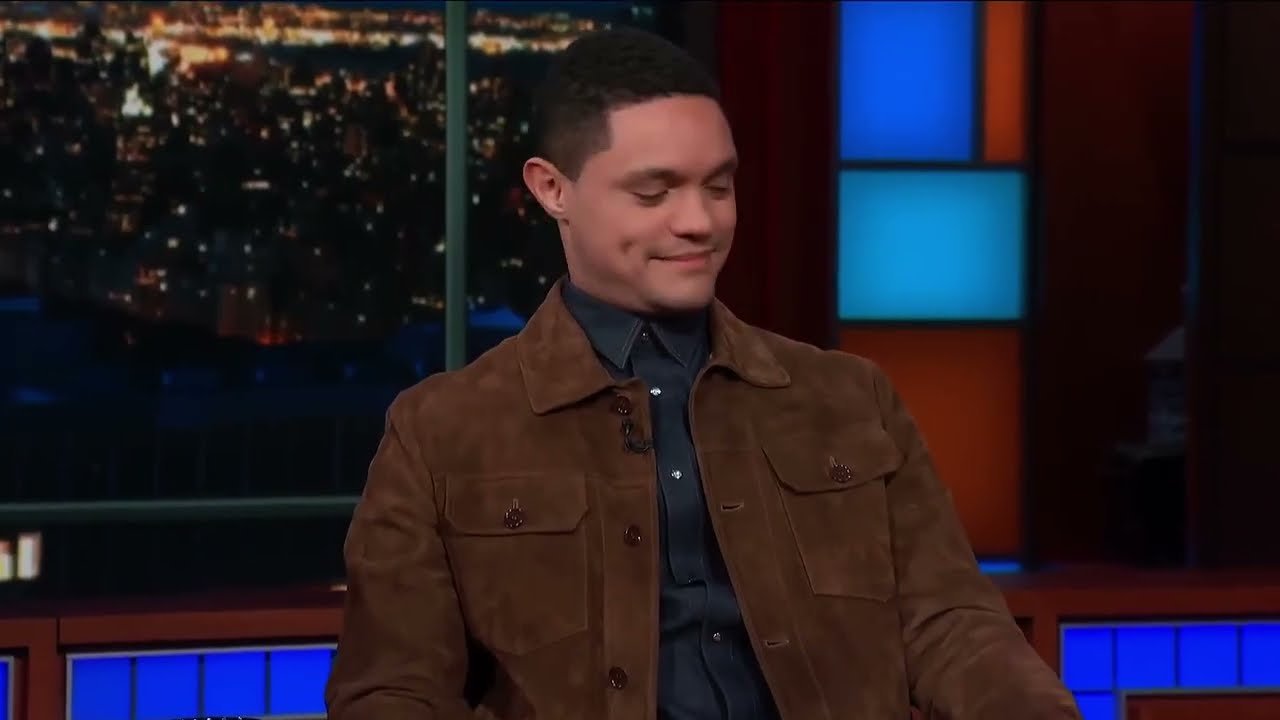
On paper, the premise was simple: Trevor Noah hosting an awards-night broadcast, delivering the kind of jokes that have long served as America’s unofficial pressure valve. But the viral retelling that spread afterward framed it as something sharper than entertainment—an evening in which comedy did not merely mock Donald Trump, but exposed the mechanics of his public persona by letting them echo back at him.
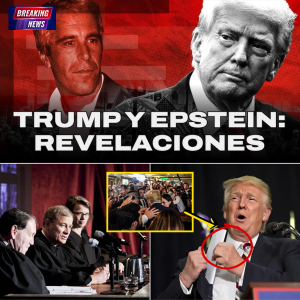
The segment’s most circulated moment hinged on a single line. Noah compared the desirability of a Grammy to Trump’s much-discussed interest in acquiring Greenland, adding an aside about Jeffrey Epstein’s island that landed with the lightness of a punch line and the sting of insinuation. Noah did not build a case. He did not enumerate allegations. He did what comedians are trained to do: compress cultural memory into a joke that audiences can recognize instantly.
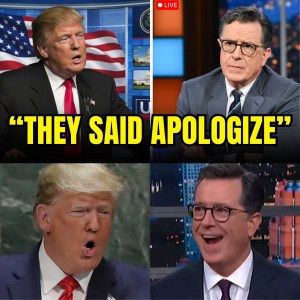
Trump’s response, as the viral clips emphasize, was not measured. He did not dismiss the monologue with indifference. Instead, he offered something closer to a legal-style denial—repetitive, emphatic, and expansive—while also attacking Noah’s talent and the quality of the show itself. It was the familiar Trump pattern: claim he does not care, then demonstrate that he cares deeply.
In the retelling, the comedy does not “win” because it is louder. It wins because it is lighter. Trump’s political strength has often depended on weight—volume, dominance, the ability to drag every exchange into his preferred terrain of grievance and counterattack. Noah, by contrast, operates in the opposite direction. He disarms by making serious subjects feel conversational, almost casual, which makes defensiveness look disproportionate.
![[WATCH] 'The Daily Show' Host Trevor Noah Wants Donald Trump to Disappear](https://variety.com/wp-content/uploads/2015/09/trevor-noah-donald-trump.jpg)
That disproportion is the point of the viral narrative. It argues that Trump’s vulnerability is not to evidence alone, but to framing. He can fight an investigator. He can attack a reporter. He can mock a rival. But when a comedian frames him as a man who cannot tolerate laughter at his expense, the resulting reaction often becomes self-confirming. The more he lashes out, the more he appears defined by what he claims is beneath him.
Noah’s broader monologue, as clipped and reshared, was less a list of accusations than a portrait of behavioral patterns. He described Trump as a figure who treats politics like a reality show, where conflict is content and attention is proof of success. He characterized Trump’s confidence as delicate—something that looks formidable from a distance but fractures under sustained scrutiny. He did so without shouting, which allowed the audience to laugh while still absorbing the underlying critique.
The retelling also draws strength from its structure. It begins with humor about Trump’s relationship to the media—how he denounces it while obsessively tracking it—then widens into commentary about leadership: Trump’s tendency, in Noah’s framing, to treat expertise as an inconvenience and institutions as props. The jokes about pandemics, diplomacy, and policy are presented not as mere insults, but as evidence of a larger worldview—one in which instinct is always superior, contradiction is never disqualifying, and accountability is optional if the crowd is still cheering.
That reading is not neutral, and it is not meant to be. Yet its popularity points to something real about contemporary political culture: comedy has become a venue for civic diagnosis, especially when other institutions feel slow, cautious, or compromised. When government language becomes evasive and partisan media becomes predictable, satire often fills the gap by naming patterns that audiences already sense but struggle to articulate.
The viral package goes further by suggesting that the true “reveal” is not about any single allegation, but about Trump’s dependency on applause. Noah’s jokes depict him as unable to exist outside constant affirmation—someone who cannot endure silence, irrelevance, or being laughed at without trying to regain control. The Trump figure in these clips is not merely powerful; he is reactive. And reaction, when it becomes habitual, looks less like strength than compulsion.
There is also a subtler point embedded in the way the story is told: that Trump’s defenses often expand rather than resolve. A comedian makes a joke. Trump denies it. Then he widens the denial, attacks unrelated enemies, and turns the spotlight back toward himself—creating a larger spectacle than the original monologue ever could. In that cycle, the joke becomes less important than the response. Comedy sets a small fire; Trump supplies the oxygen.
None of this proves wrongdoing. Satire is not a courtroom. Its authority is cultural, not legal. But it can still reveal something about power: how it reacts under pressure, what it prioritizes, what it cannot ignore. The appeal of this viral moment lies in the sensation that the audience is not being told what to think, but shown a dynamic they already recognize.
In the final beats of the retelling, Noah slows down. He frames satire as a coping tool—something that helped people live through years of turbulence without surrendering to exhaustion. And he closes with a quiet inversion of Trump’s favorite currency. Greatness, he suggests, is not measured by demand for applause, but by the ability to earn respect without insisting on it.
It is a line that lands because it does not sound like a punch line at all. It sounds like a standard. And in a media age built on noise, a standard—spoken calmly—can be more destabilizing than a shout.