A Viral “DNA Reveal” About the Trumps Shows How Fast Modern Scandal Outruns Verification

A dramatic story raced across social media this week with the pacing of a thriller and the certainty of a verdict: a televised confrontation, a “leaked” laboratory report, and a claim that Melania Trump has “zero biological connection” to Barron Trump. In many versions of the clip, the scene is staged like a courtroom drama. A political figure sits across from President Trump, holds up a document described as a DNA analysis, and declares that the family narrative Americans have been told for years is false.
The details shift from post to post. Sometimes the setting is a debate stage. Sometimes it is framed as a cable-news studio. Sometimes the protagonist is a sitting member of Congress. But the core assertion remains the same—and it is extreme. Some versions go further still, floating an incest allegation involving Ivanka Trump, presented as the “real” explanation for the claimed DNA results.
There is just one problem: outside of viral narration and selectively presented images of a document, there is no publicly verifiable evidence supporting the claim.
That gap—between the velocity of the allegation and the scarcity of proof—is the story. And it illuminates the current mechanics of political scandal: a culture in which “documents” can be conjured in minutes, emotional certainty can substitute for confirmation, and the reputational damage arrives well before any reliable accounting of what is true.
The shape of a modern rumor
The story is engineered for the algorithm. It has the essential ingredients of a high-performing conspiracy narrative: a taboo claim, a seemingly official artifact (“a lab report” with a seal and a barcode), a powerful family, a moral shock, and a scene staged for maximum emotional payoff—silence, a frozen expression, the suggestion of confession without words.
It also leverages a familiar cultural premise: that wealthy and politically connected people can buy privacy, influence institutions, and bury uncomfortable truths through money, lawyers and compliant professionals. In the viral versions, that premise is not argued; it is assumed. The “lab report” is offered as the final key that makes every suspicion click into place.
Yet in the real world, extraordinary medical claims—especially those involving genetic parentage—are not verified by a screenshot, a cropped page, or a narrated clip. They are verified by provenance, chain of custody, authentication of the issuing laboratory, and consent, among other basic requirements. If a document is genuine, it can typically be traced to an identifiable institution and corroborated through independent channels. If it is fabricated, it often relies on the audience’s unfamiliarity with how medical testing is documented and reported.
The viral story does not provide the kind of information needed to verify anything. It offers a conclusion and asks the viewer to accept it on faith.
What a DNA report can and cannot do
Even when real, DNA testing is not magic; it is statistical inference based on genetic markers. A standard parentage test compares the child’s genetic profile to that of an alleged parent and calculates the probability of a biological relationship. It can be highly accurate—when the samples are obtained and handled properly, and when the analysis is conducted by a legitimate lab following validated procedures.
But there are reasons professionals treat such results with caution outside controlled settings. Mistaken identity, mishandled samples, contamination, incomplete profiles, and fraudulent submissions are all known risks. That is why chain of custody matters—and why courtroom-admissible testing is an entire specialized field.
A claim that a public figure’s child has “zero biological connection” to a person widely recognized as the parent, based solely on a purported “leaked report,” raises immediate questions: Who collected the sample? Under what consent? From which lab? Under what accreditation? What method and loci were used? How is the document authenticated? Who verified that the names on the report match the people tested?
The viral narrative supplies none of this. Instead, it supplies the feeling of proof.
The ethical problem: private people as collateral
There is a second issue that is often ignored in the adrenaline of a viral scandal: Barron Trump is a private individual who did not choose public life. Even in families that build political brands, children remain ethically distinct from public officials. Converting a private person’s parentage into political spectacle is not accountability; it is exploitation, unless substantiated by credible reporting and legitimate public interest of a narrowly defined kind.
That distinction is not merely a matter of taste. In the United States, public figures have reduced protections against defamation, but private individuals—especially minors and young adults not acting as public officials—can have stronger claims when false statements cause harm. Beyond law, there is the moral reality: the internet’s appetite for scandal can turn someone’s most intimate identity questions into permanent content.
In this case, the most extreme versions of the story do something worse. They place incest allegations into circulation as entertainment, framed as “a theory” and insulated by vague phrasing. But the impact is not vague. It is reputational violence—distributed at scale.
Why the format feels persuasive
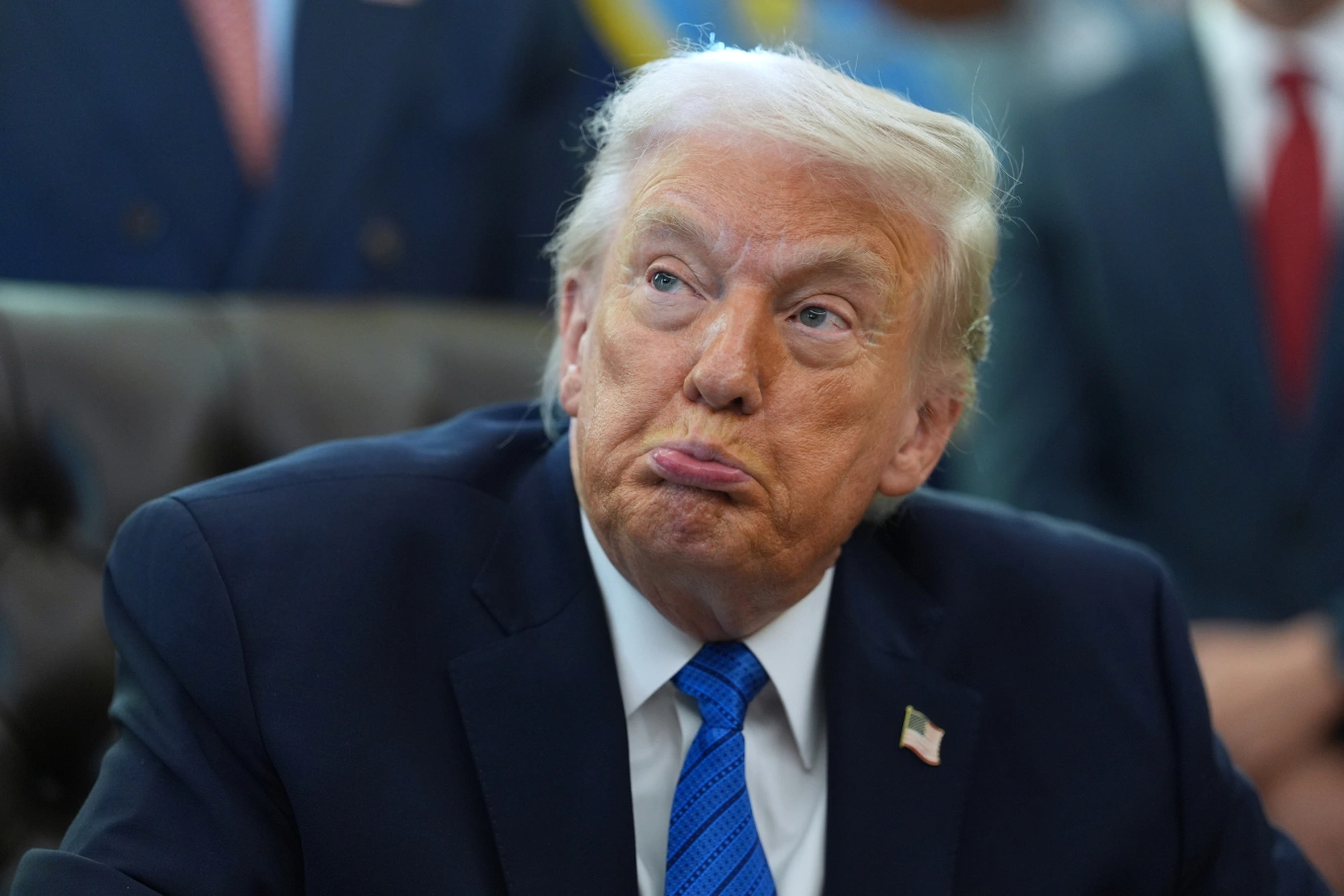
The rumor’s power is not in its evidence, but in its stagecraft.
The stories are written and edited like television: the folder as a prop, the silence as a weapon, the “twenty seconds” of reaction as a substitute for admission. It is narrative persuasion, not factual demonstration. The viewer is led to interpret an imagined facial expression as confirmation. The emotional arc is designed to produce a single conclusion: if someone looks shocked, the document must be real.
This is not new. Tabloids have long used insinuation, staged “documents,” and rhetorical questions to manufacture certainty. What is new is the speed and scale: a story can now reach millions before a single newsroom has time to confirm whether the document exists outside a video edit.
The viral version also borrows the authority of medical language. Words like “genetic markers,” “barcode,” “seal,” and “DNA analysis report” function as credibility props. They do not prove authenticity. They mimic it.
The political incentive to circulate the claim
No rumor spreads without an ecosystem willing to carry it.
For Trump opponents, the claim offers a fantasy of finality: not just political defeat, but personal unmasking. For Trump supporters, the story can be repurposed as further proof of a hostile media environment—an example of what they would call depravity and obsession. In both directions, the rumor drives engagement, fundraising, and tribal bonding. It supplies content that people can use to signal loyalty.
This is one reason such narratives persist even when they are thin: they are useful.
And usefulness, in the attention economy, often outcompetes truth.
What “full information” would actually require
A newspaper article “with depth and complete information” about a claim like this would begin with verification, not spectacle. That means:
- Confirming whether the alleged lab report exists as a real document outside viral posts
- Identifying the laboratory and its accreditation status
- Establishing chain of custody and consent for samples
- Consulting independent genetic experts on what the document does (and does not) show
- Giving the named parties an opportunity to respond
- Avoiding publication of personal medical information that cannot be ethically justified
- Separating public-interest questions from salacious insinuation
Without these steps, there is no “complete” account—only a story about how a rumor works.
And that, at this moment, is the only responsible story available based on what has been presented: not whether the claim is true, but how easily an emotionally perfect narrative can be built to feel true.
A sharper question than parentage

The most telling feature of the viral clip is how quickly it asks the public to abandon standards. It says, in effect: a seal is proof, a pause is confession, and a shocking claim is credible because it is shocking.
But democratic cultures cannot survive on that logic. If “documents” can be fabricated and treated as gospel, then anyone’s private life—politician or not—becomes an open target. And if audiences become conditioned to accept the aesthetics of evidence in place of evidence itself, accountability becomes indistinguishable from entertainment.
The scandal, in other words, may not be about DNA at all.
It may be about how rapidly the public is being trained to confuse certainty with verification—and how much damage can be done in the time it takes for actual facts to arrive.