The Feud That Won’t Die: Trump, Rosie O’Donnell, and the Politics of Public Retaliation
The long-running hostility between Donald J. Trump and Rosie O’Donnell has always carried the tone of tabloid warfare—insults, threats of lawsuits, and mutual contempt sharpened for an audience. But in recent months, it has drifted into more consequential territory, touching questions of presidential power, intimidation, and the uneasy boundary between political speech and coercion.
At the center of the latest escalation is Mr. Trump’s repeated suggestion—amplified in posts and interviews—that he could strip Ms. O’Donnell of her U.S. citizenship because of her criticism of him. The idea is, as constitutional lawyers routinely note, not a policy option available to a president acting alone, particularly when the target is a natural-born citizen. The 14th Amendment’s citizenship clause is unambiguous: citizenship attaches at birth for those born in the United States and cannot be revoked by executive whim.
Yet the point of the threat may not be legal feasibility. It may be something simpler and more modern: a message to critics that the machinery of government can be imagined as a weapon, even if it cannot actually be used that way. In an era in which intimidation often matters as much as enforcement, the suggestion itself becomes part of the political performance.

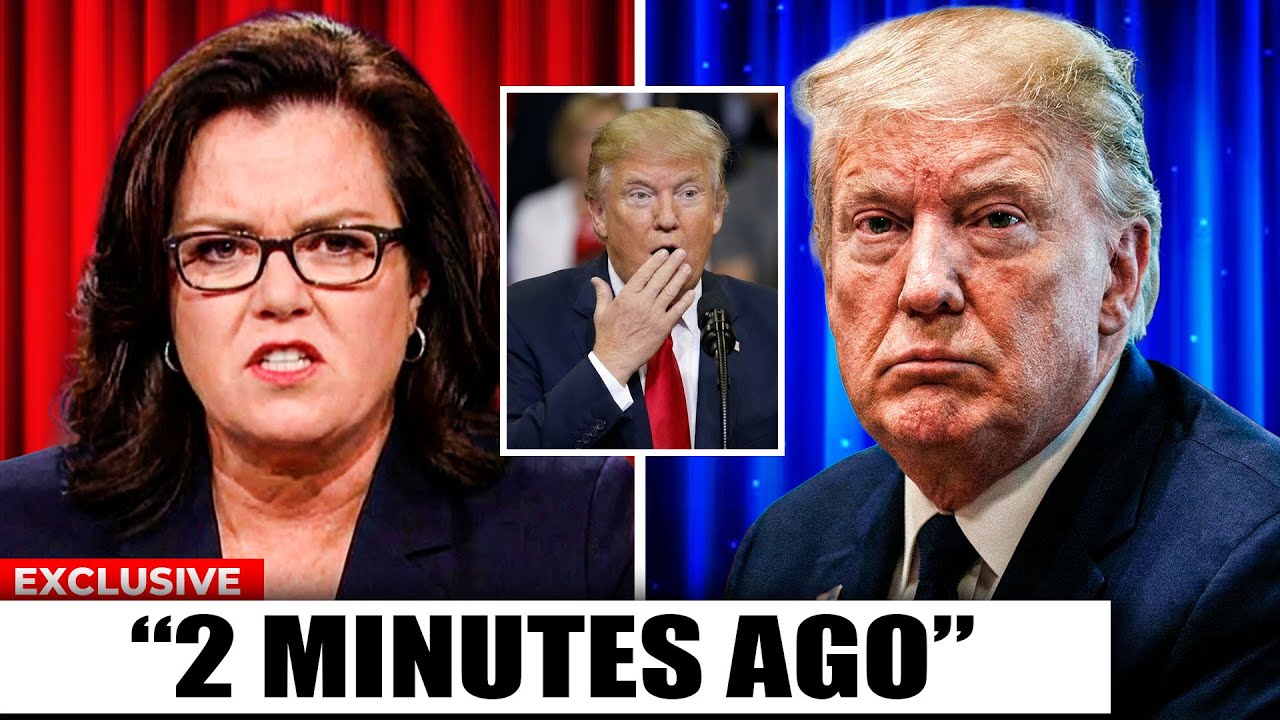
Ms. O’Donnell, who has been sparring with Mr. Trump since well before his entry into politics, has responded with a familiar refusal to retreat. In recent appearances and social media posts, she has framed the threat as evidence of authoritarian impulse—an attempt to punish speech rather than rebut it. She has cast herself not as a celebrity seeking attention, but as a citizen insisting on the right to criticize a public official without fearing state retaliation.
The most combustible element of her recent commentary, however, is not the citizenship dispute. It is her repeated speculation about Mr. Trump’s health—claims delivered with a confidence that reads to supporters as “speaking truth” and to critics as reckless diagnosis from a distance. Ms. O’Donnell has suggested that Mr. Trump shows signs consistent with cognitive decline and serious cardiac illness, at times citing visible bruising, swelling, and periods of reduced public visibility as evidence.
Medical professionals typically caution against diagnosing public figures without examination, both for ethical reasons and because symptoms can have many causes. Still, health narratives flourish in American politics because they answer a primal question—who is capable of governing?—and because modern media rewards the most definitive version of any suspicion. A confident assertion, even when unverified, travels faster than a carefully qualified question.
Mr. Trump has responded in the way he often does when confronted with criticism that hits a nerve: not by rebutting the substance in detail, but by attacking the critic’s legitimacy. He has dismissed Ms. O’Donnell as a liar and a menace, and he has folded her into a larger story he tells about “fake news,” conspiracies, and coordinated enemies. This is less persuasion than insulation: if the public can be convinced the messenger is corrupt, the message becomes optional.
The feud has also been fueled by a parallel drama playing out in the entertainment world, where late-night hosts—some of Mr. Trump’s most persistent critics—have become symbols in a broader fight over speech, power, and cultural control. When Mr. Trump celebrates the cancellation of a show or mocks a host’s talent and ratings, the insult is not merely personal. It is an assertion that public ridicule can be punished, and that visibility itself is a political asset to be won or denied.
Comedians have seized on the pattern. Some have framed Mr. Trump’s fixation as proof that he cannot tolerate mockery, particularly when it comes from cultural institutions he once courted. Others have used his own late-night posting habits—responding quickly, sometimes in the middle of the night—as material: a president who claims he is too busy to indulge entertainers, yet appears unable to stop watching them.
Layered over all of this is a larger atmosphere of unrest, in which demonstrations, labor actions, and political protests are interpreted through radically different lenses. Mr. Trump and his allies have repeatedly described protesters as “paid agitators,” a claim that functions less as an evidentiary allegation than as a worldview: that dissent must be purchased, because voluntary dissent is morally incomprehensible. Critics reply that this framing is a way to delegitimize protest and justify escalation. In that argument, the O’Donnell-Trump conflict becomes less an isolated spectacle and more a window into a wider contest over who gets to speak—and what price they might pay for speaking.
If there is a through line to the latest chapter, it is not that either side has discovered new rhetoric. It is that the stakes have shifted. A feud that once lived on the edges of celebrity culture is now being staged as a test of democratic temperament: can a president publicly fantasize about punishing speech, and can the public treat that fantasy as normal?
The law may be clear. The politics, increasingly, are not.