By XAMXAM
As the Winter Olympic Games got underway this week, the focus briefly shifted from medals and margins to something far less predictable: American athletes, standing on an international stage, publicly questioning the political direction of the country they represent. Their comments, measured in tone but unmistakable in substance, drew an immediate backlash at home and ignited a familiar debate about patriotism, protest, and the boundaries of public speech.
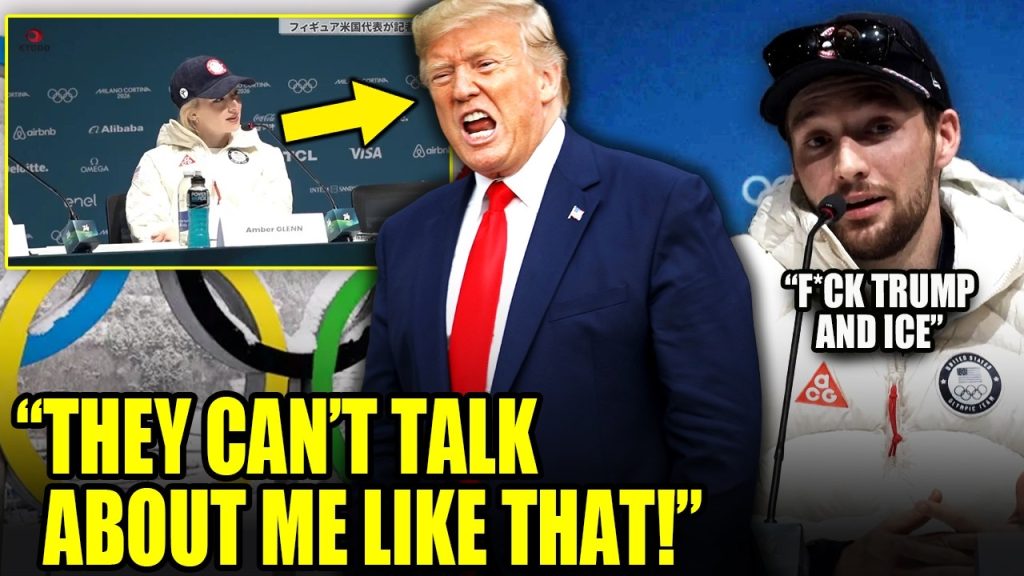
Several U.S. competitors used press conferences and interviews to voice concern about the policies of Donald Trump and the actions of Immigration and Customs Enforcement, framing their remarks not as partisan attacks but as reflections of personal values. In doing so, they challenged a long-standing expectation that Olympians should confine themselves to sport, even as they perform under a national flag.
Figure skater Amber Glenn spoke first, describing a sense of unease about the political climate at home and its impact on multiple communities. She acknowledged that athletes are often told to “stick to their job,” but rejected the idea that sport exists apart from civic life. Politics, she said, shapes daily realities, and silence is not neutral when rights and dignity feel at risk.
Her remarks set the tone for others. At a separate press conference, freestyle skier Chris Lillis said he felt “heartbroken” by recent events in the United States, particularly protests and immigration enforcement actions. While emphasizing his pride in representing the country, he framed his criticism around respect and equal treatment, saying the America he hoped viewers would see at the Olympics was one rooted in fairness and humanity.
Another skier, Quinn Dehlinger, highlighted the Olympics as a rare moment of unity, arguing that sport can show a version of America that transcends internal divisions. Hunter Hess echoed that sentiment, explaining that wearing the flag did not require endorsing every action of the government. For him, the symbol represented family, community, and ideals he believed were worth defending, even if the current political moment fell short of them.
Several athletes extended the message beyond formal interviews. Snowboarder Stacy Gaskill wrote on social media that the flag, to her, symbolized “bravery, honesty, and kindness,” and should honor those who choose compassion over power. Another snowboarder, B. Kim, emphasized diversity as a defining American strength, calling for love and respect across differences.
The reaction from conservative media and online commentators was swift and caustic. Some accused the athletes of ingratitude, urging them to leave the country if they disagreed with its leadership. Others declared they would root against U.S. teams, a response that critics noted sat uneasily with claims of patriotism. The backlash underscored how quickly expressions of dissent by athletes can be reframed as disloyalty, even when those expressions avoid personal insults or legal accusations.

The controversy widened as Vice President J. D. Vance attended Olympic events in Italy. Television footage and on-the-ground reports suggested a mixed reception, including audible boos when he appeared on camera. For some observers, the contrast was striking: athletes articulating moral discomfort with restraint, and political leaders encountering visible hostility abroad. The juxtaposition fueled online debate about how American politics is perceived beyond its borders.
The moment resonated beyond the U.S. team. Athletes from Greenland competing for Denmark also addressed the political climate, saying recent statements by Trump about Greenland had caused stress and uncertainty at home. Their decision to race under Denmark’s flag, they said, was meant as a signal of solidarity and stability, not provocation. They noted that Americans had reached out to express embarrassment and support, a reminder that national identity is not monolithic.
What distinguished this episode from earlier clashes between athletes and political leaders was its tone. The Olympians did not frame themselves as activists seeking confrontation. They spoke instead about values, responsibility, and the meaning of representation. Analysts noted that this restraint may have amplified the impact, leaving critics to supply the outrage while the athletes maintained credibility.
The debate touches a deeper question about the role of athletes in public life. The Olympics have long been marketed as apolitical, even as they unfold against backdrops of war, protest, and ideological conflict. From raised fists in 1968 to kneeling protests in recent years, the insistence on silence has often collided with the reality that athletes, like any citizens, are shaped by the policies and cultures they inhabit.
For the athletes who spoke out this week, the calculation was clear. The platform is rare, the audience global, and the moment fleeting. Whether their words will influence policy is uncertain. What is clear is that they disrupted the expected script, reminding viewers that national symbols can carry critique as well as celebration.
As competition continues, medals will be won and stories of athletic excellence will reclaim the spotlight. Yet the remarks are unlikely to fade quietly. They have already been absorbed into a larger argument about who gets to define patriotism—and whether loving a country sometimes means saying, out loud, that it can do better.






