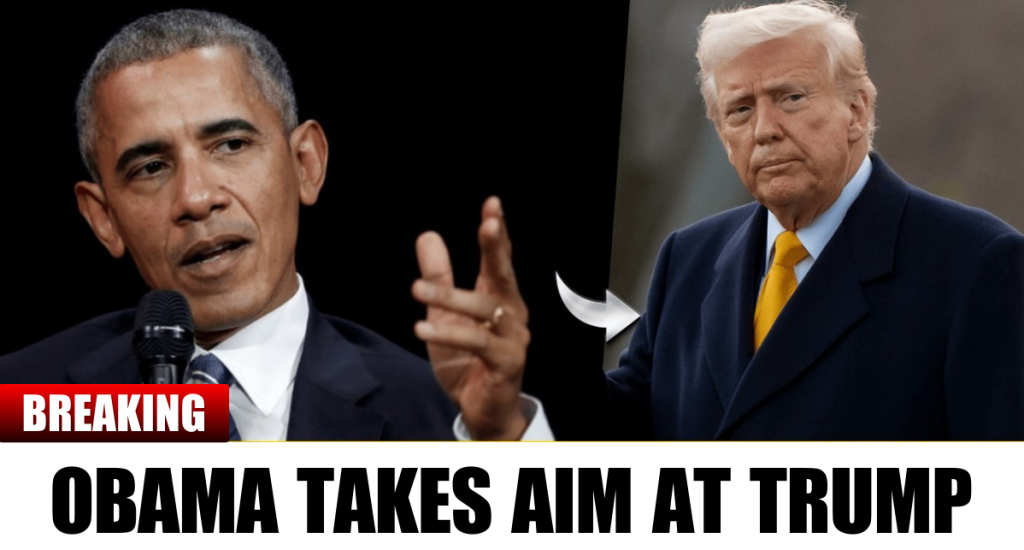
Former President Barack Obama rarely enters the public conversation without calculation. When he does, the expectation is not spectacle but synthesis — a careful weighing of history, institutions, and consequence. That is precisely what unfolded during his recent appearance at Hamilton College, where Obama delivered what many observers described as his most direct and sobering assessment yet of the state of American democracy in the era shaped by Donald Trump.
The speech was not framed as a partisan attack. There were no rally-style crescendos, no applause lines engineered for viral clips. Instead, Obama spoke in the cadence of a constitutional scholar, offering a diagnosis rather than a denunciation. Over the course of more than an hour, he laid out an argument that was both methodical and unsettling: the American democratic system, long sustained by shared norms rather than constant enforcement, is now under strain precisely because those norms are being openly tested — and too often abandoned.
Obama began by acknowledging what he described as profound disagreements with his immediate successor, but he moved quickly beyond policy. The deeper concern, he argued, was the erosion of a post–World War II consensus that once bound political adversaries together. For decades, Democrats and Republicans fought bitterly over taxes, foreign policy, and social programs, yet largely agreed on the rules of the game: respect for the rule of law, an independent judiciary, a free press, and the peaceful transfer of power.
That consensus, Obama suggested, no longer holds. What has replaced it is a politics increasingly driven by grievance, tribal identity, and a willingness to treat institutions as tools rather than safeguards. He traced the roots of this shift with notable candor, acknowledging that government had grown distant and bureaucratic, making rules feel like impositions rather than protections. But he also addressed a more uncomfortable reality: demographic change and the anxiety it has produced.
Drawing on personal anecdotes from his early days in the Senate, Obama described an institution that once reflected a narrow slice of American life. Civility, he implied, was easier to maintain when power was shared among people who looked alike, socialized alike, and rarely felt their status threatened. As those doors opened — to women, to people of color, to different backgrounds — resentment grew, and that resentment, he argued, became politically exploitable.
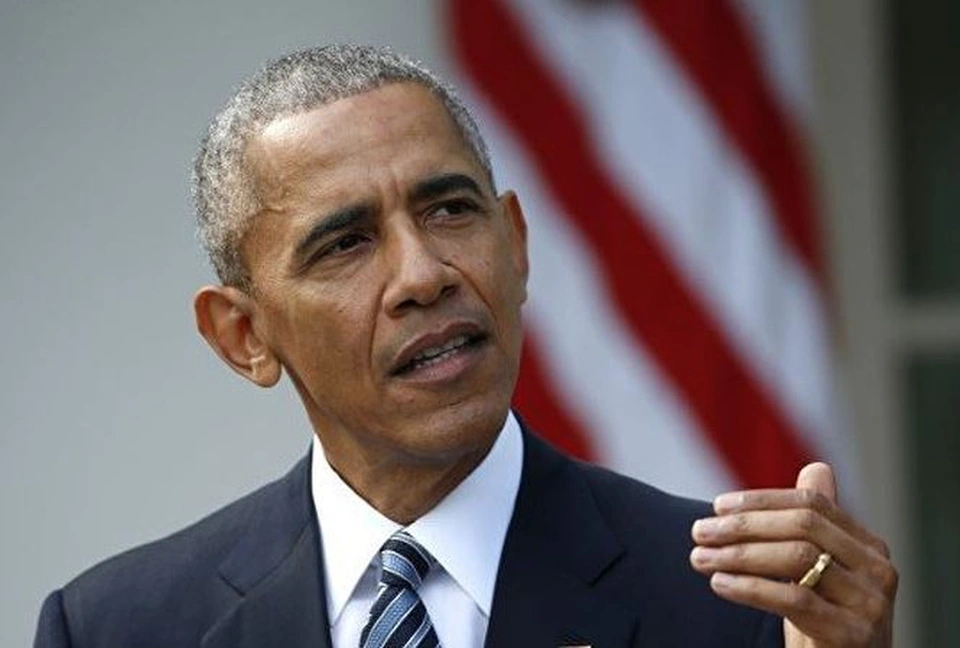
The most striking portion of the speech came when Obama shifted from structural analysis to concrete examples. Employing a rhetorical device that drew both laughter and discomfort, he asked the audience to imagine if he had engaged in behaviors now visible in American politics. What if he had stripped a hostile news organization of its White House press credentials? What if his administration had threatened law firms for representing disfavored clients, or universities for tolerating student dissent?
Each hypothetical landed with force because it required no imagination. These were not abstractions. Obama described them as real, present actions that, had they occurred under his presidency, would have provoked immediate and bipartisan outrage. The contrast, he noted pointedly, lay not in the behavior itself but in the silence surrounding it now.
From there, Obama connected democratic norms to everyday economic life, dismantling the notion that the rule of law is an elite concern. He spoke of bribes, favoritism, and arbitrary enforcement — not as distant foreign practices but as predictable outcomes when legal systems weaken. In countries where institutions erode, he argued, commerce becomes distorted, trust evaporates, and ordinary citizens pay the price. Democracy, in this telling, is not an abstract ideal but a practical infrastructure that determines whether markets function fairly and whether power can be challenged without fear.
His sharpest rebuke was reserved not for politicians, but for elites who had once styled themselves as defenders of justice. Obama criticized corporations, donors, and institutions that spoke boldly about equality when it was fashionable, yet now retreat in the face of real risk. Universities, he said, might have to forgo new buildings. Law firms might have to lose clients. Principles, he reminded the audience, are rarely tested when they are cost-free.
At the same time, Obama resisted the temptation to romanticize any side of the cultural divide. He challenged students as well, warning against a reflex to silence offensive speech rather than defeat it through argument. Free expression, he said, is not protected by fragility but by resilience — by the willingness to confront ideas head-on rather than banish them.

The speech concluded with a message that was both sobering and deliberately unsatisfying to those seeking a savior. Obama made clear that no single leader, past or future, could repair what is fraying. The most important office in American democracy, he said, is not the presidency but citizenship itself. Democracies do not sustain themselves. They demand attention, effort, and, at moments like this, courage.
There was no call to panic, but there was unmistakably a call to vigilance. Obama did not raise his voice. He did not need to. The warning lay in the clarity of his words and the implication beneath them: systems survive not because they are inevitable, but because people choose, again and again, to defend them.






