Trump’s Financial Empire Faces Its Greatest Test as Courts Move to Enforce Massive Fraud Judgment
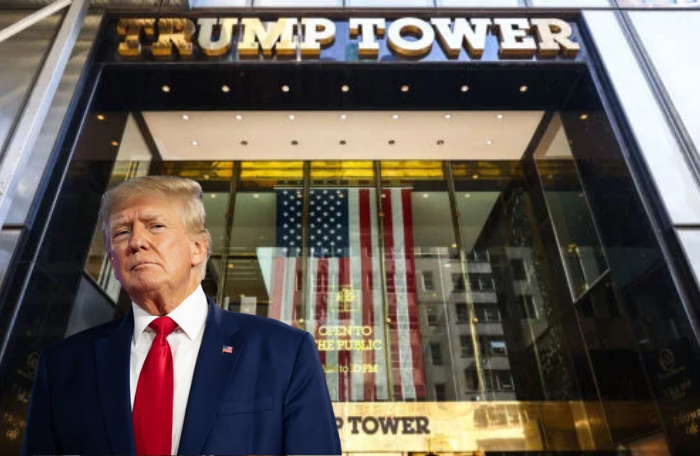
NEW YORK — As members of Congress prepare to sift through millions of newly unredacted documents related to Jeffrey Epstein this week, the political reverberations of the disclosures are already being felt on both sides of the Atlantic. In Britain, the fallout has claimed a senior figure from public life. In the United States, however, the more immediate drama is unfolding not in Parliament or on Capitol Hill, but in New York courtrooms, where Donald J. Trump’s private business empire is confronting an unprecedented legal reckoning.
On Monday, the House Oversight Committee is scheduled to depose Ghislaine Maxwell, the longtime Epstein associate now serving a federal prison sentence for sex trafficking. Lawmakers will also gain access to roughly three million unredacted files related to Epstein, a trove of documents that has already prompted resignations overseas and intensified scrutiny of political leaders’ past associations. In London, Peter Mandelson, a former British ambassador to Washington, announced his retirement from the House of Lords after renewed attention to his ties to Epstein. Prime Minister Keir Starmer, who had dismissed Mandelson from his ambassadorial post months earlier, is now facing questions about his judgment in appointing him in the first place.
Yet while the Epstein disclosures continue to ripple outward, a separate but equally consequential saga has reached a critical phase in New York: the enforcement of a civil fraud judgment that threatens to dismantle the Trump Organization itself.
A Judgment Comes Due
In February, a New York judge found Mr. Trump and his company liable for years of systematic financial fraud, concluding that the former president had repeatedly inflated the value of his assets to obtain favorable loans and insurance terms. The ruling capped a lengthy civil trial brought by the New York attorney general, who argued that the Trump Organization’s financial statements bore little resemblance to reality.
The penalty was staggering. Including interest, the judgment now approaches $460 million and continues to grow daily. Mr. Trump, who has consistently denied wrongdoing and characterized the case as politically motivated, appealed the decision. But under New York law, appealing a civil judgment of this size typically requires the defendant to post a bond covering the full amount, ensuring that funds will be available if the appeal fails.
That requirement has exposed a vulnerability few observers expected to see so plainly. Despite decades of public claims that he is worth billions of dollars, Mr. Trump was unable to secure a bond for the full amount. His lawyers sought reductions and extensions, warning that the bond requirement would cause “irreparable harm.” When those efforts fell short, the court authorized enforcement measures.
The Machinery of Enforcement
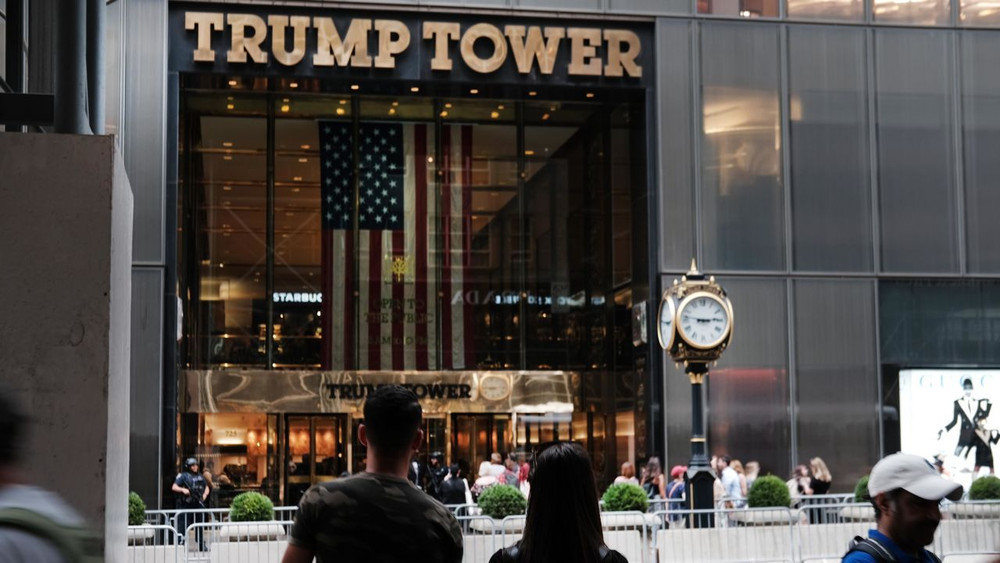
The consequences are neither abstract nor symbolic. Once enforcement begins, the state gains broad authority to collect what it is owed. Bank accounts can be frozen, preventing the movement of funds. Liens can be placed on real estate, blocking sales or refinancing without court approval. In extreme cases, properties can be seized and sold under court supervision to satisfy the debt.
Legal experts note that such measures are routine for ordinary litigants who fail to pay civil judgments. What makes this case extraordinary is the identity of the debtor. Mr. Trump is not only a former president and current occupant of the White House; he is also a figure whose political persona has long been inseparable from his image as a wealthy, self-made businessman.
“Judgment enforcement is where rhetoric stops and reality begins,” said one former New York state prosecutor familiar with high-value civil cases. “Courts don’t negotiate with branding. If the money isn’t paid, assets are taken.”
Among the properties potentially exposed are some of Mr. Trump’s most recognizable holdings, including Trump Tower and several golf clubs and commercial buildings tied to the Trump Organization. While the precise scope and timing of any seizures remain subject to court proceedings, the authorization itself marks a turning point.
Questions of Transparency
Adding to Mr. Trump’s legal peril are concerns about the opacity of his finances. Throughout the fraud trial, the court heard extensive testimony about the complexity of the Trump Organization’s corporate structure, which relies on layers of limited liability companies and holding entities. Enforcement lawyers have signaled that they are scrutinizing whether all relevant assets were fully disclosed.
In cases involving large judgments, courts often worry about asset concealment — the movement of money into shell companies or offshore accounts to shield it from creditors. Such practices, if proven, can trigger additional penalties, including contempt of court or the appointment of a receiver with sweeping authority to take control of a defendant’s assets.
“There is a difference between being illiquid and being evasive,” said a legal scholar who studies civil enforcement. “If a court concludes that assets were deliberately hidden, the consequences escalate quickly.”
A Presidency Under Financial Strain
The stakes are heightened by Mr. Trump’s return to office. Never before has a sitting American president faced active enforcement actions against his private business holdings. Ethics experts warn that the situation raises profound questions about conflicts of interest and national security.
A president under severe financial pressure, they argue, may be more susceptible to improper influence or tempted to use the powers of the office to alleviate personal legal troubles. Mr. Trump has already demonstrated a willingness to publicly attack judges and prosecutors involved in cases against him, framing adverse rulings as partisan persecution.
“This is not just about one man’s balance sheet,” said a former federal ethics official. “It’s about whether the legal system can function normally when the defendant controls the executive branch.”
An Empire on the Line
For decades, Mr. Trump cultivated an image of unassailable success, emblazoning his name in gold on buildings and marketing himself as the ultimate dealmaker. The civil fraud judgment — and his inability to immediately satisfy it — has punctured that narrative more forcefully than any political defeat.
Whether his appeal ultimately succeeds remains uncertain. What is clear is that the enforcement process has begun, and it operates according to rules that apply regardless of fame or office. Courts exist, in part, to ensure that judgments are not merely declarations but obligations backed by the force of law.
As Congress examines the Epstein files and foreign governments grapple with their own reckonings, the drama in New York underscores a parallel truth: accountability, when it arrives, often does so through unglamorous mechanisms — liens, freezes, seizures — that strip away myth and leave only facts.
For Donald J. Trump, the coming months may determine not only the future of his business empire but also how history judges the man who built his political identity on wealth he is now struggling to prove he truly has.