When Insults Backfire: Trump, Kimmel and the Politics of Ridicule
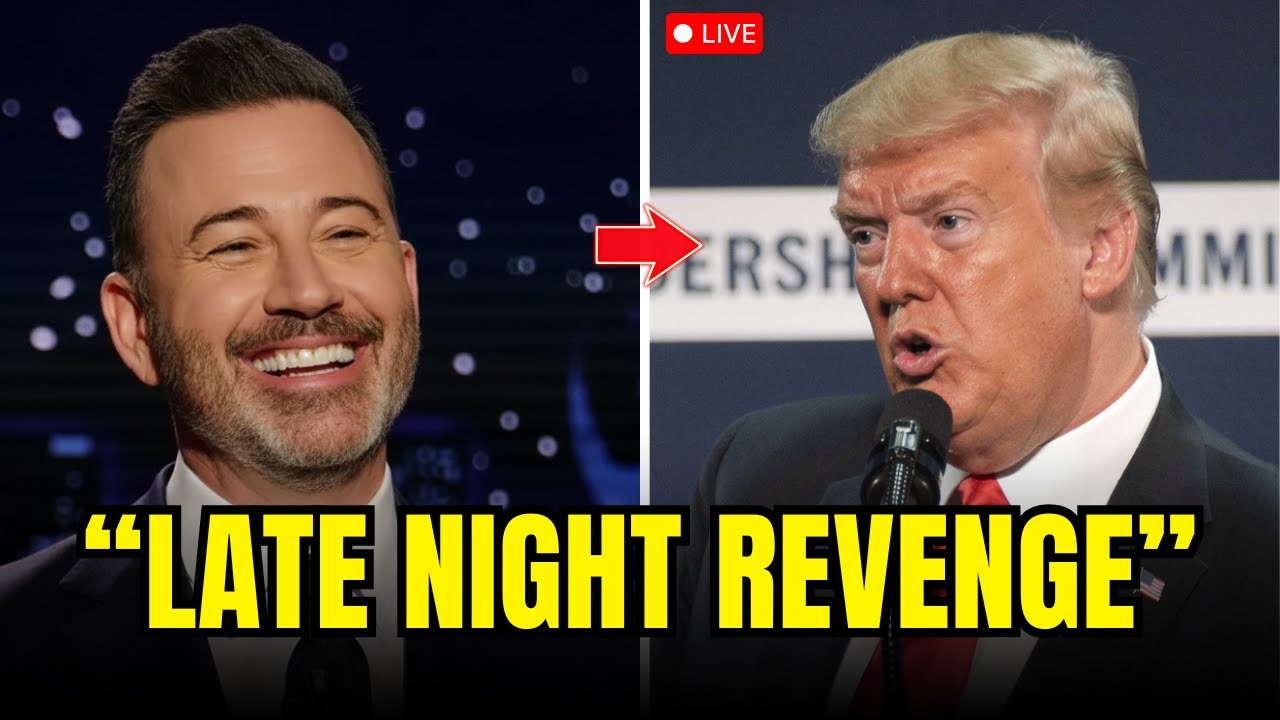
Donald Trump has long understood public life as a contest for attention. Insults, in that framework, are not lapses but tactics—tools meant to dominate the news cycle, rattle opponents and remind supporters who is in charge of the conversation. This week, his latest verbal broadside followed that familiar script. Calling Jimmy Kimmel “President Dementia,” Mr. Trump sought to belittle a late-night host who has spent years mocking him on national television.
The phrase was crude, pointed and instantly viral. It was also a miscalculation.
The exchange unfolded against a broader backdrop of speculation and spectacle surrounding Mr. Trump’s public appearances, off-the-cuff remarks and increasingly erratic rhetorical style—topics that have fueled commentary across cable news, social media and comedy monologues alike. In that environment, Mr. Trump’s decision to frame a comedian’s criticism as evidence of mental decline landed less like a knockout blow and more like an invitation.

Mr. Kimmel accepted it.
The rivalry between the two men is hardly new. Since Mr. Trump entered national politics, late-night television has treated him as an inexhaustible source of material. Mr. Kimmel, in particular, has returned to Mr. Trump’s contradictions, exaggerations and verbal detours with regularity. Mr. Trump, for his part, has responded with a mix of wounded indignation and open hostility, accusing late-night hosts of obsession, irrelevance or worse.
But the “President Dementia” insult felt different in tone—more personal, more aggressive. It was aimed not just at Mr. Kimmel’s politics or humor, but at his credibility and mental fitness. The implication was clear: criticism, in Mr. Trump’s telling, does not arise from reasoned disagreement but from confusion or decay.
What followed illustrated a recurring asymmetry between politicians who attack and comedians who respond.
Mr. Kimmel did not issue a statement or fire back online. He waited for his show. When he addressed the insult on air, he did so with exaggerated politeness and irony, praising Mr. Trump’s “talents” before dismantling the premise of the attack. He replayed Mr. Trump’s own meandering remarks and rhetorical leaps—not as medical diagnosis, but as evidence of the absurdity of the insult itself.
The audience reaction was immediate. Laughter turned into applause, not because the moment felt cruel, but because it felt clarifying. Mr. Kimmel’s most effective line—suggesting that “President Dementia” sounded like a promotion, since it included the word “president”—worked precisely because it drained the insult of its intended power.
By the next morning, clips of the monologue had spread widely. News outlets covered the exchange. Fellow late-night hosts nodded approvingly. Even political figures weighed in, dividing largely along familiar lines. Yet the significance of the moment lay less in the punchlines than in the contrast.
Mr. Trump attacked with anger and derision. Mr. Kimmel responded with composure and humor. One approach sought to dominate; the other reframed. In doing so, Mr. Kimmel highlighted a truth that comedians understand instinctively: ridicule loses its sting when it is calmly repurposed.
This dynamic has played out repeatedly during Mr. Trump’s political career. He singles out critics—journalists, entertainers, former allies—and subjects them to personal attacks designed to intimidate or exhaust. The expectation appears to be that targets will either retreat or respond with outrage, further fueling his narrative of grievance. Comedians, however, operate under different rules. Accustomed to hecklers, they know that laughter can be a more effective weapon than anger.
Late-night television has thus become an unlikely arena for political accountability, especially at moments when traditional institutions appear hesitant or constrained. Comedy does not adjudicate facts in the way courts or Congress do. But it does something else: it exposes emotional truth. It reveals insecurity, contradiction and overreach by placing them in plain sight.
Mr. Trump’s insult was meant to silence or diminish. Instead, it became material. Mr. Kimmel absorbed it, reshaped it and returned it to the public as satire. The result was not just a viral exchange, but a reminder of an old lesson in American public life: when power feels threatened by mockery, mockery has already struck its mark.
That is why the episode resonated. Not because of the insult itself, but because of its failure. In a contest between bluster and timing, timing won. And once again, the loudest voice in the room discovered that laughter, when well aimed, can be louder still.