Old Tapes, New Anxiety: How Donald Trump’s Howard Stern Past Returned to the Spotlight
For decades, Donald J. Trump cultivated an image of instinctive control—over deals, narratives, and people. This week, that carefully maintained posture looked visibly strained as long-buried audio from his frequent appearances on The Howard Stern Show resurfaced and began circulating widely online, fueling renewed scrutiny of Trump’s public conduct, his marriage, and his long-standing relationship with media spectacle.
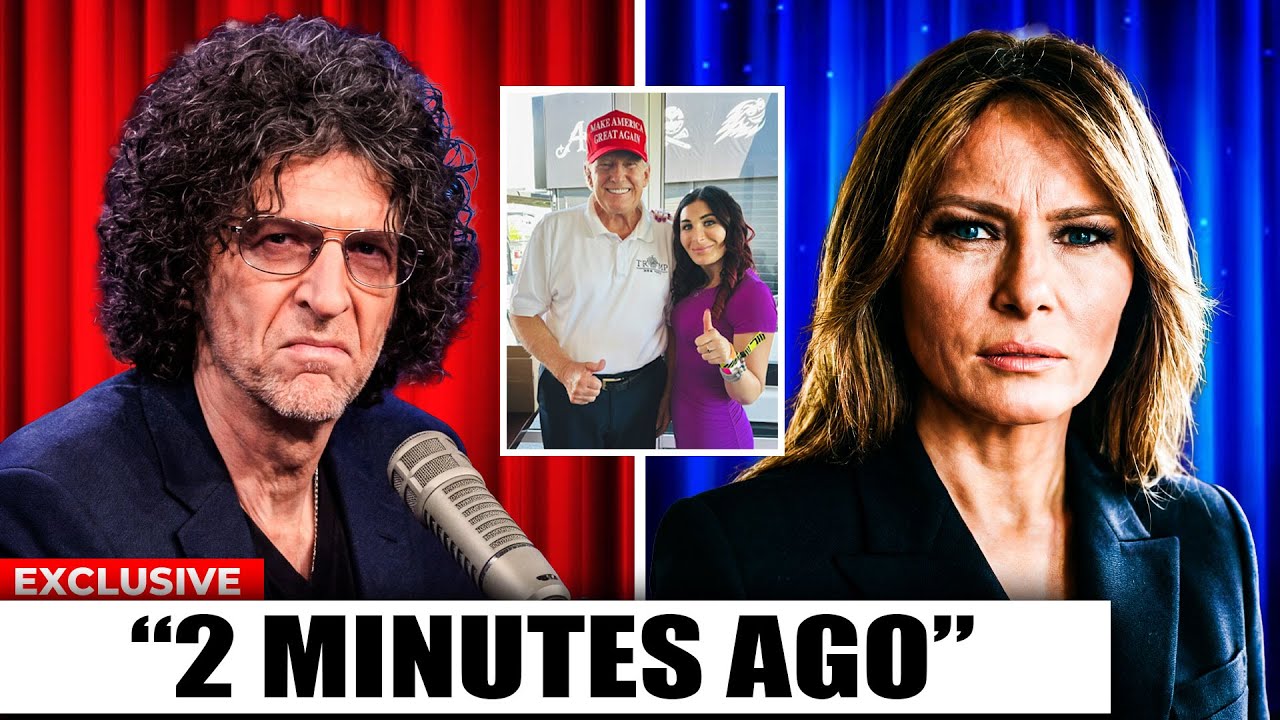
Between 1993 and 2015, Trump appeared on Stern’s program more than 70 times, speaking for roughly 15 hours on air. Stern has repeatedly described Trump as his most uninhibited guest—someone who answered any question, however inappropriate, without hesitation. At the time, those appearances were dismissed as shock-radio entertainment, an artifact of a looser media era. Today, they are being reexamined through a very different lens.
The renewed attention comes at a politically sensitive moment. As debates swirl around the delayed release of documents connected to Jeffrey Epstein and the Justice Department’s handling of related disclosures, Trump has returned to a familiar strategy: attacking critics, questioning motives, and leaning on loyal institutional figures to challenge the credibility of those raising uncomfortable questions. His defenders argue this is standard political counterpunching. His critics see panic.

The Stern recordings themselves do not allege crimes. What they do offer is something more subtle and, to many listeners, unsettling: a candid portrait of how Trump spoke about women, relationships, and power when he believed the setting absolved him of consequence. On air, Trump discussed his romantic life in transactional terms, compared women numerically, and framed marriage as a deal to be managed rather than a partnership to be protected. In one widely shared clip, he joked about age as a kind of expiration date. In another, he spoke of his then-girlfriend, Melania Knauss, as if she were a brand asset.
None of this was hidden at the time. Stern laughed. Trump laughed. So did much of the audience. What has changed is context.
Trump is no longer a celebrity real-estate developer playing to a niche radio audience. He is a former president seeking power again in a political environment shaped by reckoning—about abuse, exploitation, and the ways wealth and fame insulate behavior. What once sounded like crude bravado now lands as a record of values.
Particularly jarring to modern listeners are segments involving Melania Trump, who was occasionally brought onto the show and questioned about intimate matters on air. Trump did not intervene; he encouraged the exchange. To critics, the moments underscore a dynamic of exposure and control. To supporters, they are artifacts of a tasteless but bygone media culture. The disagreement is not about what was said, but about what it reveals.
Howard Stern himself has distanced his current persona from that era, describing it as a time when provocation was treated as a virtue. He has acknowledged that Trump’s willingness to say anything made him radio gold. “Most people censor themselves,” Stern once said. “Donald never did.”
That lack of a filter now appears to be a liability.
The tapes have resurfaced alongside reporting on Trump’s renewed reliance on William Barr, his former attorney general, who recently published an opinion essay defending the Justice Department’s pace in releasing Epstein-related materials. Barr argued that logistical realities—not political interference—explained the delays. Critics were unconvinced, noting Barr’s past role in shaping the public narrative around the Mueller investigation before its full release.
Taken together, the optics are uncomfortable for Trump: archival audio painting a picture of callousness toward women, a public insistence that nothing damaging exists in sealed files, and a familiar circle of loyalists urging patience and trust.
What seems to rattle Trump most is not the content of the tapes themselves, but their persistence. He has long believed that time erases controversy. Yet in the digital age, nothing truly disappears. Old words return stripped of their original context and reinserted into new moral frameworks.
For voters, the question is not whether Trump once said outrageous things on shock radio. That is well established. The question is whether those remarks were performative exaggerations—or honest glimpses of character.
Trump’s response has followed pattern: dismiss the criticism as unfair, accuse former allies of betrayal, and frame scrutiny as a politically motivated attack. What he has not done is deny the authenticity of the recordings. He cannot. They are his voice.
In an election cycle already defined by fatigue and distrust, the Stern tapes are unlikely to decide the race on their own. But they contribute to a growing sense that Trump’s past is not merely following him—it is overtaking him. The persona he once controlled through bravado now confronts a public less inclined to laugh it off.
Shock radio thrived on the idea that nothing mattered because it was all a joke. Politics demands the opposite assumption. When the lines blur, the record remains. And this week, that record has grown louder.