The question was simple, almost elementary, and that was precisely the point. Does due process apply to everyone in the United States? When Senator Jeff Merkley posed it to FBI Director Kash Patel during a Senate oversight hearing, he was not asking for a legal treatise or a partisan argument. He was asking for affirmation of one of the Constitution’s most basic guarantees. Patel’s response — “I’m not a constitutional scholar” — stunned the room, not because it was defiant, but because it revealed something more troubling: an uncertainty, or unwillingness, to clearly acknowledge a foundational limit on government power.
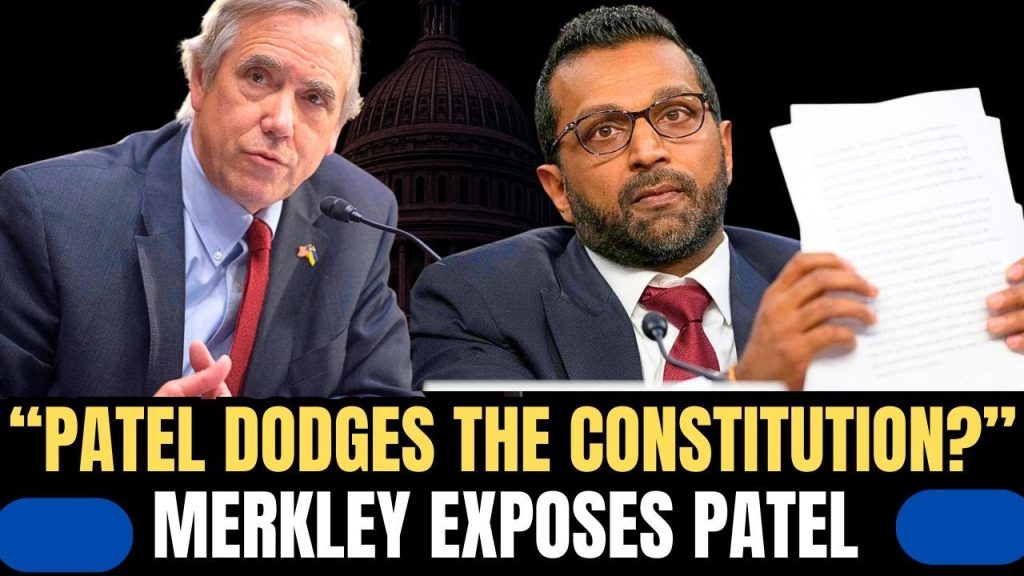
The exchange unfolded methodically. Merkley began by grounding the discussion in the Fifth Amendment, which prohibits the government from depriving “any person” of life, liberty, or property without due process of law. The language is neither obscure nor accidental. It was written by founders who had just rebelled against arbitrary detention and unchecked authority. The amendment’s phrasing is broad by design, extending its protection to “persons,” not citizens, a distinction repeatedly affirmed by the Supreme Court over more than a century.
Merkley then connected the constitutional principle to current events. Hundreds of immigrants, he noted, had reportedly been detained and transferred out of the country without meaningful hearings. Did that concern the director of the FBI? Patel responded cautiously, insisting that the bureau’s role was limited to arrests and criminal investigations, not removal proceedings. He suggested that questions of due process in deportation cases belonged to other agencies.
But Merkley was not letting the issue fragment so easily. Arrest, detention, and transfer all involve the deprivation of liberty. Once liberty is taken, constitutional protections are triggered, regardless of which agency executes which step. The senator’s argument was not ideological; it was structural. The Constitution does not parcel out rights based on bureaucratic convenience.
Patel’s reluctance to answer directly became the most revealing part of the exchange. By framing due process as a constitutional abstraction beyond his remit, he implicitly narrowed responsibility in a way that could leave no one accountable. If each agency claims it is only responsible for its own narrow task, then constitutional harm can occur across the system without any single official acknowledging ownership of the problem.
This logic is not new, but it is dangerous. History shows that rights erode not through dramatic suspension, but through procedural drift. Each step appears technical, limited, or justified by necessity. Over time, the cumulative effect is the normalization of exceptions. Due process becomes something that applies selectively, depending on who is affected and how politically inconvenient their claims may be.
Merkley pressed further, citing Supreme Court precedent that explicitly affirms due process protections for all persons on U.S. soil, regardless of citizenship. He was not offering an interpretation; he was describing settled law. Patel pushed back, arguing that he could not “call the balls and strikes” on constitutional violations and that disagreements remained over what constituted a violation in the first place.
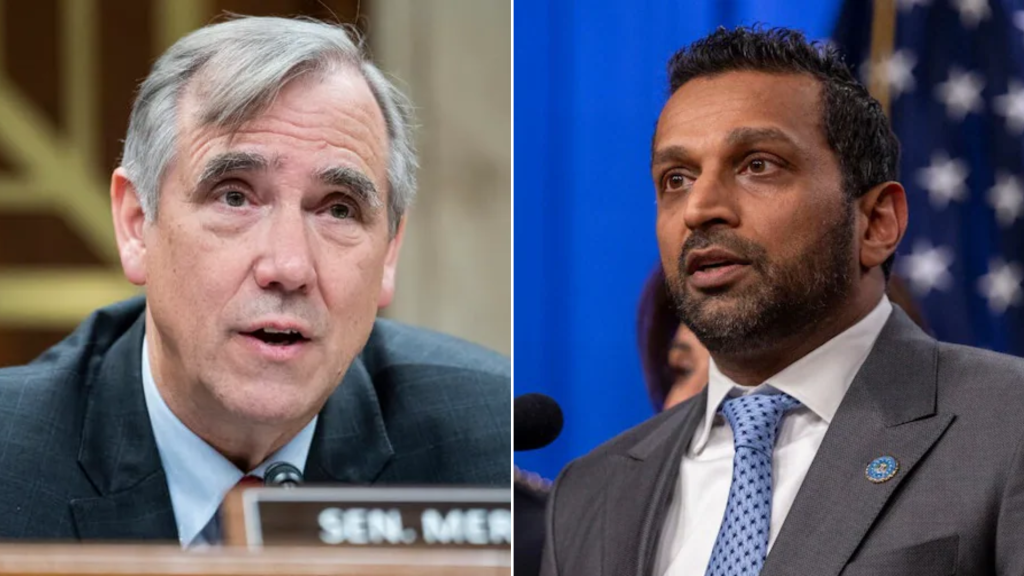
That response exposed a deeper tension. The FBI director is not a judge, but the bureau is empowered to initiate investigations when there is credible evidence of legal violations, including violations of constitutional rights. The refusal to even consider whether such an investigation might be warranted suggests an overly constrained view of institutional responsibility — one that prioritizes operational boundaries over constitutional coherence.
The moment that lingered was not the back-and-forth, but the underlying implication. If the director of the nation’s premier law enforcement agency hesitates to affirm that due process applies universally, what message does that send to the agents who carry out arrests on the ground? Constitutional norms are sustained not only by court rulings, but by internal culture — by leaders who articulate clear, non-negotiable commitments to legal limits.
Patel eventually agreed, when pressed at the end of the exchange, to ensure that due process would be honored in all FBI actions. The assurance mattered, but it felt provisional, extracted rather than volunteered. Promises made under scrutiny are fragile unless reinforced by transparency, oversight, and a willingness to explain decisions publicly.
Oversight hearings rarely deliver dramatic conclusions. Their value lies in creating a record, clarifying positions, and exposing fault lines in how power is understood and exercised. This exchange did exactly that. It revealed how easily constitutional questions can be reframed as academic or jurisdictional, and how that reframing can dull the force of rights meant to constrain the state.
Due process is often tested first in cases involving people with the least political power. That is not an accident. It is a warning. Rights that become optional for one group rarely remain secure for others. The Constitution does not enforce itself. It depends on officials who are willing to say, plainly and without qualification, that its guarantees apply to everyone — especially when doing so is inconvenient.
What Merkley asked for was not legal brilliance, but constitutional clarity. What he exposed was how fragile that clarity can be when institutional caution and political pressure converge. In moments like this, the absence of a simple “yes” can speak louder than any argument.






