The sensational headline circulating online — “TRUMP’S LIFE IN PRISON IS NOW ‘UNAVOIDABLE’ AS THE COURT ‘OPENS THE WAY'” — along with claims of a “historically shocking ruling,” dismissed immunity, and impending lifetime imprisonment, appears to stem from misleading or exaggerated social media posts, YouTube videos, and viral threads. These often amplify routine legal proceedings into dramatic, apocalyptic narratives to drive engagement.
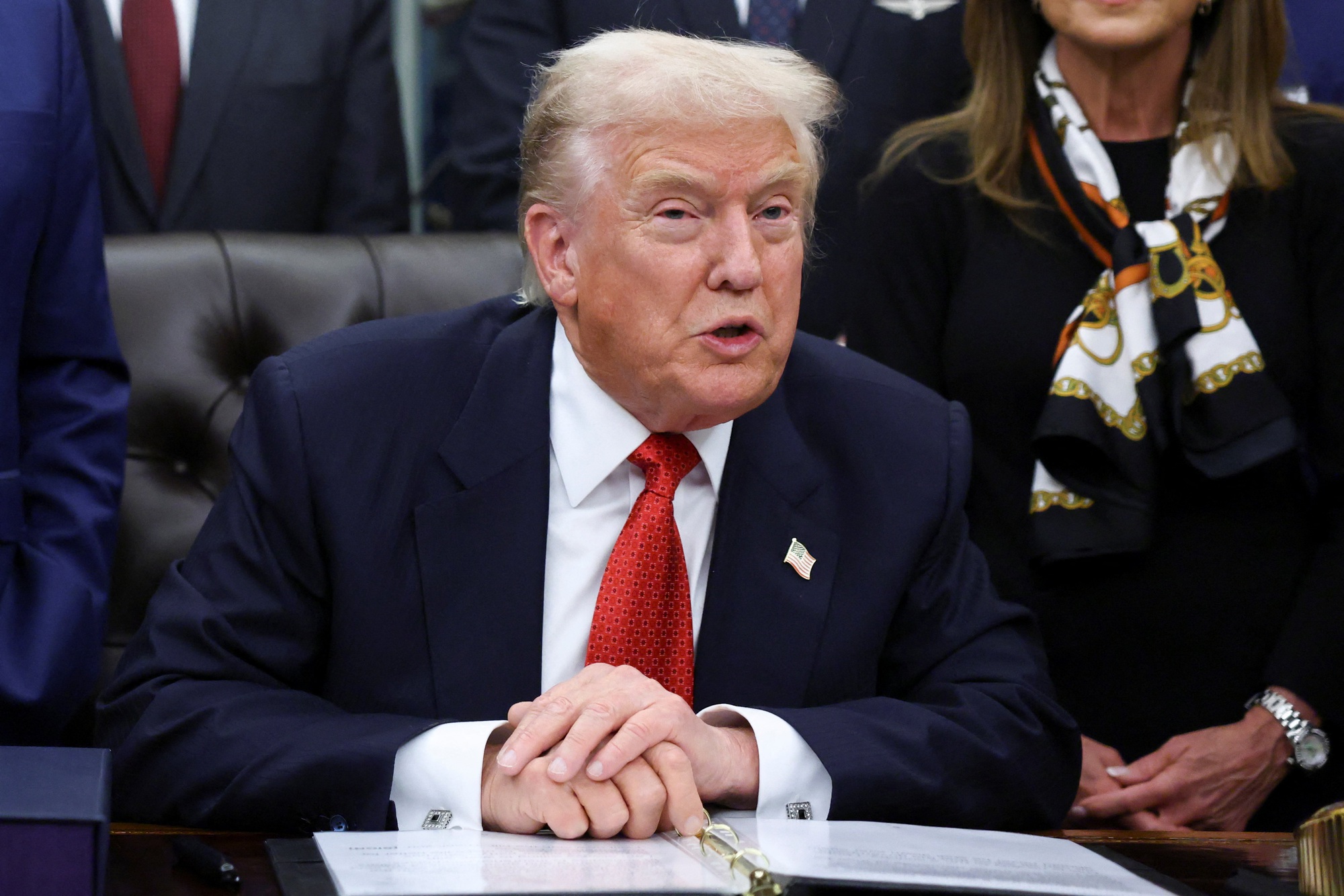
In reality, as of February 2026, President Donald J. Trump faces no credible path to life imprisonment or any prison sentence. His major criminal cases have either concluded without incarceration or been dismissed, stalled, or rendered moot by his return to the presidency and prior court rulings.
The Hush Money Conviction: No Prison, No New “Unavoidable” Doom
Trump was convicted in May 2024 in New York state court on 34 felony counts of falsifying business records tied to hush-money payments involving adult-film actress Stormy Daniels. In early 2025, Judge Juan Merchan sentenced him to an unconditional discharge — no prison time, no fines, no probation — explicitly citing respect for the presidency and the transition of power.
Recent developments in February 2026 involve Trump’s attorneys attempting to remove the case to federal court, citing the Supreme Court’s 2024 presidential immunity decision (Trump v. United States), which grants absolute immunity for core official acts and presumptive immunity for other official conduct. A federal judge, Alvin K. Hellerstein, expressed skepticism during hearings, noting that Trump’s team “waited too long” to pursue the transfer after the Supreme Court ruling. Prosecutors argue the case is too far advanced in state court.
No ruling has “opened the way” to prison or declared any sentence “unavoidable.” The conviction stands but carries no punitive consequences, and efforts to overturn or federalize it remain unresolved without altering the non-custodial outcome.
Federal Election Interference Case: Dismissed, Immunity Intact for Official Acts
The District of Columbia case, led by Special Counsel Jack Smith, accused Trump of conspiring to overturn the 2020 election results. The Supreme Court ruled in July 2024 that former presidents enjoy absolute immunity for actions within their “conclusive and preclusive” constitutional authority and presumptive immunity for other official acts, with no immunity for unofficial conduct.
The case was remanded for lower courts to apply this framework. By late 2024 and into 2025, with Trump’s re-election, the matter was dismissed without prejudice or effectively paused. No trial occurred, and no sentence — let alone life imprisonment — was imposed. Claims of immunity being “dismissed” misrepresent the ruling, which actually strengthened protections for official presidential conduct.
Other Cases: Dropped or Irrelevant to Trump
- The classified documents case was dismissed by Judge Aileen Cannon in 2025.
- The Georgia election interference case saw charges dropped by a new prosecutor in late 2025.
- No active federal or state prosecution currently threatens Trump with incarceration.
Sensational videos and posts claiming a “nightmare ruling” or “final shield stripped” often recycle old footage or fabricate urgency around procedural hearings, such as the recent New York federal court arguments. Phrases like “indulgent funeral” (possibly a garbled reference to unrelated or metaphorical language) and “lifetime imprisonment awaits” lack any basis in court records or credible reporting.

Broader Context: A Presidency Shaped by Legal Battles
Trump’s legal odyssey has defined much of his public life since 2023, testing boundaries of presidential immunity, prosecutorial discretion, and judicial independence. The Supreme Court’s 2024 decision reaffirmed that no one is above the law but carved out significant protections for executive actions, influencing how history may view accountability in the Oval Office.
As Trump begins his second term in 2025-2029, attention has shifted to policy implementation, executive orders, and institutional challenges rather than criminal jeopardy. Viral claims of imminent imprisonment reflect polarized online ecosystems more than courtroom realities.
The American justice system, while intensely scrutinized in Trump’s cases, has so far produced outcomes of fines (in civil matters), convictions without punishment, and dismissals — not the dramatic downfall some narratives suggest. For now, life in prison remains not unavoidable, but entirely unfounded.






