Capitol Hill Erupts as Pressure Mounts on Trump and His Inner Circle

Washington — A convergence of political, legal and institutional crises is placing President Donald Trump under the most intense pressure of his second term, as senior lawmakers openly discuss constitutional removal mechanisms, federal courts push back against executive authority, and turmoil spreads inside the administration itself — including at the Federal Bureau of Investigation.
According to multiple people familiar with the matter, President Trump and his top aides are now considering replacing FBI Director Kash Patel, whose conduct has generated a string of damaging headlines and drawn sharp criticism from within the Justice Department. The discussions, first reported by NBC News, come as Congress faces an unprecedented moment: more than 120 members of the House and Senate have publicly called for Trump to resign or be removed from office through impeachment or the 25th Amendment.
The overlapping crises have created a political environment in Washington that several lawmakers privately compared to the final stages of the Nixon presidency — volatile, uncertain and increasingly driven by institutional fear rather than partisan calculation.
Turmoil at the FBI
The White House’s growing dissatisfaction with Mr. Patel reflects deeper fractures within the administration. Three people with direct knowledge of the situation said senior officials have become alarmed by Patel’s use of government resources and his repeated breaches of standard investigative protocol.
Among the incidents cited: Patel’s use of an FBI aircraft to visit his girlfriend, the deployment of a SWAT team to provide her personal security, and a series of premature public statements about sensitive investigations — including commentary on the killing of conservative activist Charlie Kirk and a terrorism-related case in Michigan — before law enforcement agencies had finalized arrests or disclosures.
Officials at the Justice Department, including Attorney General Pam Bondi and Deputy Attorney General Todd Blanche, have expressed frustration with Patel for months, according to people familiar with internal discussions. While the department has publicly denied tensions, several current and former officials described Patel as increasingly isolated.
One option under consideration is replacing Patel by the end of the year with Andrew Bailey, the former Missouri attorney general, who currently serves as a co–acting FBI director alongside Dan Bongino. Any leadership change at the bureau would further underscore the administration’s internal instability at a moment when Trump’s authority is already being tested on multiple fronts.
A Historic Congressional Revolt
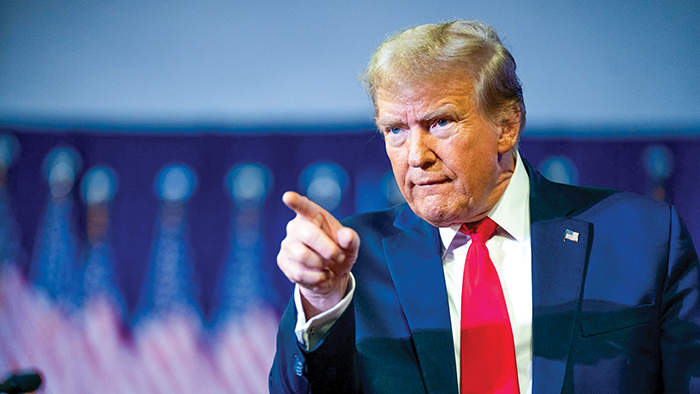
Far more consequential, however, is the rapidly expanding movement on Capitol Hill calling for Trump’s removal.
As of this week, more than 120 lawmakers across both chambers have gone on the record stating that Trump should either resign voluntarily or be removed through constitutional mechanisms. The coalition includes progressive Democrats, centrist lawmakers and a small but notable number of Republicans who have stopped short of endorsing impeachment but have questioned Trump’s fitness to govern.
“This is not about policy disagreements anymore,” said one senior Democratic aide involved in the discussions. “This is about whether the president is capable of respecting the constitutional limits of his office.”
The urgency of the rhetoric has escalated sharply. Several lawmakers have suggested that Trump has mere “hours or days” to de-escalate before formal removal proceedings begin — language virtually unheard of in modern American politics.
The 25th Amendment Push
A growing number of legislators are calling for the invocation of the 25th Amendment, which allows the vice president and a majority of the cabinet to declare the president unfit to serve.
Senator Ed Markey of Massachusetts has been among the most vocal proponents, describing Trump’s behavior as “erratic, dangerous and incompatible with the responsibilities of the presidency.” Representatives Eric Swalwell, Yassamin Ansari and Sydney Kamlager-Dove have echoed those calls, pointing to Trump’s threats regarding Greenland, his attacks on federal judges and his open defiance of court orders.
While the legal threshold for successfully removing a president under the 25th Amendment is extremely high — requiring a two-thirds vote in both chambers if the president contests the decision — supporters argue that even initiating the process would have seismic political consequences.
“It would force every cabinet member and every Republican in Congress to choose between loyalty to Trump and loyalty to the Constitution,” said a Democratic strategist advising several House members.
Impeachment Infrastructure Already in Place
Simultaneously, impeachment efforts are far more advanced than many observers realize.
Multiple impeachment resolutions have already been filed, including H. Res. 353, which outlines seven articles of impeachment ranging from abuse of war powers to violations of the First Amendment, and H. Res. 939, introduced by Representative Al Green, which focuses on abuse of power and incitement of violence.
Unlike symbolic resolutions of the past, these measures are fully drafted, legally detailed and supported by extensive documentation, including adverse federal court rulings and testimony from administration officials.
Advocacy organizations such as Impeach Trump Again have mobilized nationwide campaigns, staging demonstrations, targeting individual lawmakers and applying sustained pressure on Democratic leadership to act.
Democratic Caution and Grassroots Pressure
Despite the growing momentum, Democratic leaders remain cautious. House Minority Leader Hakeem Jeffries and other senior figures have publicly emphasized economic messaging ahead of the 2026 midterms, wary of allowing Republicans to frame impeachment as a partisan obsession.
But that restraint may prove difficult to maintain.
Several Democratic lawmakers privately acknowledged that if the party retakes the House in November, pressure from the party’s base would make impeachment almost unavoidable. “The articles are written. The evidence is there,” one House member said. “If we win, people will expect action — immediately.”
Republican leaders are well aware of that dynamic. Speaker Mike Johnson has repeatedly warned conservative donors that losing the House would likely trigger a third Trump impeachment, consuming the remainder of his term.
Quiet Republican Calculations
Publicly, Republicans remain largely unified behind the president. Privately, however, aides from both parties say quiet contingency planning is underway.
“No one wants to be the last person defending a collapsing presidency,” said a former Republican lawmaker who remains in close contact with current members. “At some point, self-preservation kicks in.”
The erosion of institutional trust — including court rulings striking down Trump policies, tensions with federal agencies, and internal administration chaos — has made loyalty to the president increasingly costly.
A Defining Moment
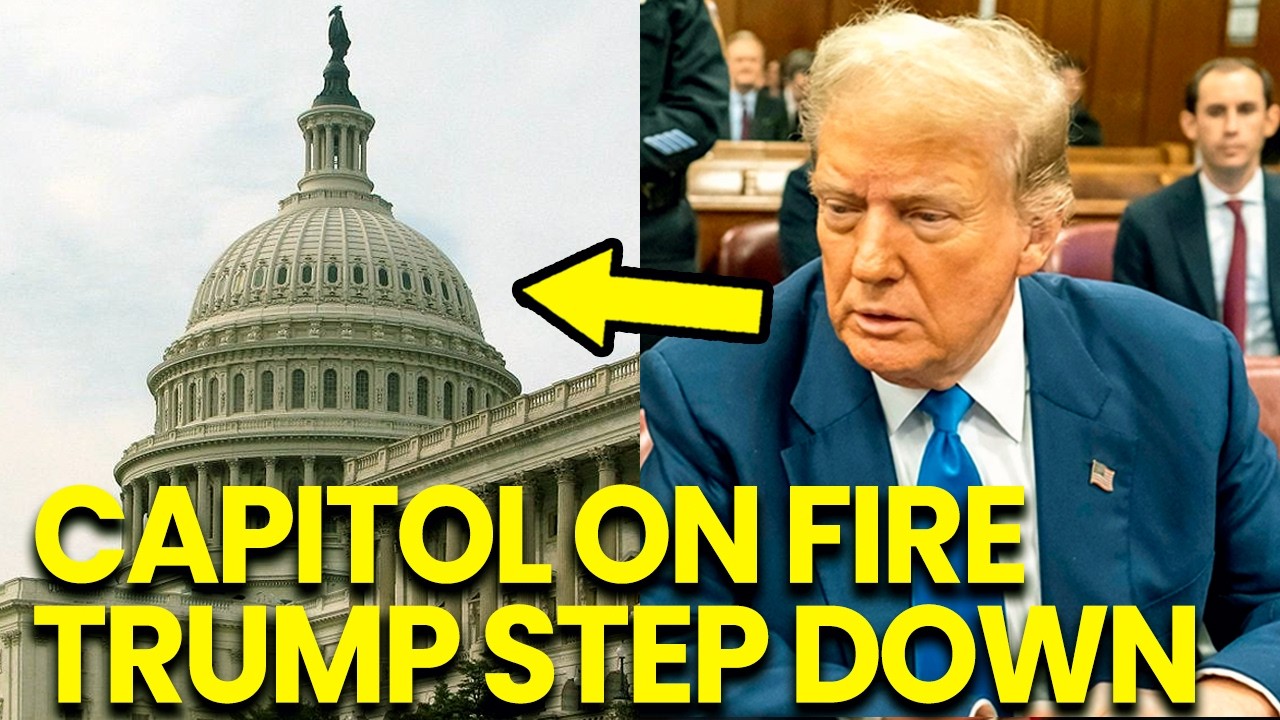
What distinguishes this moment from previous impeachment crises is the convergence of multiple pressure points: judicial rebukes, congressional revolt, grassroots mobilization and executive branch dysfunction — all unfolding simultaneously.
The coming months, and particularly the 2026 midterm elections, will determine whether this pressure culminates in the most dramatic constitutional confrontation since Watergate or remains a contained but unresolved crisis.
For now, Washington remains on edge, bracing for a showdown that could redefine the limits of presidential power — and the resilience of American democracy itself.