Maxwell Invokes Fifth Amendment as Congressional Scrutiny Intensifies Around Trump-Epstein Questions
Washington — A congressional deposition involving Ghislaine Maxwell, the longtime associate of Jeffrey Epstein, ended abruptly Monday after Maxwell declined to answer substantive questions, invoking her Fifth Amendment right against self-incrimination — a move that immediately triggered sharp reactions from lawmakers and renewed political attention on Donald Trump.
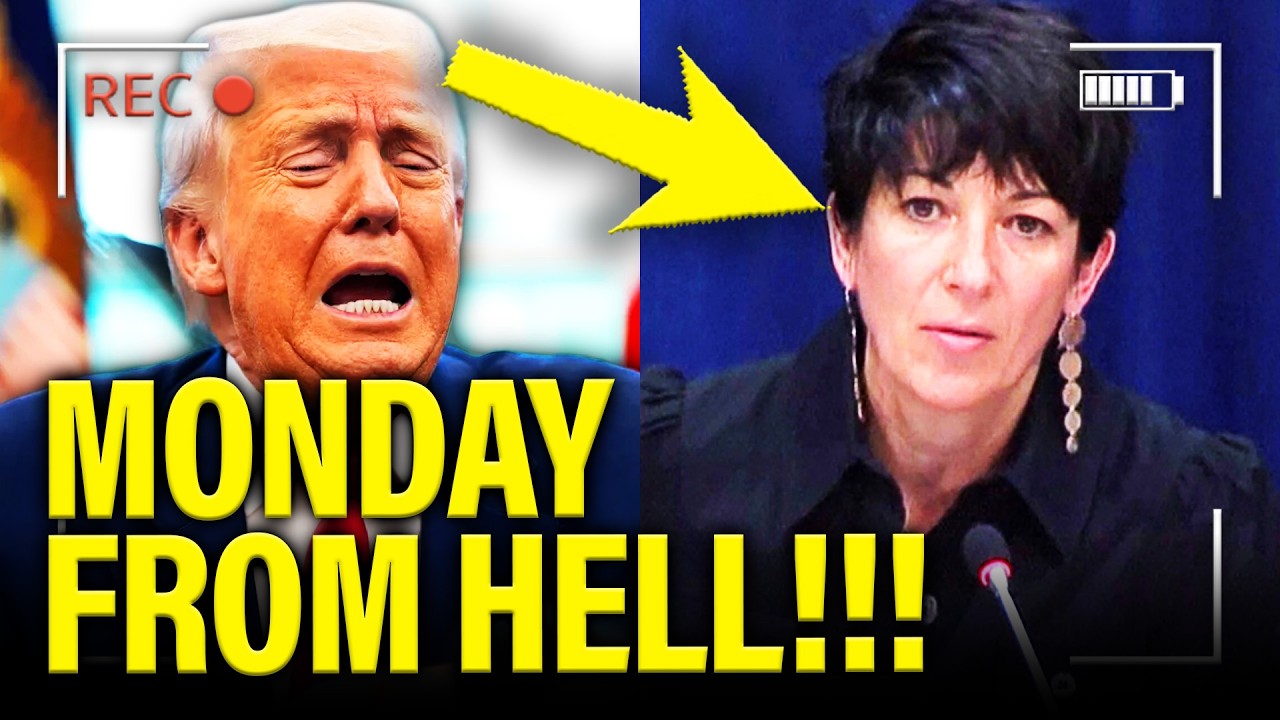
Maxwell, who is serving a federal prison sentence for her role in Epstein’s sex-trafficking operation, appeared before the House Oversight Committee but refused to respond beyond a brief opening statement read by her attorney, David Oscar Markus. On his advice, Maxwell declined to answer questions posed by committee members, citing ongoing legal efforts including a pending habeas corpus petition challenging her conviction.
The refusal came as lawmakers prepared to question Maxwell about potential co-conspirators, undisclosed settlements, and her knowledge of powerful figures connected to Epstein’s network. Several of the written questions submitted by members focused on whether individuals beyond Epstein had avoided prosecution, and whether Maxwell possessed information explaining why.
“This was a blanket invocation of the Fifth,” said Rep. Ro Khanna, a Democrat on the committee, who noted that some of his questions, in his view, did not directly implicate Maxwell in new criminal exposure. “The American people will notice the inconsistency,” he said, referencing Maxwell’s earlier cooperation in other legal settings.
Clemency at the Center of the Dispute
In a written statement submitted to the committee, Maxwell’s attorney argued that she would be willing to speak “fully and honestly” if granted clemency by the president — language that lawmakers from both parties immediately seized upon as politically significant.
Democratic members characterized the statement as an overt appeal to the White House. Several urged the president to publicly rule out any pardon or sentence commutation, arguing that the possibility of clemency could discourage cooperation with Congress.
“This looks like an attempt to buy silence,” said Rep. Melanie Stansbury, a Democrat from New Mexico, who accused the government of shielding powerful individuals connected to Epstein. Other Democrats echoed that concern, framing Maxwell’s refusal as part of a broader transparency issue surrounding the Epstein investigation.
Republicans on the committee did not publicly dispute Maxwell’s constitutional right to remain silent but avoided endorsing claims of a coordinated cover-up.
Trump’s Name Returns to the Spotlight
While no new evidence was introduced during the deposition, Maxwell’s silence — combined with her attorney’s reference to clemency — placed renewed focus on Trump’s past social association with Epstein, which has been documented in photographs and public records but has not resulted in criminal charges against Trump.
Several lawmakers cited the frequency with which Trump’s name appears in Epstein-related documents released by the Justice Department, while acknowledging that such references do not themselves establish wrongdoing. Trump has repeatedly denied any involvement in Epstein’s crimes and has said he severed ties with Epstein years before Epstein’s arrest.
The White House did not immediately respond to requests for comment on whether the president would rule out clemency for Maxwell.
Political Fallout and Broader Context
The deposition unfolded against a backdrop of escalating political tension. Earlier the same day, Trump faced criticism for a late-night social media post that drew bipartisan condemnation before being removed. Lawmakers also pointed to recent polling showing erosion in Trump’s approval among non-college-educated voters, a demographic that has historically formed a core part of his political base.
Administration officials, including Trump’s economic advisers, appeared on television Monday warning of potential job displacement tied to automation and artificial intelligence — remarks that drew renewed scrutiny as lawmakers debated economic uncertainty alongside accountability issues.
What the Deposition Did — and Did Not — Establish
Legal experts caution that Maxwell’s invocation of the Fifth Amendment is not an admission of guilt beyond her existing conviction, nor does it confirm allegations involving other individuals. It does, however, limit Congress’s ability to obtain sworn testimony directly from one of the central figures in the Epstein case.
For now, the Oversight Committee has not announced whether it will pursue contempt proceedings or seek alternative means of obtaining information. Democrats signaled that the investigation would continue, emphasizing document review, witness testimony, and public hearings.
“This isn’t the end,” Rep. Jasmine Crockett of Texas said after the session. “Silence does not close the book.”
As the political and legal reverberations continue, Maxwell remains incarcerated, Trump remains uncharged in connection with Epstein’s crimes, and Congress remains divided over how — and whether — the full scope of Epstein’s network will ever be publicly documented.
What is clear is that a deposition that produced few answers has nonetheless reopened one of the most politically sensitive questions still lingering in Washington: who knew what — and when — and whether the public will ever hear it under oath.






