Pam Bondi Under Fire: Allegations of Political Interference, Congressional Evasion, and a Justice Department in Crisis
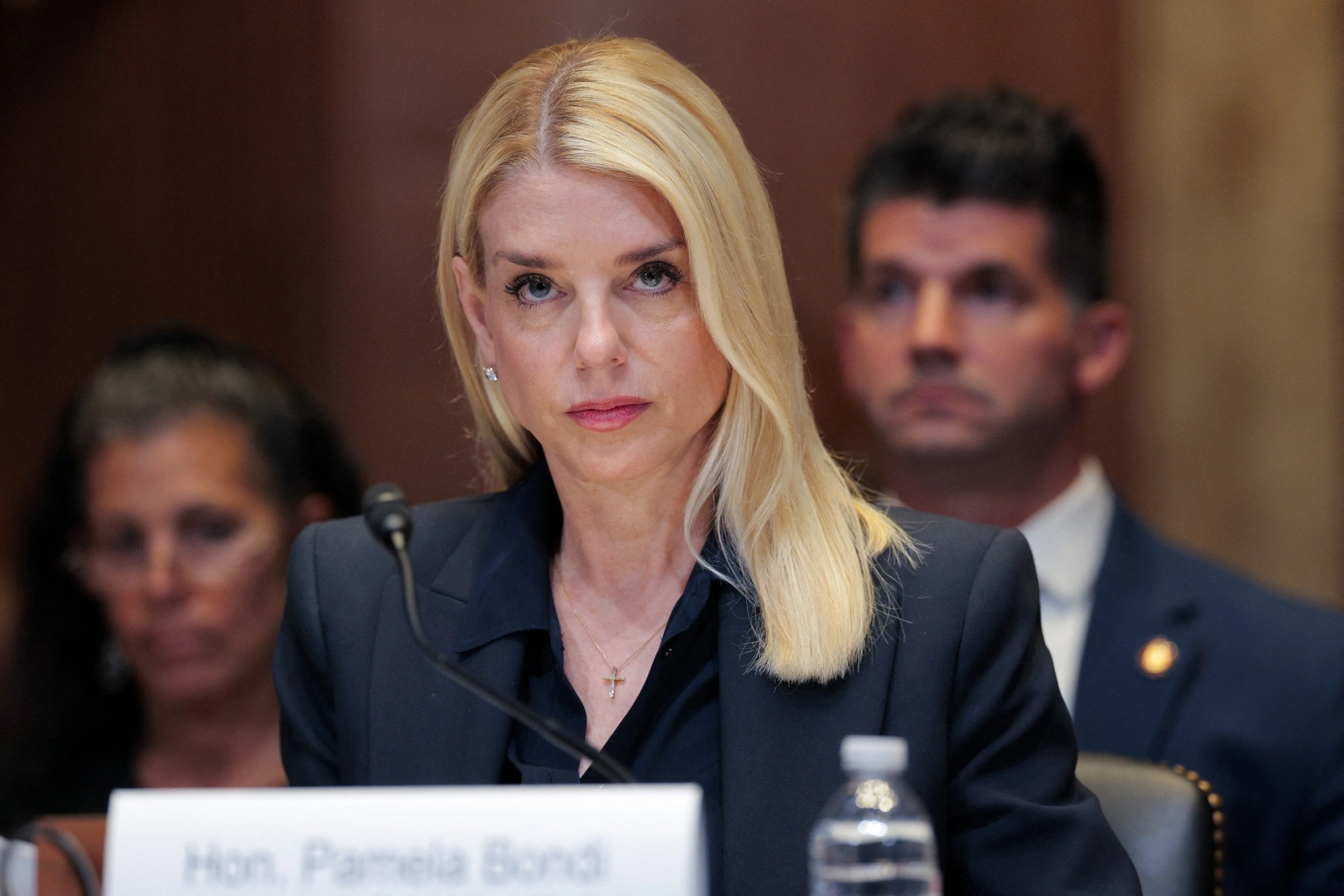
Washington — Fireworks erupted on Capitol Hill this week as Attorney General Pam Bondi faced a blistering round of questioning from Democratic senators, intensifying concerns that the Justice Department under President Donald Trump has become an instrument of political retribution rather than an independent enforcer of the law.
In a contentious hearing before the Senate Judiciary Committee, Bondi clashed repeatedly with Democrats who accused her of allowing — and in some cases facilitating — the weaponization of federal law enforcement against Trump’s perceived enemies. The flashpoints were familiar but volatile: the prosecution of former FBI Director James Comey, the handling of long-sought Epstein-related records, and Bondi’s own past statements about the 2020 election.
Bondi, a longtime Trump ally and former Florida attorney general, responded with defiance. She refused to discuss any conversations she may have had with the president regarding Comey’s indictment, declined to answer detailed questions about internal Justice Department deliberations, and repeatedly asserted that she was bound by legal and ethical constraints from commenting on ongoing matters.
Democrats were unconvinced.
“What was once the Department of Justice has become the Department of Revenge and Corruption,” Senator Richard Blumenthal of Connecticut said, pressing Bondi on the timing of Comey’s prosecution — which came just six days after Trump publicly demanded action in a social media post.
Bondi flatly rejected the premise of the question and declined to confirm or deny whether Comey was discussed during a White House dinner the night before the indictment. When Blumenthal displayed a photograph of that dinner, Bondi responded with a smile. “I love that picture,” she said. “That’s a great picture. And there were a lot of people there that night.”
The exchange underscored a broader concern animating Democrats: whether Bondi has been truthful under oath, and whether her sworn testimony aligns with public records, past statements, and internal communications that may yet come to light.
Contradictions Under Oath
The scrutiny of Bondi did not begin this week. During her confirmation hearing in January 2025, senators questioned her extensively about her role in the aftermath of the 2020 election and her public endorsement of Trump’s false claims that he won Pennsylvania. Bondi pledged independence and vowed to follow the law “no matter who is involved,” but she stopped short of explicitly acknowledging that Trump lost the election — a refusal that fact-checkers and legal analysts immediately flagged.
Since then, critics say, a pattern has emerged.
Bondi has repeatedly declined to retract demonstrably false claims she previously promoted, while insisting under oath that she respects electoral outcomes and democratic norms. She has attempted to recast prior statements — including promises made on conservative media to prosecute Trump’s critics — as rhetorical excess rather than concrete intent. And she has evaded questions about whether she privately acknowledged Trump’s defeat while publicly suggesting otherwise.
Former federal prosecutors note that such discrepancies matter. Under federal law, knowingly making materially false statements to Congress — even by omission — can constitute a crime under 18 U.S.C. § 1001, punishable by up to five years in prison. Perjury carries similar penalties.
“Prosecutors don’t need a dramatic smoking gun,” one former Justice Department official said. “They need proof that a witness knew the truth and testified in a way that misrepresented it on a material issue. Patterns of contradiction can be powerful evidence.”
Oversight, Stonewalling, and Contempt
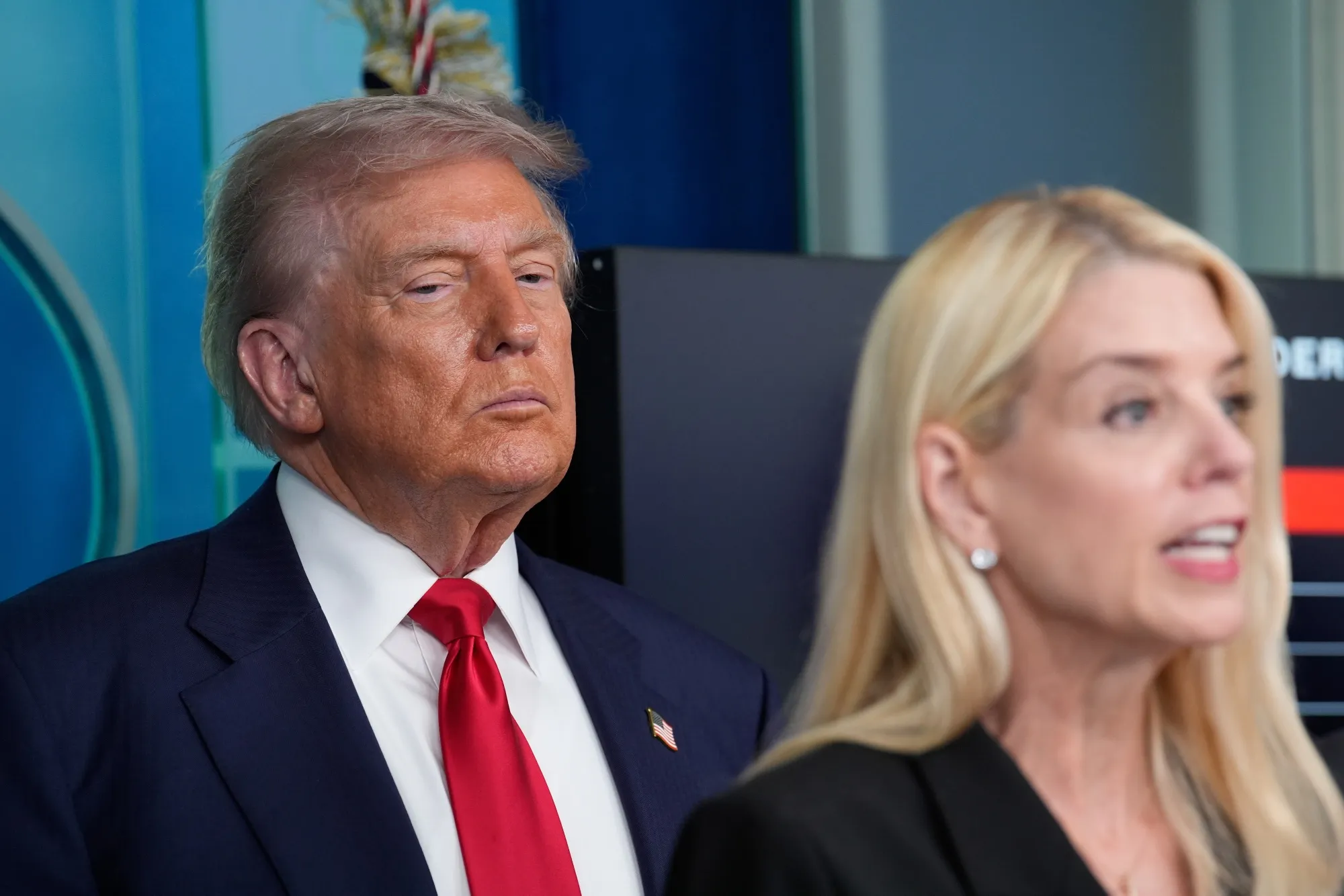
Bondi’s October 2025 oversight appearance before the Judiciary Committee only deepened tensions. Senators questioned her about the Justice Department’s handling of the Epstein files — records Congress and the courts have ordered released under transparency statutes — and about alleged discussions with Trump concerning the prosecution of political adversaries.
Again, Bondi refused to answer. She cited executive privilege, prosecutorial discretion, and ongoing investigations. Democrats accused her of stonewalling Congress and undermining its constitutional oversight role.
“Refusing to answer is not the same as complying with the law,” Senator Sheldon Whitehouse said during that hearing. “Oversight is not optional.”
While no formal contempt vote has yet been taken, legal scholars note that Congress retains multiple enforcement mechanisms, including inherent contempt powers and criminal referrals — options that could be revived if control of the chamber shifts after the 2026 midterm elections.
Court Orders and Judicial Frustration
Beyond Capitol Hill, Bondi faces mounting pressure from the judiciary. Federal judges overseeing litigation related to Epstein records have issued increasingly pointed orders directing the Justice Department to produce documents. According to court filings and legal commentators, compliance has been slow and incomplete, with the department invoking exemptions that judges have questioned.
Judges have not yet held Bondi in contempt, but several have warned that continued defiance could lead to sanctions or criminal referrals. Contempt of court, while rare for senior officials, carries the possibility of fines and even incarceration.
“The courts have tools to enforce their orders,” said a former federal judge. “No one, including the attorney general, is above them.”
Political Protection — For Now
For the moment, Bondi remains insulated by political realities. Republicans control Congress, and the Justice Department ultimately answers to her. Any criminal case would require prosecutors willing — and empowered — to act.
But that protection is contingent. If Democrats regain control of the House or Senate, oversight could intensify dramatically. Hearings could reopen. Contempt votes could advance. And a future administration could revisit whether Bondi’s testimony crossed the line from evasion into falsehood.
Historical precedents loom large. Michael Cohen and Roger Stone were both convicted for lying to Congress. In each case, prosecutors relied heavily on sworn testimony contradicted by documentary evidence.
“Lying to Congress is not theoretical,” a former U.S. attorney said. “People go to prison for it.”
A Justice Department on Trial
The stakes extend beyond Bondi herself. At issue is the credibility of the Justice Department and the principle that law enforcement must remain independent from political pressure. Critics argue that Bondi’s conduct — evasive testimony, selective prosecutions, and resistance to transparency — threatens that foundation.
Bondi and her allies reject that characterization, insisting she is restoring accountability after years of partisan abuse. The White House praised her performance at the hearing, calling it “firm, professional, and entirely appropriate.”
Whether that view prevails may depend less on rhetoric than on records — emails, memoranda, and sworn statements that could eventually be scrutinized under different political conditions.
For now, no charges have been filed, no contempt citations issued, and no court has ruled that Bondi committed a crime. But the record is growing. Each hearing, each refusal, each contradiction adds to it.
“The path isn’t automatic,” one legal analyst said. “But it’s being built piece by piece.”
And in Washington, paths built on the public record have a way of leading places their architects did not intend.